New Zealand Natural Flavors Market Top 5 Importing Countries and Market Competition (HHI) Analysis
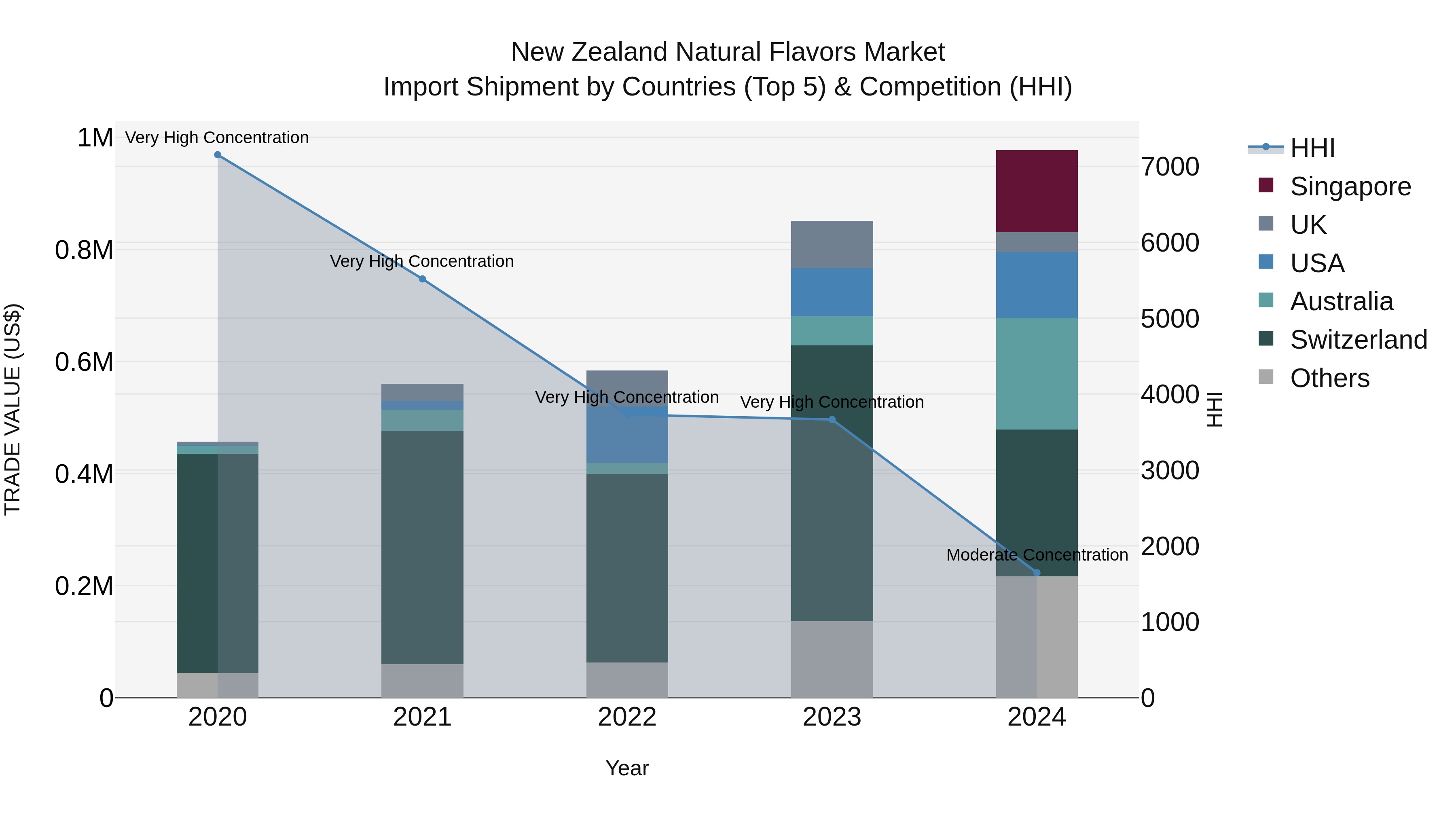
The New Zealand natural flavors market continues to thrive with significant import shipments from top exporting countries such as Switzerland, Australia, Singapore, USA, and Indonesia in 2024. The market shows a positive trend with a notable decrease in market concentration from a high in 2023 to a more moderate level in 2024. With a remarkable CAGR of 20.93% from 2020 to 2024 and a solid growth rate of 14.85% in 2024, the future looks promising for the natural flavors industry in New Zealand.
New Zealand Natural Flavors Market Synopsis
The New Zealand natural flavors market is experiencing steady growth driven by increasing consumer demand for clean label and natural food products. The market is characterized by a shift towards healthier eating habits, leading to a rising preference for natural flavors derived from fruits, vegetables, herbs, and spices. Key players in the market are focusing on innovation and product development to cater to evolving consumer preferences for authentic and natural flavors. The market is witnessing a surge in demand for natural flavors in various applications such as beverages, dairy products, snacks, and confectionery. Additionally, stringent regulations regarding food safety and labeling are further propelling the growth of the natural flavors market in New Zealand. Overall, the market presents opportunities for manufacturers to capitalize on the growing trend towards natural and clean label products.
New Zealand Natural Flavors Market Trends
The New Zealand natural flavors market is experiencing significant growth driven by increasing consumer preference for clean label and natural ingredients. Key trends include the rising demand for flavors sourced from native New Zealand botanicals such as Manuka honey, kiwifruit, and feijoa. There is also a growing interest in organic and sustainable flavor options, with companies focusing on transparency and traceability in sourcing their ingredients. Opportunities in the market lie in developing innovative flavor profiles that cater to changing consumer preferences, as well as expanding into new product categories such as plant-based alternatives and functional foods. Collaborations with local suppliers and producers can help companies differentiate their offerings and capitalize on the unique flavors that New Zealand has to offer.
New Zealand Natural Flavors Market Challenges
In the New Zealand Natural Flavors Market, some challenges faced include sourcing high-quality natural ingredients, meeting the increasing demand for clean-label products, navigating stringent regulations around food safety and labeling, and managing the impact of seasonal variations on ingredient availability. Additionally, competition from synthetic flavors and the need for continuous innovation to meet changing consumer preferences are also significant hurdles. Companies operating in this market need to balance authenticity and sustainability in sourcing ingredients while ensuring consistency in flavor profiles to maintain consumer trust and loyalty. Adapting to evolving market trends, such as the rise of plant-based flavors and the growing interest in indigenous ingredients, further adds complexity to the landscape.
New Zealand Natural Flavors Market Investment Opportunities
The New Zealand natural flavors market is primarily driven by the increasing consumer demand for clean label and natural products, driven by a growing awareness and preference for healthier food and beverage options. Consumers are seeking products made with natural ingredients, free from artificial additives and preservatives. Additionally, the rise in vegan and plant-based diets has fueled the demand for natural flavors derived from fruits, vegetables, and botanical sources. The strong agricultural sector in New Zealand also contributes to the availability of high-quality natural ingredients, supporting the growth of the natural flavors market. Manufacturers are focusing on innovation to develop new and unique natural flavor profiles to cater to changing consumer preferences, driving further growth in the market.
New Zealand Natural Flavors Market Government Polices
In New Zealand, the natural flavors market is governed by regulations set by the Ministry for Primary Industries (MPI) and the Food Standards Australia New Zealand (FSANZ). These regulations ensure that natural flavors used in food and beverages meet safety and quality standards. The Food Act 2014 and the Australia New Zealand Food Standards Code outline the requirements for labeling, additives, and maximum residue limits for natural flavors. Additionally, the MPI provides guidelines for the cultivation and processing of natural flavor ingredients to maintain food safety and traceability. Overall, these government policies aim to protect consumer health, ensure product quality, and promote transparency in the New Zealand natural flavors market.
New Zealand Natural Flavors Market Future Outlook
The New Zealand Natural Flavors Market is poised for steady growth in the coming years as consumer demand for clean label and natural products continues to rise. The market is expected to experience an increasing preference for locally sourced and sustainably produced natural flavors, driven by a growing awareness of health and wellness among consumers. Key trends shaping the market include the rising popularity of unique and exotic flavor profiles, as well as the increasing use of natural flavors in a wide range of food and beverage products. Manufacturers are likely to focus on innovation and product development to meet evolving consumer preferences and regulatory requirements, positioning New Zealand as a key player in the global natural flavors market.
Key Highlights of the Report:
- New Zealand Natural Flavors Market Outlook
- Market Size of New Zealand Natural Flavors Market, 2024
- Forecast of New Zealand Natural Flavors Market, 2031
- Historical Data and Forecast of New Zealand Natural Flavors Revenues & Volume for the Period 2021- 2031
- New Zealand Natural Flavors Market Trend Evolution
- New Zealand Natural Flavors Market Drivers and Challenges
- New Zealand Natural Flavors Price Trends
- New Zealand Natural Flavors Porter's Five Forces
- New Zealand Natural Flavors Industry Life Cycle
- Historical Data and Forecast of New Zealand Natural Flavors Market Revenues & Volume By Product for the Period 2021- 2031
- Historical Data and Forecast of New Zealand Natural Flavors Market Revenues & Volume By Animal Flavors for the Period 2021- 2031
- Historical Data and Forecast of New Zealand Natural Flavors Market Revenues & Volume By Plant Flavors for the Period 2021- 2031
- Historical Data and Forecast of New Zealand Natural Flavors Market Revenues & Volume By Type for the Period 2021- 2031
- Historical Data and Forecast of New Zealand Natural Flavors Market Revenues & Volume By Natural Flavor Synthetic Flavor for the Period 2021- 2031
- Historical Data and Forecast of New Zealand Natural Flavors Market Revenues & Volume By Natural Identical Flavoring for the Period 2021- 2031
- Historical Data and Forecast of New Zealand Natural Flavors Market Revenues & Volume By Application for the Period 2021- 2031
- Historical Data and Forecast of New Zealand Natural Flavors Market Revenues & Volume By Dairy for the Period 2021- 2031
- Historical Data and Forecast of New Zealand Natural Flavors Market Revenues & Volume By Bakery for the Period 2021- 2031
- Historical Data and Forecast of New Zealand Natural Flavors Market Revenues & Volume By Snack for the Period 2021- 2031
- Historical Data and Forecast of New Zealand Natural Flavors Market Revenues & Volume By Confectionery for the Period 2021- 2031
- Historical Data and Forecast of New Zealand Natural Flavors Market Revenues & Volume By Others for the Period 2021- 2031
- New Zealand Natural Flavors Import Export Trade Statistics
- Market Opportunity Assessment By Product
- Market Opportunity Assessment By Type
- Market Opportunity Assessment By Application
- New Zealand Natural Flavors Top Companies Market Share
- New Zealand Natural Flavors Competitive Benchmarking By Technical and Operational Parameters
- New Zealand Natural Flavors Company Profiles
- New Zealand Natural Flavors Key Strategic Recommendations






































