New Zealand Oyster Market Year-wise Growth Rate (2021-2031F)
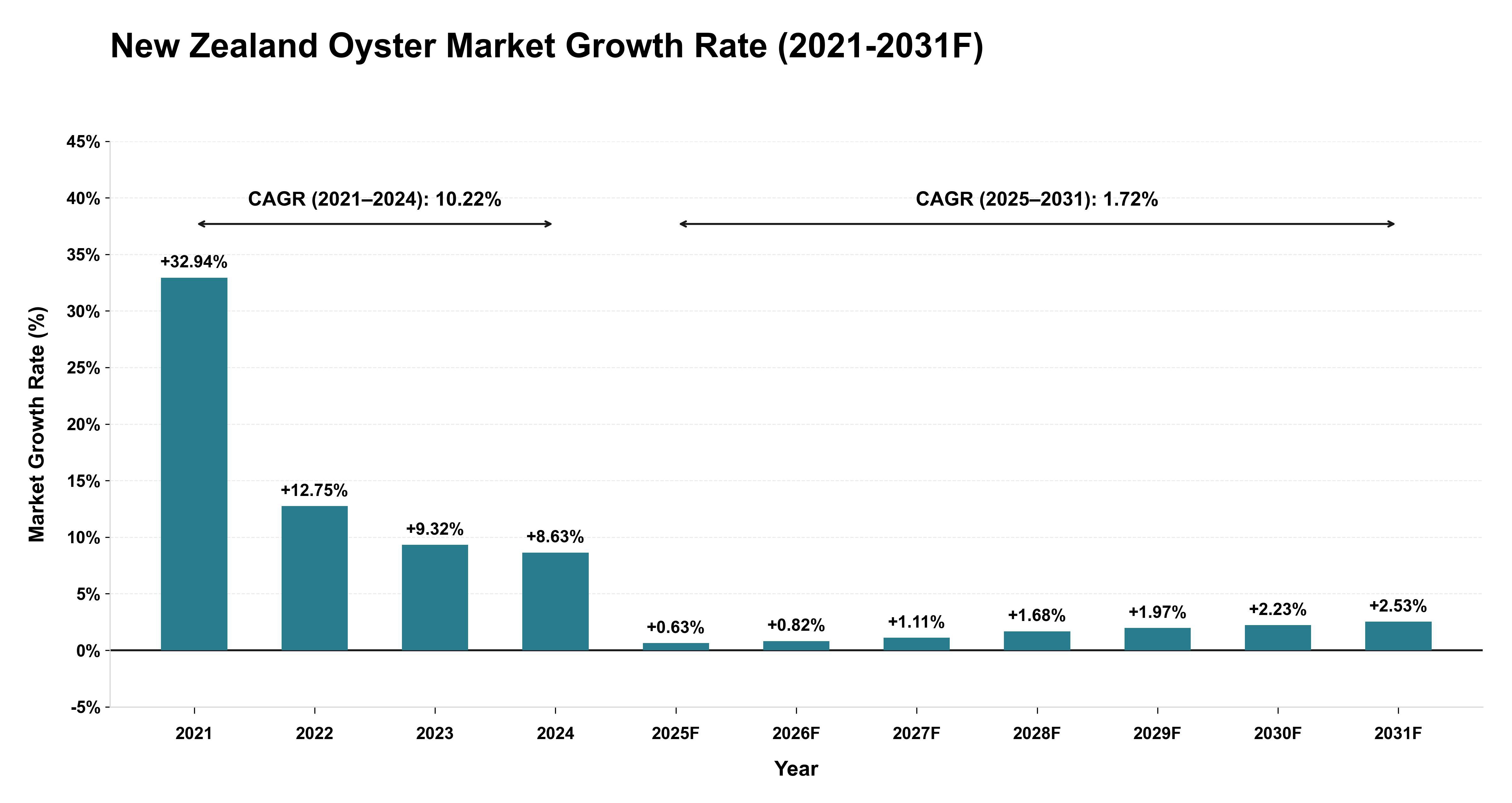
The New Zealand Oyster Market experienced robust growth from 2021 to 2024, with a significant CAGR of 10.22%. This surge was mainly driven by increasing domestic consumption, growing demand from the foodservice industry, and expanding export opportunities. However, the market saw a gradual deceleration towards the end of this period, as growth rates started to stabilize. Looking ahead to 2025-2031, the forecasted CAGR of 1.72% suggests a more moderate but steady growth trajectory. Factors such as evolving consumer preferences towards healthier seafood options, sustainability concerns in oyster farming practices, and potential regulatory changes impacting the industry are expected to shape the market dynamics during this period. The slight acceleration in growth rates from 2025 onwards indicates a resilient market adapting to changing market forces and consumer demands.
Key Highlights of the Report:
- New Zealand Oyster Market Outlook
- Market Size of New Zealand Oyster Market, 2024
- Forecast of New Zealand Oyster Market, 2031
- Historical Data and Forecast of New Zealand Oyster Revenues & Volume for the Period 2021-2031
- New Zealand Oyster Market Trend Evolution
- New Zealand Oyster Market Drivers and Challenges
- New Zealand Oyster Price Trends
- New Zealand Oyster Porter`s Five Forces
- New Zealand Oyster Industry Life Cycle
- Historical Data and Forecast of New Zealand Oyster Market Revenues & Volume By Oyster Type for the Period 2021-2031
- Historical Data and Forecast of New Zealand Oyster Market Revenues & Volume By Cupped Oyster for the Period 2021-2031
- Historical Data and Forecast of New Zealand Oyster Market Revenues & Volume By Pacific Cupped Oyster for the Period 2021-2031
- Historical Data and Forecast of New Zealand Oyster Market Revenues & Volume By American Cupped Oyster for the Period 2021-2031
- Historical Data and Forecast of New Zealand Oyster Market Revenues & Volume By Penguin Wing Oyster for the Period 2021-2031
- Historical Data and Forecast of New Zealand Oyster Market Revenues & Volume By Others for the Period 2021-2031
- Historical Data and Forecast of New Zealand Oyster Market Revenues & Volume By End User for the Period 2021-2031
- Historical Data and Forecast of New Zealand Oyster Market Revenues & Volume By Foodservice for the Period 2021-2031
- Historical Data and Forecast of New Zealand Oyster Market Revenues & Volume By Retail for the Period 2021-2031
- Historical Data and Forecast of New Zealand Oyster Market Revenues & Volume By Packaging Form for the Period 2021-2031
- Historical Data and Forecast of New Zealand Oyster Market Revenues & Volume By Fresh for the Period 2021-2031
- Historical Data and Forecast of New Zealand Oyster Market Revenues & Volume By Frozen for the Period 2021-2031
- Historical Data and Forecast of New Zealand Oyster Market Revenues & Volume By Canned for the Period 2021-2031
- Historical Data and Forecast of New Zealand Oyster Market Revenues & Volume By Others for the Period 2021-2031
- New Zealand Oyster Import Export Trade Statistics
- Market Opportunity Assessment By Oyster Type
- Market Opportunity Assessment By End User
- Market Opportunity Assessment By Packaging Form
- New Zealand Oyster Top Companies Market Share
- New Zealand Oyster Competitive Benchmarking By Technical and Operational Parameters
- New Zealand Oyster Company Profiles
- New Zealand Oyster Key Strategic Recommendations






































