New Zealand Packaged Water Market Top 5 Importing Countries and Market Competition (HHI) Analysis
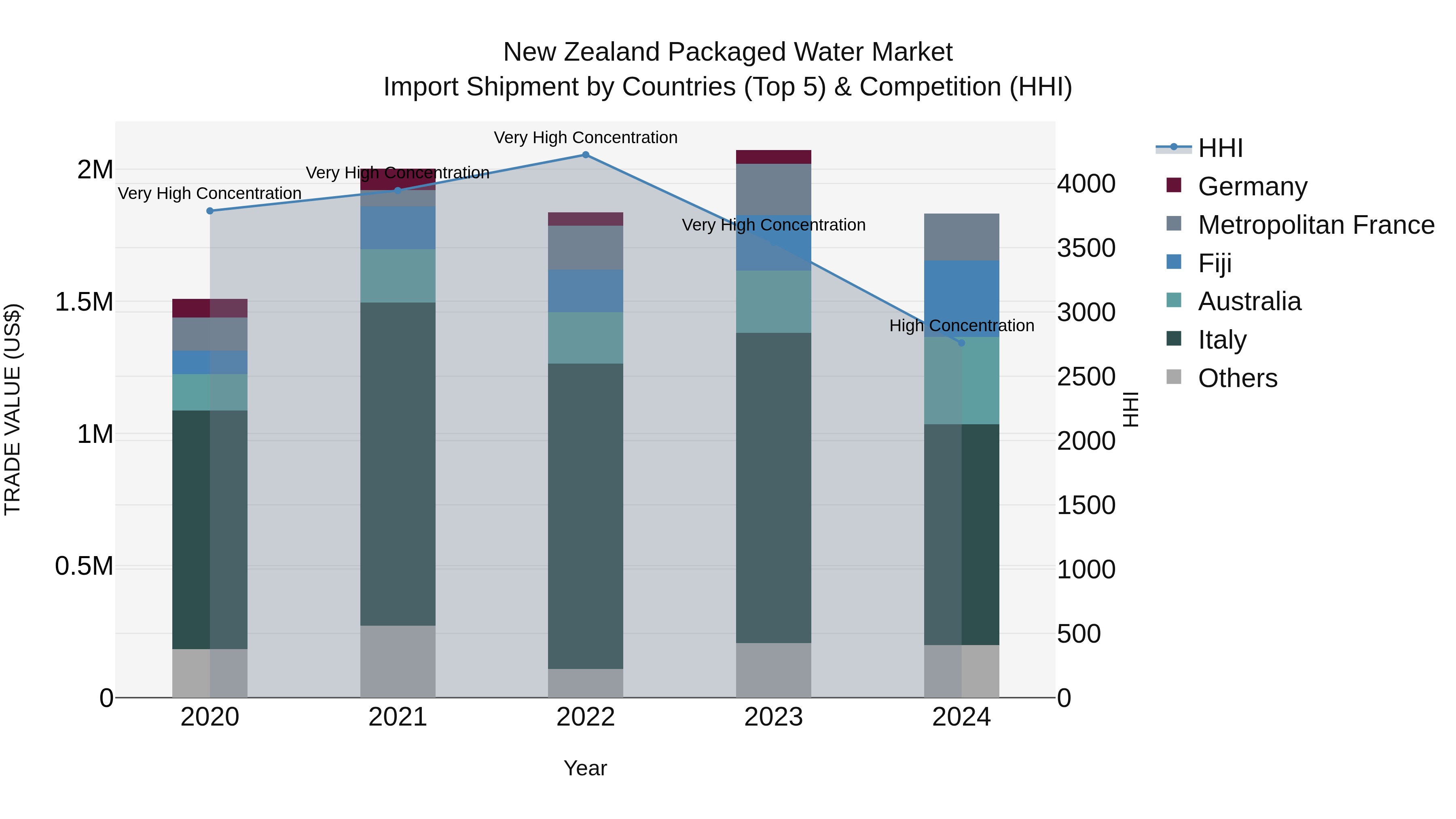
The packaged water import market in New Zealand experienced a shift in concentration levels from very high in 2023 to high in 2024, indicating a more competitive landscape. Top exporting countries such as Italy, Australia, Fiji, Metropolitan France, and the USA are key players in supplying packaged water to New Zealand. Despite a slight decline in growth rate from 2023 to 2024, the compound annual growth rate (CAGR) over the period of 2020-2024 remains positive at 4.96%, reflecting sustained interest in imported packaged water among consumers in New Zealand.
New Zealand Packaged water Market Overview
The New Zealand packaged water market is experiencing steady growth driven by increasing health consciousness among consumers, a shift towards healthier beverage options, and concerns about the quality of tap water. The market is characterized by a wide range of products including still, sparkling, flavored, and functional waters, catering to diverse consumer preferences. Key players in the market are focusing on product innovation, sustainable packaging solutions, and strategic marketing campaigns to differentiate themselves in a competitive landscape. The trend towards eco-friendly packaging materials and the rising popularity of premium and value-added waters are shaping the market dynamics. The regulatory environment promoting safe drinking water standards also plays a significant role in influencing consumer choices. Overall, the New Zealand packaged water market is poised for continued growth with opportunities for both domestic and international brands to capture market share.
New Zealand Packaged water Market Trends and Opportunities
The New Zealand packaged water market is experiencing a shift towards healthier and more sustainable options, with increased demand for premium and functional waters such as flavored, vitamin-enhanced, and alkaline waters. Consumers are also seeking environmentally friendly packaging, leading to a rise in the popularity of products in biodegradable or recyclable materials. Additionally, the market is witnessing a growing preference for locally sourced and artisanal bottled water brands. Opportunities lie in expanding product offerings to cater to specific consumer preferences, such as natural mineral water or infused sparkling water, as well as leveraging e-commerce channels for distribution. Brands that prioritize transparency, sustainability, and innovation are likely to succeed in this evolving market landscape.
New Zealand Packaged water Market Challenges
In the New Zealand Packaged water market, some key challenges include increasing competition among existing players and new entrants, pricing pressures due to the presence of multiple brands offering similar products, and consumer concerns around environmental sustainability and plastic waste. Additionally, changing consumer preferences towards healthier beverage options like flavored water, functional drinks, and alternatives to traditional plastic packaging present a challenge for traditional packaged water companies. Moreover, fluctuations in raw material prices, regulatory changes related to packaging and labeling requirements, and the impact of global events like the COVID-19 pandemic on supply chains and consumer behavior are also significant challenges faced by the industry. To stay competitive and address these challenges, companies in the New Zealand Packaged water market need to focus on innovation, sustainability, and effective marketing strategies.
New Zealand Packaged water Market Drivers
The New Zealand Packaged water market is primarily driven by increasing consumer awareness regarding the importance of hydration for health and wellness, leading to a growing preference for convenient and portable water options. The trend towards healthier beverage choices and a shift away from sugary drinks has also contributed to the market growth. Additionally, the rise in on-the-go lifestyles, coupled with the convenience of single-serve packaging, has further boosted the demand for packaged water in New Zealand. The emphasis on environmental sustainability and the availability of eco-friendly packaging options are also influencing consumer purchasing decisions in this market. Overall, the drivers fueling the growth of the New Zealand Packaged water market revolve around health consciousness, convenience, and sustainability.
New Zealand Packaged water Market Government Policy
In New Zealand, the packaged water market is regulated under the Food Act 2014 and the Australia New Zealand Food Standards Code. These regulations outline strict requirements for the labeling, composition, and safety of packaged water products. The Ministry for Primary Industries oversees compliance with these regulations, ensuring that packaged water companies adhere to quality standards and provide accurate information to consumers. Additionally, the government has implemented initiatives to promote sustainability in the packaged water industry, encouraging companies to use eco-friendly packaging materials and reduce their environmental impact. Overall, government policies in New Zealand aim to safeguard consumer health, promote transparency in labeling, and support sustainable practices within the packaged water market.
New Zealand Packaged water Market Future Outlook
The future outlook for the New Zealand Packaged water market appears positive, driven by increasing health consciousness among consumers seeking convenient and safe hydration options. The market is expected to witness steady growth due to the rising preference for packaged water over sugary beverages and the growing awareness of the benefits of staying hydrated. Factors such as the demand for on-the-go beverages, concerns regarding tap water quality, and environmental sustainability initiatives favor the continued expansion of the packaged water segment. With a focus on innovation in packaging, flavors, and functional benefits, key players are likely to capitalize on the trend and cater to evolving consumer preferences, contributing to the overall growth and competitiveness of the New Zealand Packaged water market.
Key Highlights of the Report:
- New Zealand Packaged water Market Outlook
- Market Size of New Zealand Packaged water Market, 2024
- Forecast of New Zealand Packaged water Market, 2031
- Historical Data and Forecast of New Zealand Packaged water Revenues & Volume for the Period 2021- 2031
- New Zealand Packaged water Market Trend Evolution
- New Zealand Packaged water Market Drivers and Challenges
- New Zealand Packaged water Price Trends
- New Zealand Packaged water Porter's Five Forces
- New Zealand Packaged water Industry Life Cycle
- Historical Data and Forecast of New Zealand Packaged water Market Revenues & Volume By Product for the Period 2021- 2031
- Historical Data and Forecast of New Zealand Packaged water Market Revenues & Volume By Still for the Period 2021- 2031
- Historical Data and Forecast of New Zealand Packaged water Market Revenues & Volume By Carbonated for the Period 2021- 2031
- Historical Data and Forecast of New Zealand Packaged water Market Revenues & Volume By Flavored for the Period 2021- 2031
- Historical Data and Forecast of New Zealand Packaged water Market Revenues & Volume By Functional for the Period 2021- 2031
- New Zealand Packaged water Import Export Trade Statistics
- Market Opportunity Assessment By Product
- New Zealand Packaged water Top Companies Market Share
- New Zealand Packaged water Competitive Benchmarking By Technical and Operational Parameters
- New Zealand Packaged water Company Profiles
- New Zealand Packaged water Key Strategic Recommendations






































