New Zealand Prepared Food Market Growth Rate Analysis (2025 - 2031)
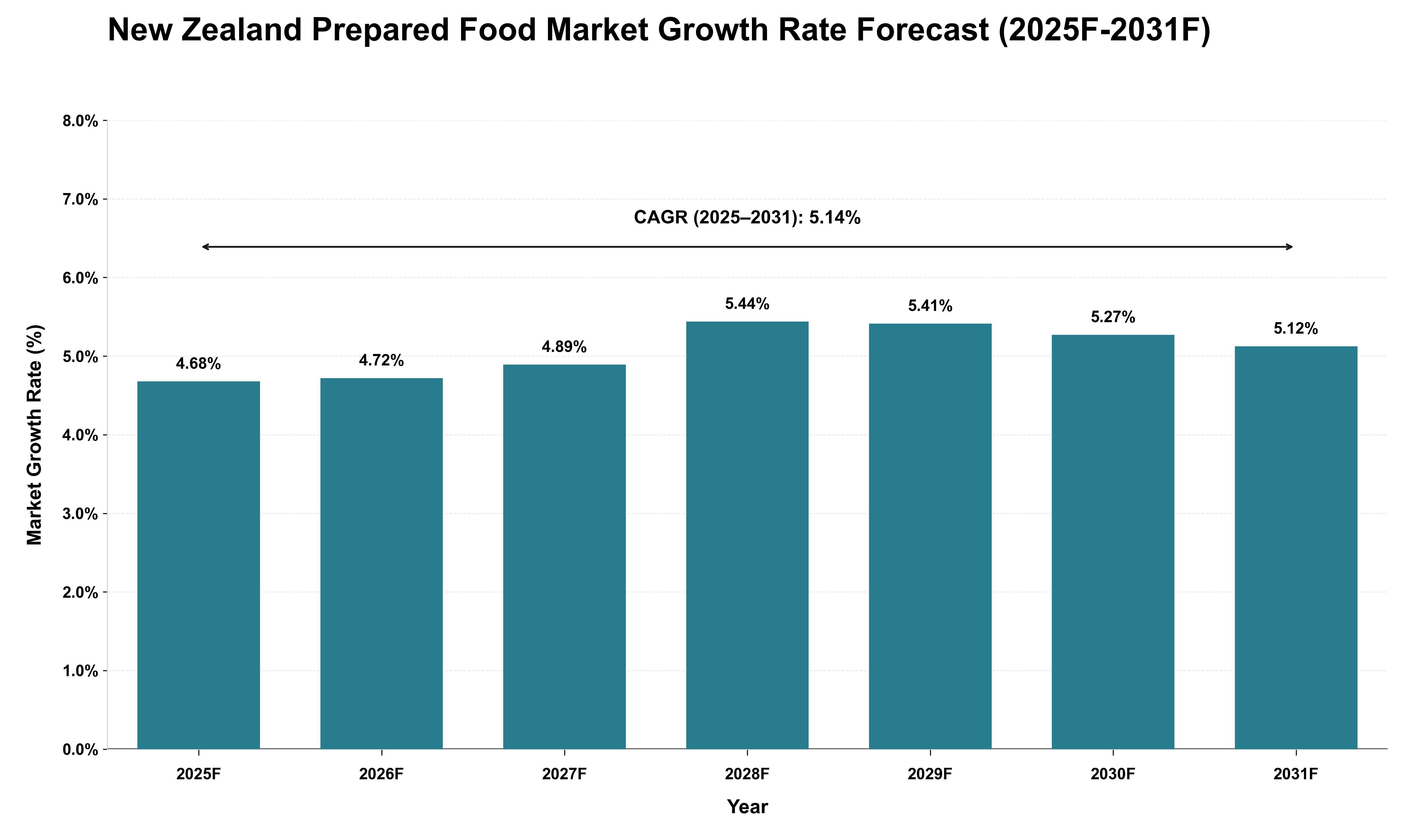
The New Zealand prepared food market is poised for growth driven by several macroeconomic factors, including increasing consumer demand for convenience and health-oriented products. As the forecast CAGR of 5.14% suggests, the annual growth rates will exhibit a gradual increase, peaking in 2028 at 5.44%, before stabilizing slightly thereafter. This trend will be influenced by raw material availability, particularly as global supply chains adapt to fluctuating agricultural outputs and import dependencies on key ingredients. The anticipated rise in food prices due to climate-related disruptions and geopolitical tensions may also impact production costs, thereby affecting pricing strategies within the sector. Additionally, evolving consumer preferences towards sustainable and locally sourced options will likely shape procurement practices, necessitating a responsive approach to raw material sourcing that aligns with these trends throughout the forecast period.
Key Highlights of the Report:
- New Zealand Prepared Food Market Outlook
- Market Size of New Zealand Prepared Food Market,2024
- Forecast of New Zealand Prepared Food Market, 2031
- Historical Data and Forecast of New Zealand Prepared Food Revenues & Volume for the Period 2021-2031
- New Zealand Prepared Food Market Trend Evolution
- New Zealand Prepared Food Market Drivers and Challenges
- New Zealand Prepared Food Price Trends
- New Zealand Prepared Food Porter's Five Forces
- New Zealand Prepared Food Industry Life Cycle
- Historical Data and Forecast of New Zealand Prepared Food Market Revenues & Volume By Type for the Period 2021-2031
- Historical Data and Forecast of New Zealand Prepared Food Market Revenues & Volume By Ready-to-eat for the Period 2021-2031
- Historical Data and Forecast of New Zealand Prepared Food Market Revenues & Volume By Frozen for the Period 2021-2031
- Historical Data and Forecast of New Zealand Prepared Food Market Revenues & Volume By Chilled for the Period 2021-2031
- Historical Data and Forecast of New Zealand Prepared Food Market Revenues & Volume By Shelf-stable for the Period 2021-2031
- Historical Data and Forecast of New Zealand Prepared Food Market Revenues & Volume By Packaging for the Period 2021-2031
- Historical Data and Forecast of New Zealand Prepared Food Market Revenues & Volume By Cans for the Period 2021-2031
- Historical Data and Forecast of New Zealand Prepared Food Market Revenues & Volume By Trays for the Period 2021-2031
- Historical Data and Forecast of New Zealand Prepared Food Market Revenues & Volume By Pouches for the Period 2021-2031
- Historical Data and Forecast of New Zealand Prepared Food Market Revenues & Volume By Boxes for the Period 2021-2031
- Historical Data and Forecast of New Zealand Prepared Food Market Revenues & Volume By Ingredient for the Period 2021-2031
- Historical Data and Forecast of New Zealand Prepared Food Market Revenues & Volume By Frozen Meals for the Period 2021-2031
- Historical Data and Forecast of New Zealand Prepared Food Market Revenues & Volume By Refrigerated Foods for the Period 2021-2031
- Historical Data and Forecast of New Zealand Prepared Food Market Revenues & Volume By Packaged Snacks for the Period 2021-2031
- Historical Data and Forecast of New Zealand Prepared Food Market Revenues & Volume By Prepared Soups for the Period 2021-2031
- Historical Data and Forecast of New Zealand Prepared Food Market Revenues & Volume By Distribution Channel for the Period 2021-2031
- Historical Data and Forecast of New Zealand Prepared Food Market Revenues & Volume By Supermarkets for the Period 2021-2031
- Historical Data and Forecast of New Zealand Prepared Food Market Revenues & Volume By Online for the Period 2021-2031
- Historical Data and Forecast of New Zealand Prepared Food Market Revenues & Volume By Convenience Stores for the Period 2021-2031
- Historical Data and Forecast of New Zealand Prepared Food Market Revenues & Volume By Direct-to-consumer for the Period 2021-2031
- Historical Data and Forecast of New Zealand Prepared Food Market Revenues & Volume By End-use for the Period 2021-2031
- Historical Data and Forecast of New Zealand Prepared Food Market Revenues & Volume By Retail for the Period 2021-2031
- Historical Data and Forecast of New Zealand Prepared Food Market Revenues & Volume By Restaurants for the Period 2021-2031
- Historical Data and Forecast of New Zealand Prepared Food Market Revenues & Volume By Hospitals for the Period 2021-2031
- Historical Data and Forecast of New Zealand Prepared Food Market Revenues & Volume By Catering Services for the Period 2021 - 2029
- New Zealand Prepared Food Import Export Trade Statistics
- Market Opportunity Assessment By Type
- Market Opportunity Assessment By Packaging
- Market Opportunity Assessment By Ingredient
- Market Opportunity Assessment By Distribution Channel
- Market Opportunity Assessment By End-use
- New Zealand Prepared Food Top Companies Market Share
- New Zealand Prepared Food Competitive Benchmarking By Technical and Operational Parameters
- New Zealand Prepared Food Company Profiles
- New Zealand Prepared Food Key Strategic Recommendations






































