New Zealand Propane Market Top 5 Importing Countries and Market Competition (HHI) Analysis
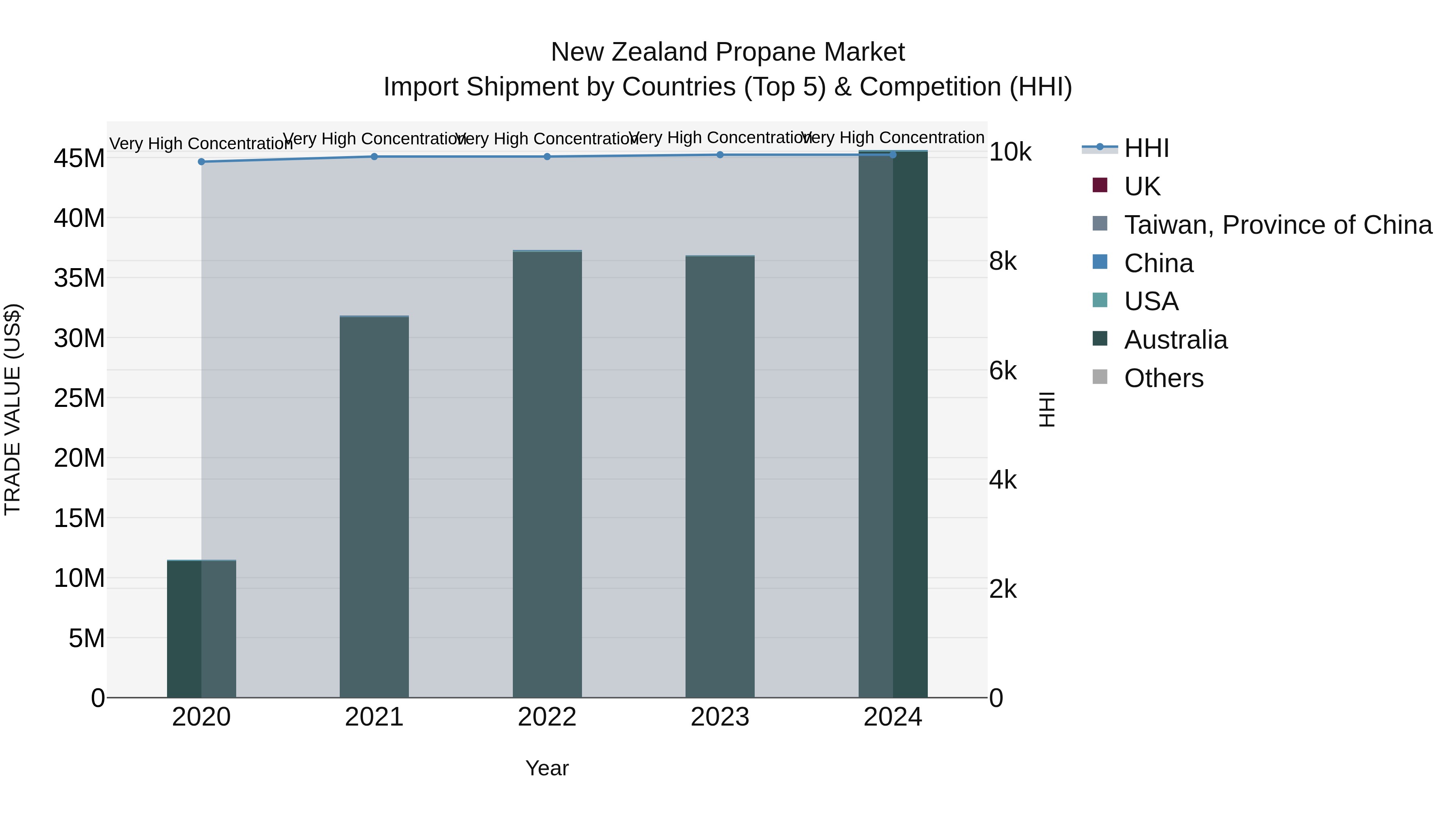
The New Zealand propane import market in 2024 continued to be dominated by key suppliers such as Australia, USA, China, UK, and Italy, indicating a high level of concentration. The impressive compound annual growth rate (CAGR) of 41.2% from 2020 to 2024 highlights a robust expansion in the market. Moreover, the substantial growth rate of 23.76% from 2023 to 2024 suggests a continued upward trajectory in propane import shipments, signaling a positive outlook for the industry in New Zealand.
Propane Market: New Zealand vs Top 5 Major Economies in 2027 (Asia)
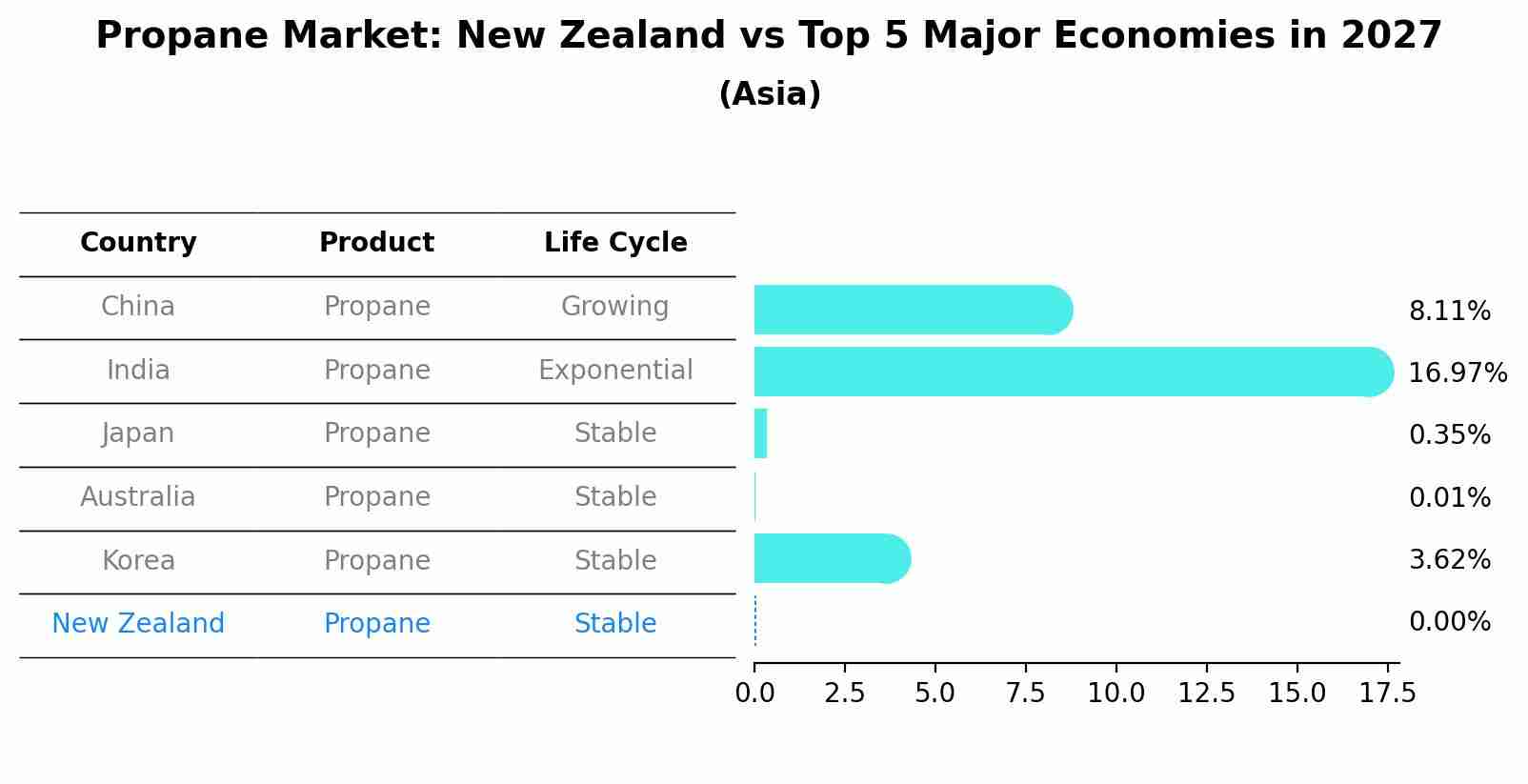
In the Asia region, the Propane market in New Zealand is projected to expand at a stable growth rate of 0.00% by 2027. The largest economy is China, followed by India, Japan, Australia and South Korea.
New Zealand Propane Market Overview
The propane market in New Zealand serves various sectors, including residential, commercial, and industrial, providing a clean and versatile energy source for heating, cooking, and transportation. With a focus on sustainability and energy efficiency, propane suppliers are promoting the benefits of propane as a reliable and environmentally friendly fuel option.
Drivers of the market
The propane market in New Zealand is driven by the increasing demand for clean and efficient energy sources across various applications, including residential heating, cooking, industrial processes, and transportation. Propane is valued for its versatility, reliability, and lower environmental impact compared to other fossil fuels. The growth of the construction industry and the rising demand for portable energy solutions are also contributing to market expansion. Additionally, advancements in propane storage and distribution technologies that enhance safety and efficiency are propelling market growth. The increasing focus on sustainability and the development of renewable propane are further contributing to the demand for propane.
Challenges of the market
In the propanol market, challenges include competition from alternative solvents and regulatory compliance. Propanol is widely used as a solvent in various industries, but concerns about its environmental impact and health risks drive demand for alternative solutions. Developing sustainable production methods and ensuring compliance with safety regulations are key challenges in this market.
Government Policy of the market
Government regulations on energy usage and emissions have influenced the propane market in New Zealand. Policies promoting clean energy sources and diversification of energy supply have contributed to the demand for propane as an alternative fuel.
Key Highlights of the Report:
- New Zealand Propane Market Outlook
- Market Size of New Zealand Propane Market, 2024
- Forecast of New Zealand Propane Market, 2031
- Historical Data and Forecast of New Zealand Propane Revenues & Volume for the Period 2021-2031
- New Zealand Propane Market Trend Evolution
- New Zealand Propane Market Drivers and Challenges
- New Zealand Propane Price Trends
- New Zealand Propane Porter`s Five Forces
- New Zealand Propane Industry Life Cycle
- Historical Data and Forecast of New Zealand Propane Market Revenues & Volume By Applications for the Period 2021-2031
- Historical Data and Forecast of New Zealand Propane Market Revenues & Volume By Industrial for the Period 2021-2031
- Historical Data and Forecast of New Zealand Propane Market Revenues & Volume By Commercial for the Period 2021-2031
- Historical Data and Forecast of New Zealand Propane Market Revenues & Volume By Residential for the Period 2021-2031
- Historical Data and Forecast of New Zealand Propane Market Revenues & Volume By Transportation for the Period 2021-2031
- Historical Data and Forecast of New Zealand Propane Market Revenues & Volume By Agriculture for the Period 2021-2031
- Historical Data and Forecast of New Zealand Propane Market Revenues & Volume By Chemicals and Refineries for the Period 2021-2031
- New Zealand Propane Import Export Trade Statistics
- Market Opportunity Assessment By Applications
- New Zealand Propane Top Companies Market Share
- New Zealand Propane Competitive Benchmarking By Technical and Operational Parameters
- New Zealand Propane Company Profiles
- New Zealand Propane Key Strategic Recommendations






































