New Zealand Tiles Market Growth Rate Analysis (2025 - 2031)
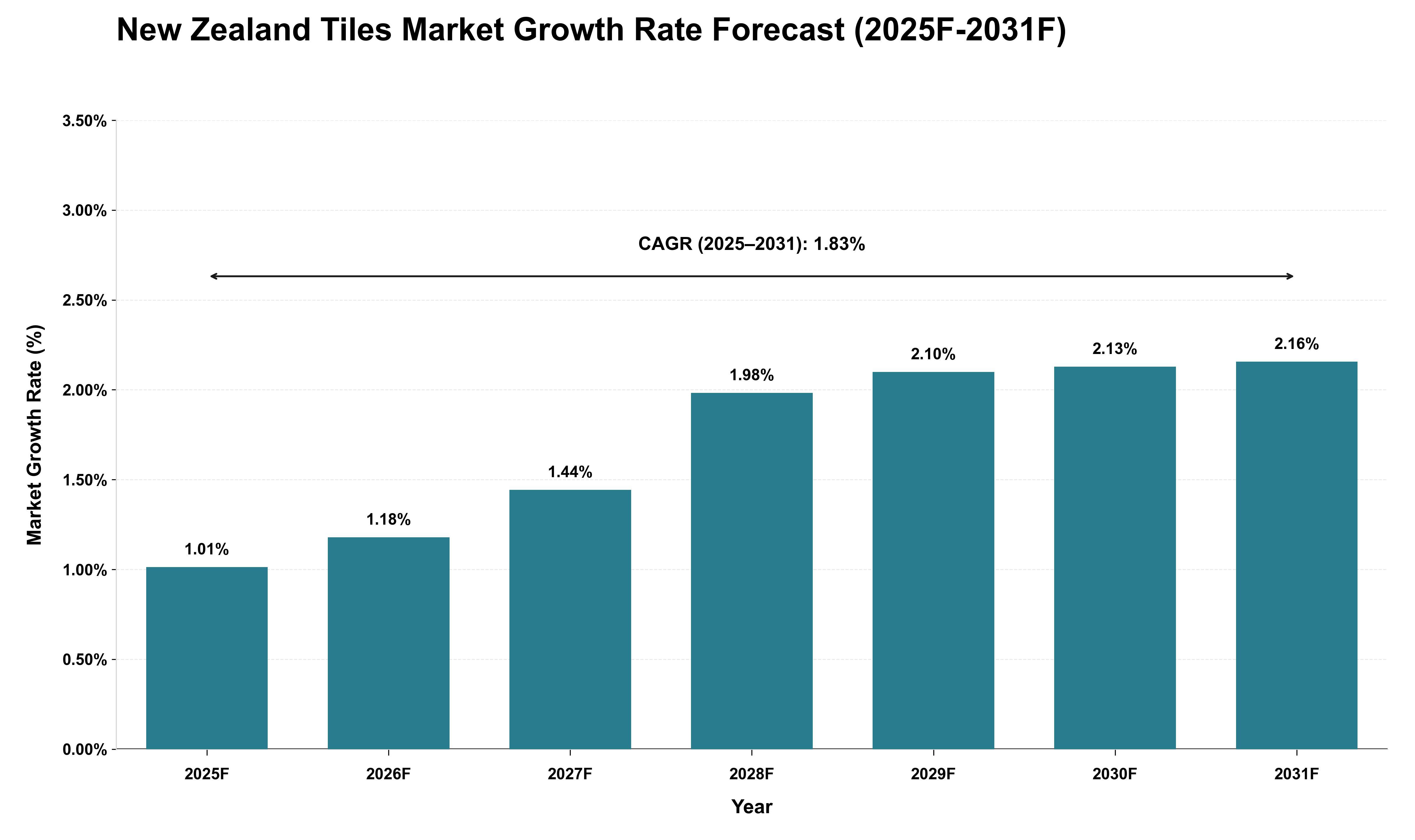
The New Zealand tiles market is projected to experience a compound annual growth rate of 1.83% from 2025 to 2031, reflecting a gradual increase in demand driven by macroeconomic factors such as construction activity and housing market dynamics. The initial growth rate of 1.01% in 2025 will likely be influenced by ongoing recovery from economic disruptions, with subsequent years showing a steady uptick as investment in infrastructure and residential projects gains momentum. By 2031, the growth rate is expected to reach 2.16%, indicating an upward trajectory that aligns with anticipated increases in disposable income and consumer spending on home improvement. Additionally, import dependencies may play a role in shaping price dynamics and availability, potentially impacting local production capabilities. Overall, the cyclical nature of construction-related markets suggests that the tiles sector will benefit from broader economic recovery trends during this forecast period.
Key Highlights of the Report:
- New Zealand Tiles Market Outlook
- Market Size of New Zealand Tiles Market, 2025
- Forecast of New Zealand Tiles Market, 2032
- Historical Data and Forecast of New Zealand Tiles Revenues & Volume for the Period 2022 - 2032
- New Zealand Tiles Market Trend Evolution
- New Zealand Tiles Market Drivers and Challenges
- New Zealand Tiles Price Trends
- New Zealand Tiles Porter's Five Forces
- New Zealand Tiles Industry Life Cycle
- Historical Data and Forecast of New Zealand Tiles Market Revenues & Volume By Type for the Period 2022 - 2032
- Historical Data and Forecast of New Zealand Tiles Market Revenues & Volume By Ceramic and Porcelain Tile for the Period 2022 - 2032
- Historical Data and Forecast of New Zealand Tiles Market Revenues & Volume By Glass Tile for the Period 2022 - 2032
- Historical Data and Forecast of New Zealand Tiles Market Revenues & Volume By Quarry Tile for the Period 2022 - 2032
- Historical Data and Forecast of New Zealand Tiles Market Revenues & Volume By Stone for the Period 2022 - 2032
- Historical Data and Forecast of New Zealand Tiles Market Revenues & Volume By Application for the Period 2022 - 2032
- Historical Data and Forecast of New Zealand Tiles Market Revenues & Volume By Wall for the Period 2022 - 2032
- Historical Data and Forecast of New Zealand Tiles Market Revenues & Volume By Floor for the Period 2022 - 2032
- Historical Data and Forecast of New Zealand Tiles Market Revenues & Volume By Ceiling for the Period 2022 - 2032
- Historical Data and Forecast of New Zealand Tiles Market Revenues & Volume By Roofing for the Period 2022 - 2032
- Historical Data and Forecast of New Zealand Tiles Market Revenues & Volume By Countertop for the Period 2022 - 2032
- New Zealand Tiles Import Export Trade Statistics
- Market Opportunity Assessment By Type
- Market Opportunity Assessment By Application
- New Zealand Tiles Top Companies Market Share
- New Zealand Tiles Competitive Benchmarking By Technical and Operational Parameters
- New Zealand Tiles Company Profiles
- New Zealand Tiles Key Strategic Recommendations






































