New Zealand Vacuum Flask Market Growth Rate Analysis (2025 - 2031)
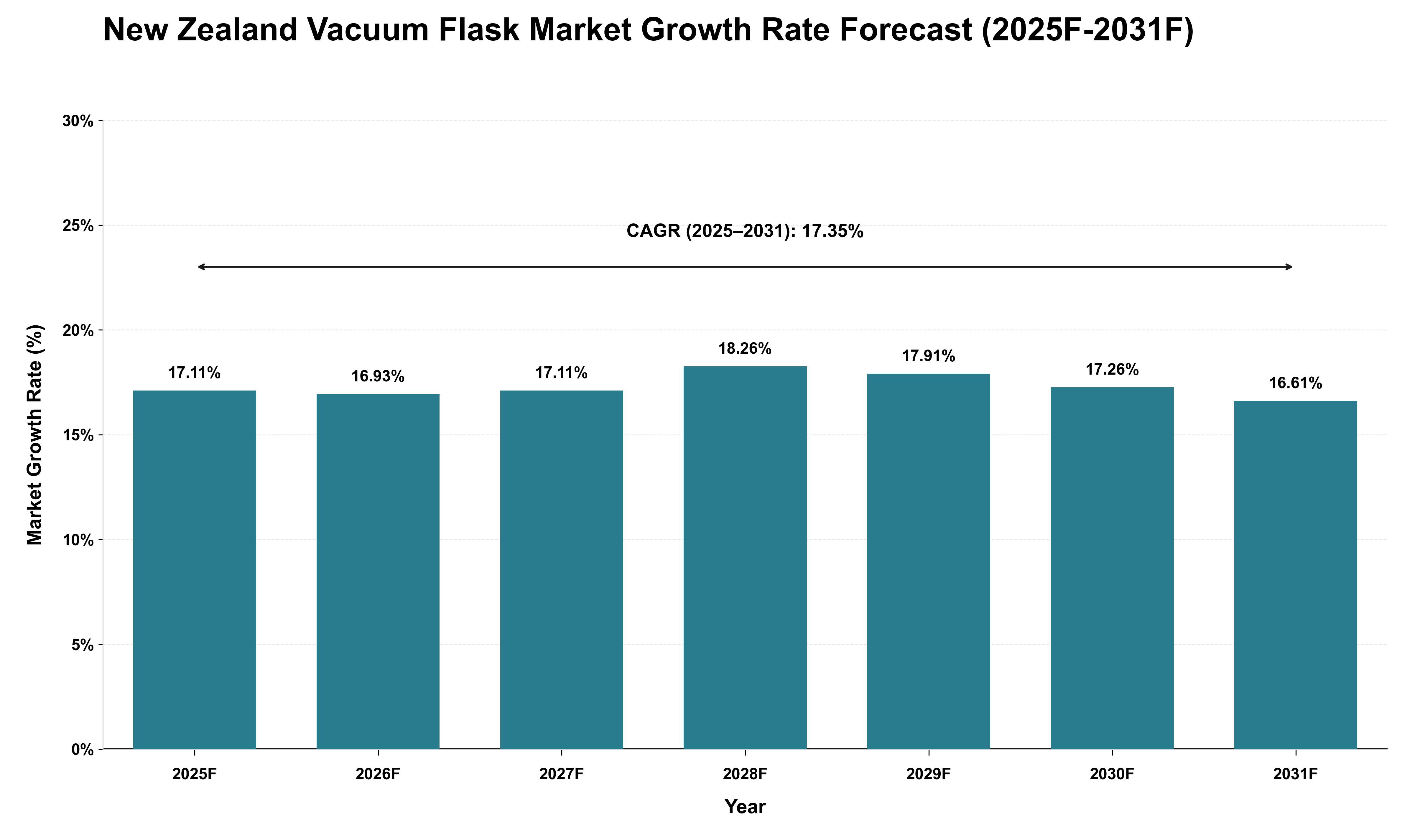
The New Zealand vacuum flask market is poised for robust growth driven by evolving consumer preferences and regulatory frameworks that favor sustainable products. From 2025 onward, the market is expected to experience a compound annual growth rate (CAGR) of 17.35%, reflecting a strong demand for eco-friendly alternatives to single-use containers. Anticipated regulatory measures aimed at reducing plastic waste will likely enhance import dependencies on innovative, high-quality vacuum flasks, as local production may struggle to meet rising standards and consumer expectations. The annual growth rates will fluctuate slightly, with peaks in 2028 at 18.26% and gradual declines thereafter, indicating cyclical trends influenced by seasonal demand variations and potential shifts in trade policies affecting import tariffs. Overall, the interplay of these macroeconomic factors will create a dynamic environment for stakeholders within the vacuum flask sector during this forecast period.
Key Highlights of the Report:
- New Zealand Vacuum flask Market Outlook
- Market Size of New Zealand Vacuum flask Market, 2024
- Forecast of New Zealand Vacuum flask Market, 2031
- Historical Data and Forecast of New Zealand Vacuum flask Revenues & Volume for the Period 2021-2031
- New Zealand Vacuum flask Market Trend Evolution
- New Zealand Vacuum flask Market Drivers and Challenges
- New Zealand Vacuum flask Price Trends
- New Zealand Vacuum flask Porter`s Five Forces
- New Zealand Vacuum flask Industry Life Cycle
- Historical Data and Forecast of New Zealand Vacuum flask Market Revenues & Volume By Material for the Period 2021-2031
- Historical Data and Forecast of New Zealand Vacuum flask Market Revenues & Volume By Plastic for the Period 2021-2031
- Historical Data and Forecast of New Zealand Vacuum flask Market Revenues & Volume By Glass for the Period 2021-2031
- Historical Data and Forecast of New Zealand Vacuum flask Market Revenues & Volume By Stainless Steel for the Period 2021-2031
- Historical Data and Forecast of New Zealand Vacuum flask Market Revenues & Volume By Others for the Period 2021-2031
- Historical Data and Forecast of New Zealand Vacuum flask Market Revenues & Volume By Application for the Period 2021-2031
- Historical Data and Forecast of New Zealand Vacuum flask Market Revenues & Volume By Indoor for the Period 2021-2031
- Historical Data and Forecast of New Zealand Vacuum flask Market Revenues & Volume By Outdoor for the Period 2021-2031
- Historical Data and Forecast of New Zealand Vacuum flask Market Revenues & Volume By Distribution Channel for the Period 2021-2031
- Historical Data and Forecast of New Zealand Vacuum flask Market Revenues & Volume By Online for the Period 2021-2031
- Historical Data and Forecast of New Zealand Vacuum flask Market Revenues & Volume By Offline for the Period 2021-2031
- New Zealand Vacuum flask Import Export Trade Statistics
- Market Opportunity Assessment By Material
- Market Opportunity Assessment By Application
- Market Opportunity Assessment By Distribution Channel
- New Zealand Vacuum flask Top Companies Market Share
- New Zealand Vacuum flask Competitive Benchmarking By Technical and Operational Parameters
- New Zealand Vacuum flask Company Profiles
- New Zealand Vacuum flask Key Strategic Recommendations






































