New Zealand Wool Market Growth Rate Analysis (2025 - 2031)
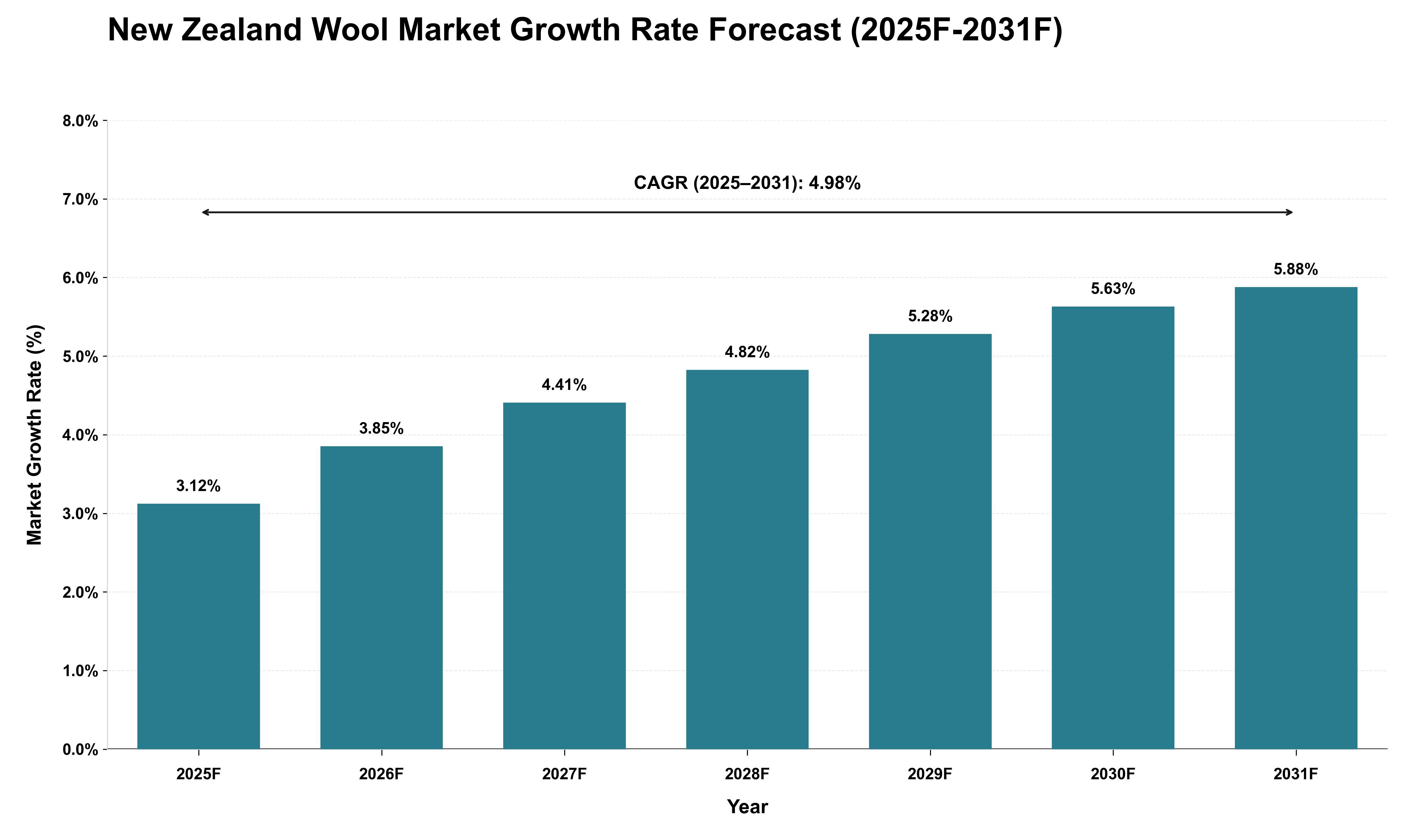
The New Zealand wool market will experience a notable transformation in export and import dynamics from 2025 to 2031, driven by increasing global demand for sustainable textiles and the rising popularity of wool in various applications. As the forecasted CAGR of 4.98% suggests, annual growth rates will progressively accelerate, peaking at 5.88% in 2031. This trend will be underpinned by enhanced trade flows, particularly as key markets such as China and Europe expand their import volumes to meet consumer preferences for eco-friendly materials. Additionally, fluctuations in global supply chains may lead to increased reliance on New Zealand wool imports, further solidifying its position as a critical player in the international textile market. The cyclical nature of fashion trends will also contribute to periodic spikes in demand, reinforcing the upward trajectory of trade flows throughout this period.
Key Highlights of the Report:
- New Zealand Wool Market Outlook
- Market Size of New Zealand Wool Market, 2024
- Forecast of New Zealand Wool Market, 2031
- Historical Data and Forecast of New Zealand Wool Revenues & Volume for the Period 2021-2031
- New Zealand Wool Market Trend Evolution
- New Zealand Wool Market Drivers and Challenges
- New Zealand Wool Price Trends
- New Zealand Wool Porter`s Five Forces
- New Zealand Wool Industry Life Cycle
- Historical Data and Forecast of New Zealand Wool Market Revenues & Volume By Source for the Period 2021-2031
- Historical Data and Forecast of New Zealand Wool Market Revenues & Volume By Merino Wool for the Period 2021-2031
- Historical Data and Forecast of New Zealand Wool Market Revenues & Volume By Peruvian Highland Wool for the Period 2021-2031
- Historical Data and Forecast of New Zealand Wool Market Revenues & Volume By Teeswater Wool for the Period 2021-2031
- Historical Data and Forecast of New Zealand Wool Market Revenues & Volume By Shetland Wool for the Period 2021-2031
- Historical Data and Forecast of New Zealand Wool Market Revenues & Volume By Cashmere Wool for the Period 2021-2031
- Historical Data and Forecast of New Zealand Wool Market Revenues & Volume By others for the Period 2021-2031
- Historical Data and Forecast of New Zealand Wool Market Revenues & Volume By Type for the Period 2021-2031
- Historical Data and Forecast of New Zealand Wool Market Revenues & Volume By Fine wool (? 25 ) for the Period 2021-2031
- Historical Data and Forecast of New Zealand Wool Market Revenues & Volume By Medium wool (25 to 35 ?) for the Period 2021-2031
- Historical Data and Forecast of New Zealand Wool Market Revenues & Volume By Coarse wool (? 35 ) for the Period 2021-2031
- Historical Data and Forecast of New Zealand Wool Market Revenues & Volume By Application for the Period 2021-2031
- Historical Data and Forecast of New Zealand Wool Market Revenues & Volume By Apparels for the Period 2021-2031
- Historical Data and Forecast of New Zealand Wool Market Revenues & Volume By Interior Textiles for the Period 2021-2031
- New Zealand Wool Import Export Trade Statistics
- Market Opportunity Assessment By Source
- Market Opportunity Assessment By Type
- Market Opportunity Assessment By Application
- New Zealand Wool Top Companies Market Share
- New Zealand Wool Competitive Benchmarking By Technical and Operational Parameters
- New Zealand Wool Company Profiles
- New Zealand Wool Key Strategic Recommendations






































