Niger Foam Market Growth Rate Analysis (2025 - 2031)
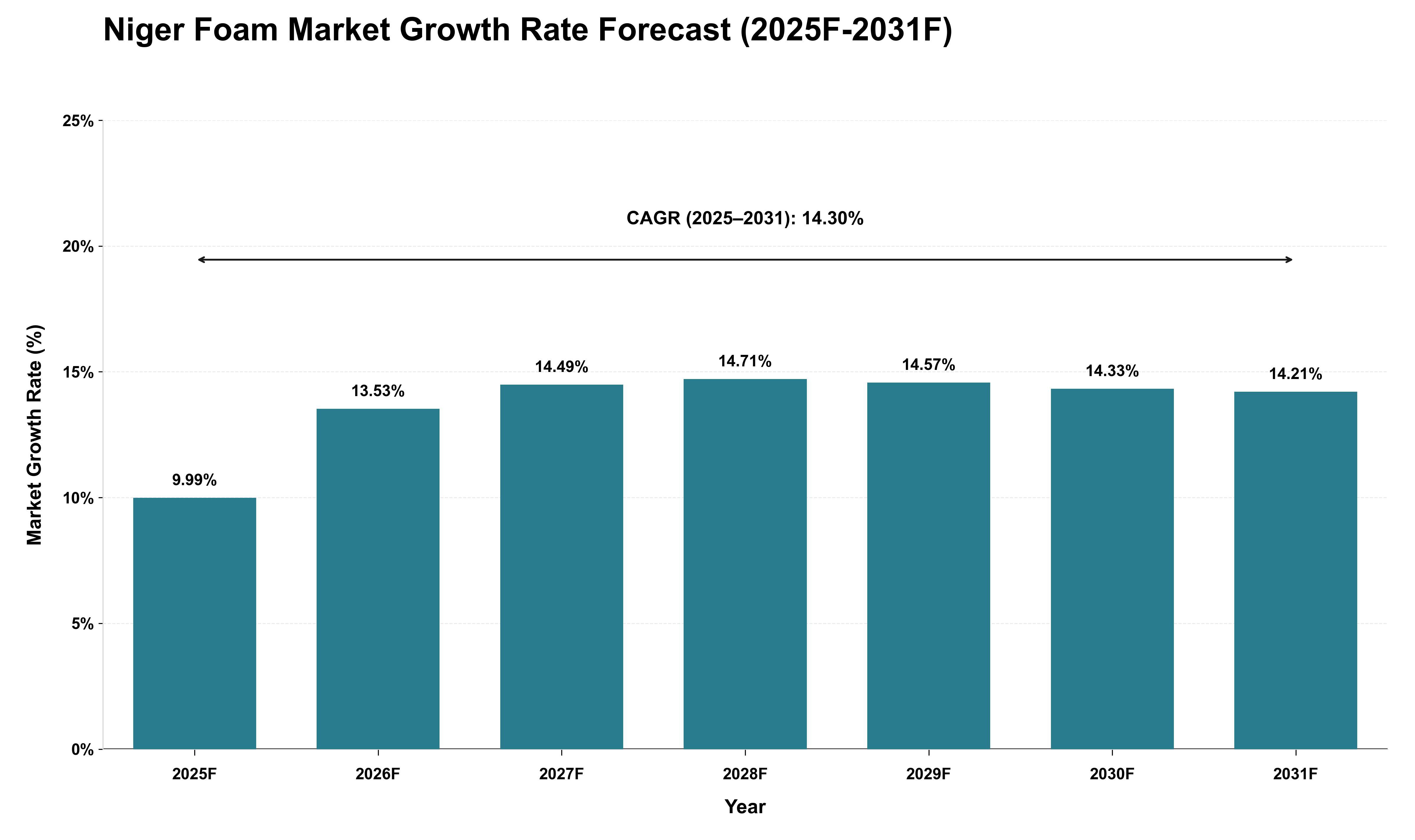
The Niger foam market is poised for robust growth driven by increasing end-use demand across various sectors, particularly in construction and furniture manufacturing. As urbanization accelerates and disposable incomes rise, the anticipated CAGR of 14.30% from 2025 to 2031 reflects a significant shift towards higher-quality foam products that meet evolving consumer preferences for comfort and durability. The annual growth rates, peaking at 14.71% in 2028, suggest a strong response to both domestic production capabilities and import dependencies that may fluctuate due to global supply chain dynamics. Additionally, cyclical trends in housing development and consumer spending will likely bolster demand for foam products, as they are integral to insulation and cushioning applications. This confluence of factors indicates a sustained upward trajectory for the market as it adapts to changing economic conditions and consumer needs over the forecast period.
Key Highlights of the Report:
- Niger Foam Market Outlook
- Market Size of Niger Foam Market, 2024
- Forecast of Niger Foam Market, 2031
- Historical Data and Forecast of Niger Foam Revenues & Volume for the Period 2021-2031
- Niger Foam Market Trend Evolution
- Niger Foam Market Drivers and Challenges
- Niger Foam Price Trends
- Niger Foam Porter`s Five Forces
- Niger Foam Industry Life Cycle
- Historical Data and Forecast of Niger Foam Market Revenues & Volume By Type for the Period 2021-2031
- Historical Data and Forecast of Niger Foam Market Revenues & Volume By Flexible Foam for the Period 2021-2031
- Historical Data and Forecast of Niger Foam Market Revenues & Volume By Rigid Foam for the Period 2021-2031
- Historical Data and Forecast of Niger Foam Market Revenues & Volume By Foam Type for the Period 2021-2031
- Historical Data and Forecast of Niger Foam Market Revenues & Volume By Polyurethane for the Period 2021-2031
- Historical Data and Forecast of Niger Foam Market Revenues & Volume By Polystyrene for the Period 2021-2031
- Historical Data and Forecast of Niger Foam Market Revenues & Volume By Polyolefin for the Period 2021-2031
- Historical Data and Forecast of Niger Foam Market Revenues & Volume By Phenolic for the Period 2021-2031
- Historical Data and Forecast of Niger Foam Market Revenues & Volume By PET for the Period 2021-2031
- Historical Data and Forecast of Niger Foam Market Revenues & Volume By Others for the Period 2021-2031
- Historical Data and Forecast of Niger Foam Market Revenues & Volume By End-use Industry for the Period 2021-2031
- Historical Data and Forecast of Niger Foam Market Revenues & Volume By Building & Construction for the Period 2021-2031
- Historical Data and Forecast of Niger Foam Market Revenues & Volume By Packaging for the Period 2021-2031
- Historical Data and Forecast of Niger Foam Market Revenues & Volume By Automotive for the Period 2021-2031
- Historical Data and Forecast of Niger Foam Market Revenues & Volume By Furniture & Bedding for the Period 2021-2031
- Historical Data and Forecast of Niger Foam Market Revenues & Volume By Footwear, Sports, & Recreational for the Period 2021-2031
- Historical Data and Forecast of Niger Foam Market Revenues & Volume By Others for the Period 2021-2031
- Niger Foam Import Export Trade Statistics
- Market Opportunity Assessment By Type
- Market Opportunity Assessment By Foam Type
- Market Opportunity Assessment By End-use Industry
- Niger Foam Top Companies Market Share
- Niger Foam Competitive Benchmarking By Technical and Operational Parameters
- Niger Foam Company Profiles
- Niger Foam Key Strategic Recommendations






































