Niger Particle Board Market Growth Rate Analysis (2025 - 2031)
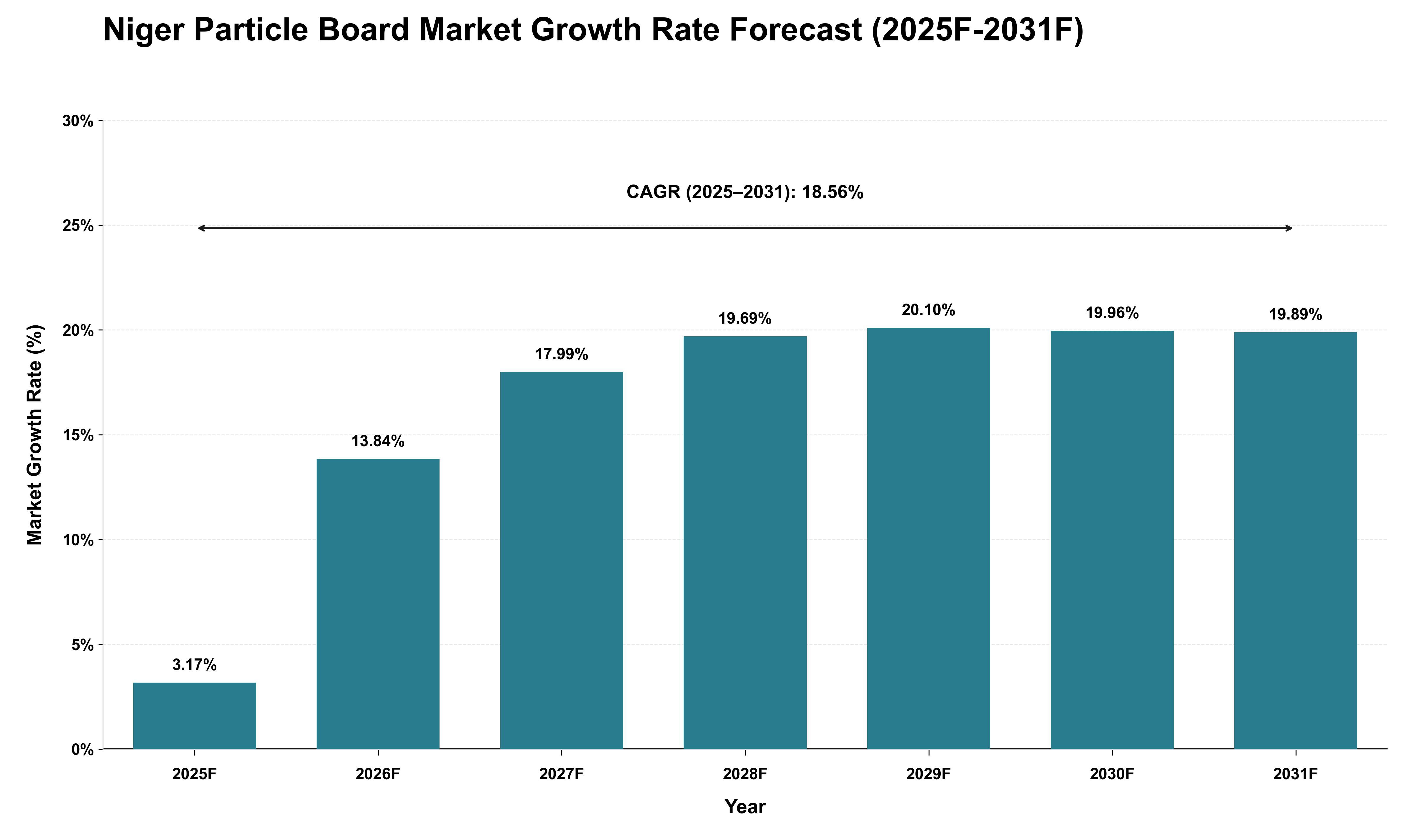
The Niger particle board market will experience significant growth driven by evolving macroeconomic factors, including increased urbanization and rising disposable incomes, which will enhance demand for affordable housing and furniture solutions. The forecasted CAGR of 18.56% reflects a robust trajectory, with annual growth rates peaking at 20.10% in 2029, indicating a strong upward trend as consumer preferences shift towards engineered wood products. This growth will be supported by import dependencies on raw materials, necessitating strategic trade partnerships to ensure supply chain stability amidst global economic fluctuations. As the market evolves, cyclical trends related to construction activity and consumer spending patterns will further influence demand dynamics, positioning the particle board sector as a critical component of Niger's broader economic landscape during this period.
Key Highlights of the Report:
- Niger Particle Board Market Outlook
- Market Size of Niger Particle Board Market, 2024
- Forecast of Niger Particle Board Market, 2031
- Historical Data and Forecast of Niger Particle Board Revenues & Volume for the Period 2021-2031
- Niger Particle Board Market Trend Evolution
- Niger Particle Board Market Drivers and Challenges
- Niger Particle Board Price Trends
- Niger Particle Board Porter`s Five Forces
- Niger Particle Board Industry Life Cycle
- Historical Data and Forecast of Niger Particle Board Market Revenues & Volume By Type for the Period 2021-2031
- Historical Data and Forecast of Niger Particle Board Market Revenues & Volume By Standard Chipboard for the Period 2021-2031
- Historical Data and Forecast of Niger Particle Board Market Revenues & Volume By Melamine Veneered Chipboard for the Period 2021-2031
- Historical Data and Forecast of Niger Particle Board Market Revenues & Volume By Flooring Grade Chipboard for the Period 2021-2031
- Historical Data and Forecast of Niger Particle Board Market Revenues & Volume By Wood Veneered Chipboard for the Period 2021-2031
- Historical Data and Forecast of Niger Particle Board Market Revenues & Volume By Plastic Veneered Chipboard for the Period 2021-2031
- Historical Data and Forecast of Niger Particle Board Market Revenues & Volume By Other for the Period 2021-2031
- Historical Data and Forecast of Niger Particle Board Market Revenues & Volume By Application for the Period 2021-2031
- Historical Data and Forecast of Niger Particle Board Market Revenues & Volume By Construction for the Period 2021-2031
- Historical Data and Forecast of Niger Particle Board Market Revenues & Volume By Furniture for the Period 2021-2031
- Historical Data and Forecast of Niger Particle Board Market Revenues & Volume By Infrastructure for the Period 2021-2031
- Historical Data and Forecast of Niger Particle Board Market Revenues & Volume By Other for the Period 2021-2031
- Niger Particle Board Import Export Trade Statistics
- Market Opportunity Assessment By Type
- Market Opportunity Assessment By Application
- Niger Particle Board Top Companies Market Share
- Niger Particle Board Competitive Benchmarking By Technical and Operational Parameters
- Niger Particle Board Company Profiles
- Niger Particle Board Key Strategic Recommendations






































