Nigeria Axles Market Top 5 Importing Countries and Market Competition (HHI) Analysis
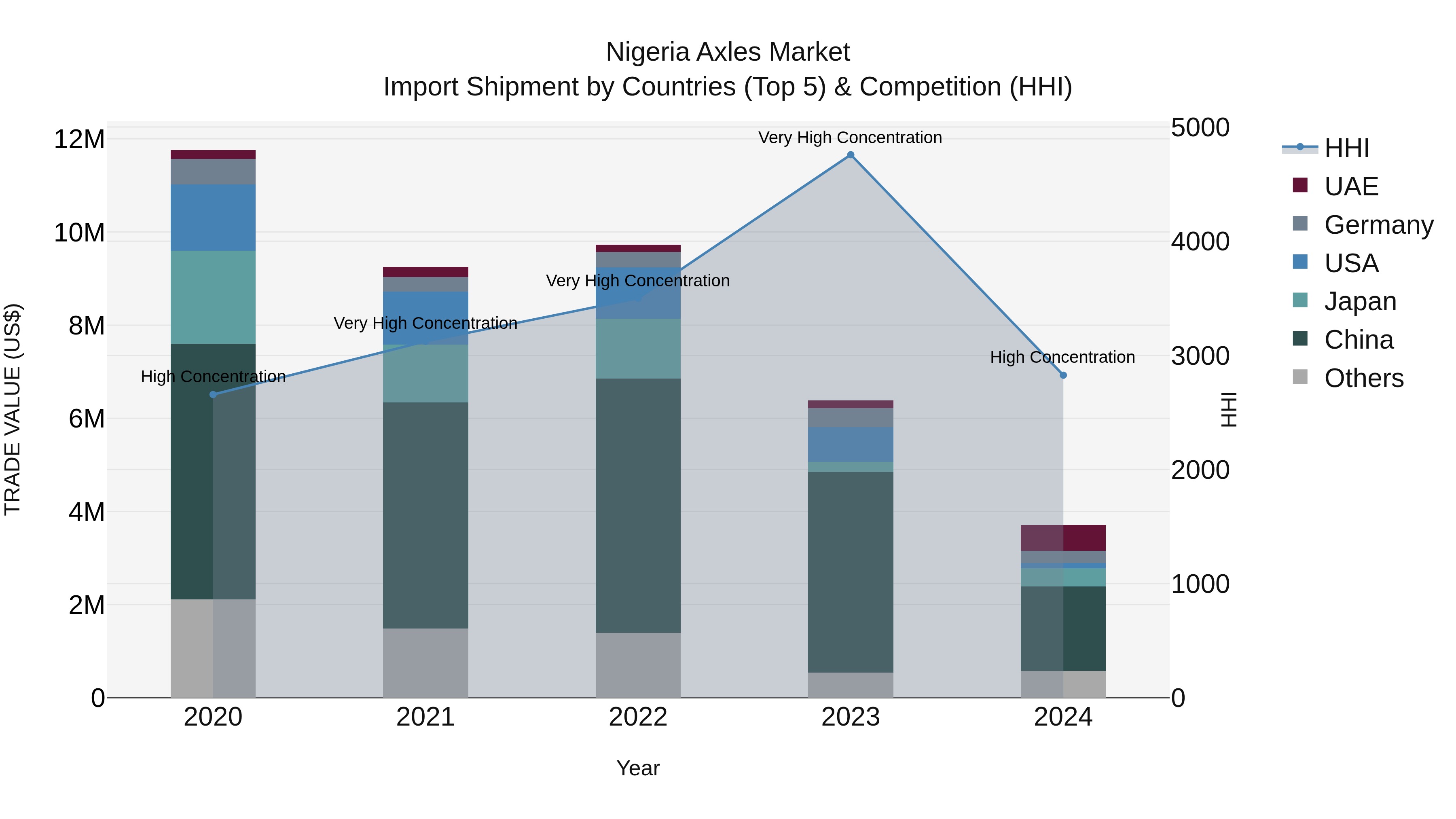
The Nigeria axles import market continues to see a high concentration of shipments from top exporting countries such as China, UAE, Japan, Germany, and Spain. Despite a significant decline in the Compound Annual Growth Rate (CAGR) from 2020 to 2024 at -25.04%, the market experienced an even steeper decrease in growth rate from 2023 to 2024 at -41.84%. This indicates a challenging landscape for importers and suggests the need for strategic adjustments and market diversification to navigate the changing dynamics of the Nigeria axles import market.
Nigeria Axles Market Overview
The Nigeria axles market is witnessing steady growth primarily driven by the expanding commercial vehicle sector and increasing demand for transportation services. The market is characterized by a mix of domestic and international axle manufacturers offering a range of products to cater to the diverse needs of the automotive industry. With the government`s focus on infrastructure development and initiatives to boost the manufacturing sector, the demand for axles is expected to rise further. Key players in the market are focusing on product innovation and strategic partnerships to enhance their market presence. Additionally, factors such as rising disposable income, urbanization, and the growth of e-commerce are also contributing to the increasing demand for axles in Nigeria.
Nigeria Axles Market Trends and Opportunities
The Nigeria Axles Market is experiencing growth driven by increasing demand for commercial vehicles, such as trucks and buses, due to infrastructure development and economic growth in the country. The market is witnessing a shift towards technologically advanced axles that offer improved performance, fuel efficiency, and durability. Key opportunities lie in the development of electric and hybrid axles to cater to the growing trend towards sustainable transportation solutions. Additionally, partnerships and collaborations between international axle manufacturers and local companies present opportunities for technology transfer and knowledge sharing, enhancing the overall competitiveness of the market. With the government`s focus on improving the transportation sector, the Nigeria Axles Market is poised for further expansion, particularly in the aftermarket segment for replacement and maintenance services.
Nigeria Axles Market Challenges
The Nigeria axles market faces several challenges, including inadequate infrastructure for transportation, which hinders the demand for axles in the country. Additionally, the presence of counterfeit products in the market poses a significant threat to the sales of genuine axle products. Limited access to financing options for both consumers and manufacturers also inhibits growth in the market. Furthermore, the lack of skilled labor and technical expertise for axle manufacturing and maintenance further complicates the industry landscape. Addressing these challenges will be crucial for the Nigeria axles market to realize its full potential and meet the growing demand for reliable and high-quality axle products in the country.
Nigeria Axles Market Drivers
The Nigeria Axles Market is primarily driven by the growth in the automotive industry, increasing demand for commercial vehicles, and infrastructure development projects in the country. The rising population and urbanization are leading to a higher need for transportation and logistics services, resulting in a surge in the demand for vehicles equipped with axles. Additionally, government initiatives to improve road connectivity and enhance the transportation sector are fueling the market growth. Technological advancements in axle manufacturing, such as lightweight and durable materials, are also influencing the market positively. Overall, factors like economic development, industrial expansion, and a focus on improving transportation infrastructure are key drivers propelling the growth of the Nigeria Axles Market.
Nigeria Axles Market Government Policy
The government policies related to the Nigeria Axles Market are primarily focused on supporting local manufacturing and promoting economic growth in the automotive sector. The Nigerian government has implemented import restrictions and tariffs on axles to encourage domestic production and reduce reliance on foreign imports. Additionally, there are initiatives in place to provide incentives and support for local axle manufacturers, such as tax breaks, subsidies, and technical assistance programs. The government also emphasizes the importance of quality standards and compliance with regulations to ensure the safety and reliability of axles produced in Nigeria. Overall, the government policies aim to boost the competitiveness of the local axles market, create job opportunities, and contribute to the country`s industrial development.
Nigeria Axles Market Future Outlook
The Nigeria axles market is expected to witness steady growth in the coming years, driven by the expansion of the automotive sector, infrastructure development projects, and the increasing demand for commercial vehicles across the country. The implementation of government policies aimed at boosting local manufacturing and industrial growth is also anticipated to positively impact the market. Additionally, technological advancements in axle manufacturing processes, such as the introduction of lightweight and high-strength materials, are likely to further fuel market growth. However, challenges such as fluctuating raw material prices and economic uncertainties may pose some constraints. Overall, the Nigeria axles market is poised for growth, with opportunities for market players to capitalize on the increasing demand for efficient and durable axle solutions in the transportation and logistics industries.
Key Highlights of the Report:
- Nigeria Axles Market Outlook
- Market Size of Nigeria Axles Market, 2024
- Forecast of Nigeria Axles Market, 2031
- Historical Data and Forecast of Nigeria Axles Revenues & Volume for the Period 2021- 2031
- Nigeria Axles Market Trend Evolution
- Nigeria Axles Market Drivers and Challenges
- Nigeria Axles Price Trends
- Nigeria Axles Porter's Five Forces
- Nigeria Axles Industry Life Cycle
- Historical Data and Forecast of Nigeria Axles Market Revenues & Volume By Type for the Period 2021- 2031
- Historical Data and Forecast of Nigeria Axles Market Revenues & Volume By Live Axle for the Period 2021- 2031
- Historical Data and Forecast of Nigeria Axles Market Revenues & Volume By Dead Axle for the Period 2021- 2031
- Historical Data and Forecast of Nigeria Axles Market Revenues & Volume By Tandem Axle for the Period 2021- 2031
- Historical Data and Forecast of Nigeria Axles Market Revenues & Volume By Application for the Period 2021- 2031
- Historical Data and Forecast of Nigeria Axles Market Revenues & Volume By Passenger Vehicles for the Period 2021- 2031
- Historical Data and Forecast of Nigeria Axles Market Revenues & Volume By Light Duty Vehicles for the Period 2021- 2031
- Historical Data and Forecast of Nigeria Axles Market Revenues & Volume By Heavy Duty Vehicles for the Period 2021- 2031
- Nigeria Axles Import Export Trade Statistics
- Market Opportunity Assessment By Type
- Market Opportunity Assessment By Application
- Nigeria Axles Top Companies Market Share
- Nigeria Axles Competitive Benchmarking By Technical and Operational Parameters
- Nigeria Axles Company Profiles
- Nigeria Axles Key Strategic Recommendations






































