Nigeria Cake Mixes Market Top 5 Importing Countries and Market Competition (HHI) Analysis
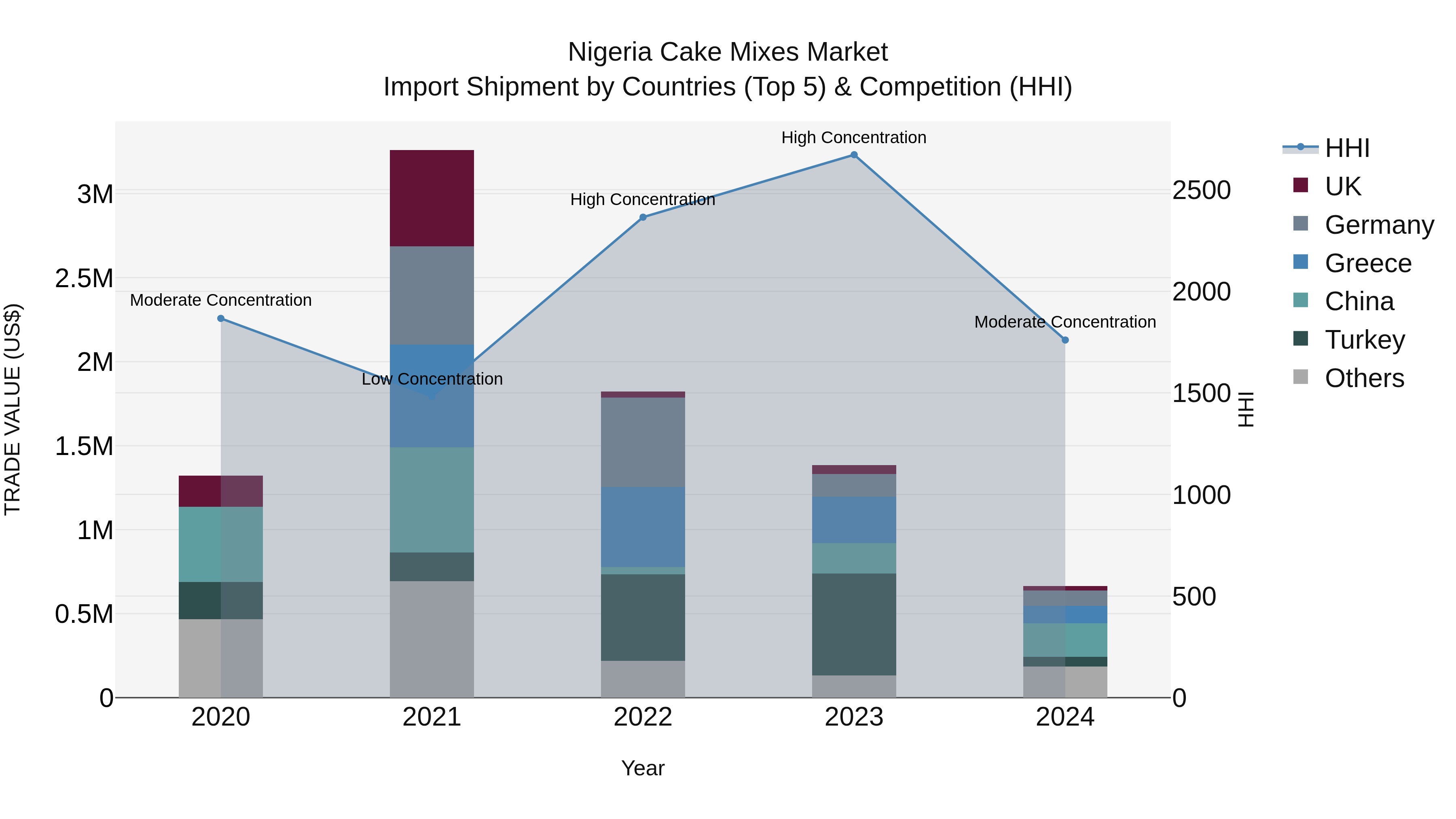
In 2024, Nigeria witnessed a shift in cake mix import sources, with China, Metropolitan France, Greece, Germany, and Turkey emerging as the top exporters. The market experienced a notable decrease in concentration levels from 2023 to 2024, transitioning from high to moderate concentration. The industry has seen a concerning Compound Annual Growth Rate (CAGR) of -15.79% from 2020 to 2024, with a steep decline in growth rate from 2023 to 2024 at -51.97%. These fluctuations indicate a dynamic landscape for cake mix imports in Nigeria, with changing patterns and challenges impacting market performance.
Nigeria Cake Mixes Market Overview
The Nigeria cake mixes market is experiencing steady growth driven by factors such as increasing disposable income, changing consumer preferences, and the rising trend of home baking. The market is characterized by a wide range of cake mix products available in various flavors, sizes, and packaging formats to cater to diverse consumer needs. Key players in the market are focusing on product innovation, marketing strategies, and distribution channels to gain a competitive edge. The market is also witnessing a shift towards premium and organic cake mixes as consumers become more health-conscious. Additionally, the growing popularity of baking as a hobby and the influence of social media platforms are driving the demand for cake mixes in Nigeria. Overall, the Nigeria cake mixes market is poised for further growth and opportunities for both local and international brands.
Nigeria Cake Mixes Market Trends
The Nigeria Cake Mixes Market is experiencing a surge in demand driven by the growing popularity of home baking and increasing interest in convenience products. Consumers are seeking convenient solutions for baking at home, leading to a rise in sales of cake mixes that offer ease of preparation and consistent results. With changing lifestyles and a preference for homemade treats, there is a shift towards convenient baking options like cake mixes. Additionally, the market is witnessing a trend towards premium and specialized cake mixes offering unique flavors and ingredients to cater to diverse consumer preferences. Manufacturers are focusing on product innovation and packaging to attract consumers looking for high-quality and convenient baking solutions in the evolving Nigeria Cake Mixes Market.
Nigeria Cake Mixes Market Challenges
In the Nigeria Cake Mixes Market, some of the key challenges include limited consumer awareness and acceptance of cake mixes as a convenient baking solution, preference for traditional homemade cakes, and the availability of affordable raw ingredients which can make homemade cakes a more cost-effective option for consumers. Additionally, issues such as inconsistent quality of cake mixes, limited distribution channels in certain regions, and the need for specialized baking equipment and skills to use cake mixes effectively also pose challenges for market growth. Overcoming these obstacles will require targeted marketing efforts to educate consumers, improving product quality and variety, expanding distribution networks, and offering competitive pricing to make cake mixes more appealing and accessible to a wider audience in Nigeria.
Nigeria Cake Mixes Market Investment Opportunities
The Nigeria Cake Mixes Market presents promising investment opportunities due to the growing consumer interest in convenient baking solutions and the increasing adoption of Western baking trends. With the rising disposable income and changing lifestyles driving the demand for ready-to-use baking mixes, investors can capitalize on this trend by entering the market with innovative products catering to local tastes and preferences. Additionally, partnerships with retailers and bakeries, as well as online sales channels, can help reach a wider customer base. Investing in research and development to create unique flavor profiles and packaging designs tailored to Nigerian consumers can also differentiate a brand in this competitive market. Overall, the Nigeria Cake Mixes Market offers potential for growth and profitability for investors willing to tap into the evolving baking industry in the country.
Nigeria Cake Mixes Market Government Policy
In Nigeria, government policies related to the cake mixes market primarily focus on food safety and quality standards, import regulations, and promoting local production. The National Agency for Food and Drug Administration and Control (NAFDAC) oversees the registration and approval of cake mix products to ensure they meet safety and quality requirements. Import regulations such as tariffs and quotas are in place to protect local manufacturers and promote domestic production. Additionally, the government encourages the growth of the baking industry through various support programs and incentives for local producers. Overall, the government`s policies aim to safeguard consumer health, support local businesses, and promote sustainable growth in the cake mixes market in Nigeria.
Nigeria Cake Mixes Market Future Outlook
The Nigeria Cake Mixes Market is poised for growth in the coming years due to factors such as increasing urbanization, rising disposable incomes, and a growing interest in baking and confectionery products. The market is expected to witness a surge in demand for convenient baking solutions, especially among busy urban consumers looking for quick and easy ways to bake cakes at home. Additionally, the influence of Western baking trends and the popularity of celebrating special occasions with baked goods are expected to further drive market growth. Manufacturers are likely to introduce new product variants, flavors, and packaging innovations to cater to evolving consumer preferences and drive market expansion. Overall, the Nigeria Cake Mixes Market presents significant opportunities for growth and innovation in the foreseeable future.
Key Highlights of the Report:
- Nigeria Cake Mixes Market Outlook
- Market Size of Nigeria Cake Mixes Market, 2021
- Forecast of Nigeria Cake Mixes Market, 2031
- Historical Data and Forecast of Nigeria Cake Mixes Revenues & Volume for the Period 2021 - 2031
- Nigeria Cake Mixes Market Trend Evolution
- Nigeria Cake Mixes Market Drivers and Challenges
- Nigeria Cake Mixes Price Trends
- Nigeria Cake Mixes Porter's Five Forces
- Nigeria Cake Mixes Industry Life Cycle
- Historical Data and Forecast of Nigeria Cake Mixes Market Revenues & Volume By Flavor for the Period 2021 - 2031
- Historical Data and Forecast of Nigeria Cake Mixes Market Revenues & Volume By Chocolate for the Period 2021 - 2031
- Historical Data and Forecast of Nigeria Cake Mixes Market Revenues & Volume By Vanilla for the Period 2021 - 2031
- Historical Data and Forecast of Nigeria Cake Mixes Market Revenues & Volume By Fruit for the Period 2021 - 2031
- Historical Data and Forecast of Nigeria Cake Mixes Market Revenues & Volume By Others for the Period 2021 - 2031
- Historical Data and Forecast of Nigeria Cake Mixes Market Revenues & Volume By Distribution Channel for the Period 2021 - 2031
- Historical Data and Forecast of Nigeria Cake Mixes Market Revenues & Volume By Online for the Period 2021 - 2031
- Historical Data and Forecast of Nigeria Cake Mixes Market Revenues & Volume By Offline for the Period 2021 - 2031
- Nigeria Cake Mixes Import Export Trade Statistics
- Market Opportunity Assessment By Flavor
- Market Opportunity Assessment By Distribution Channel
- Nigeria Cake Mixes Top Companies Market Share
- Nigeria Cake Mixes Competitive Benchmarking By Technical and Operational Parameters
- Nigeria Cake Mixes Company Profiles
- Nigeria Cake Mixes Key Strategic Recommendations






































