Nigeria Digital Signature Market Size & Growth Rate (2026-2032)
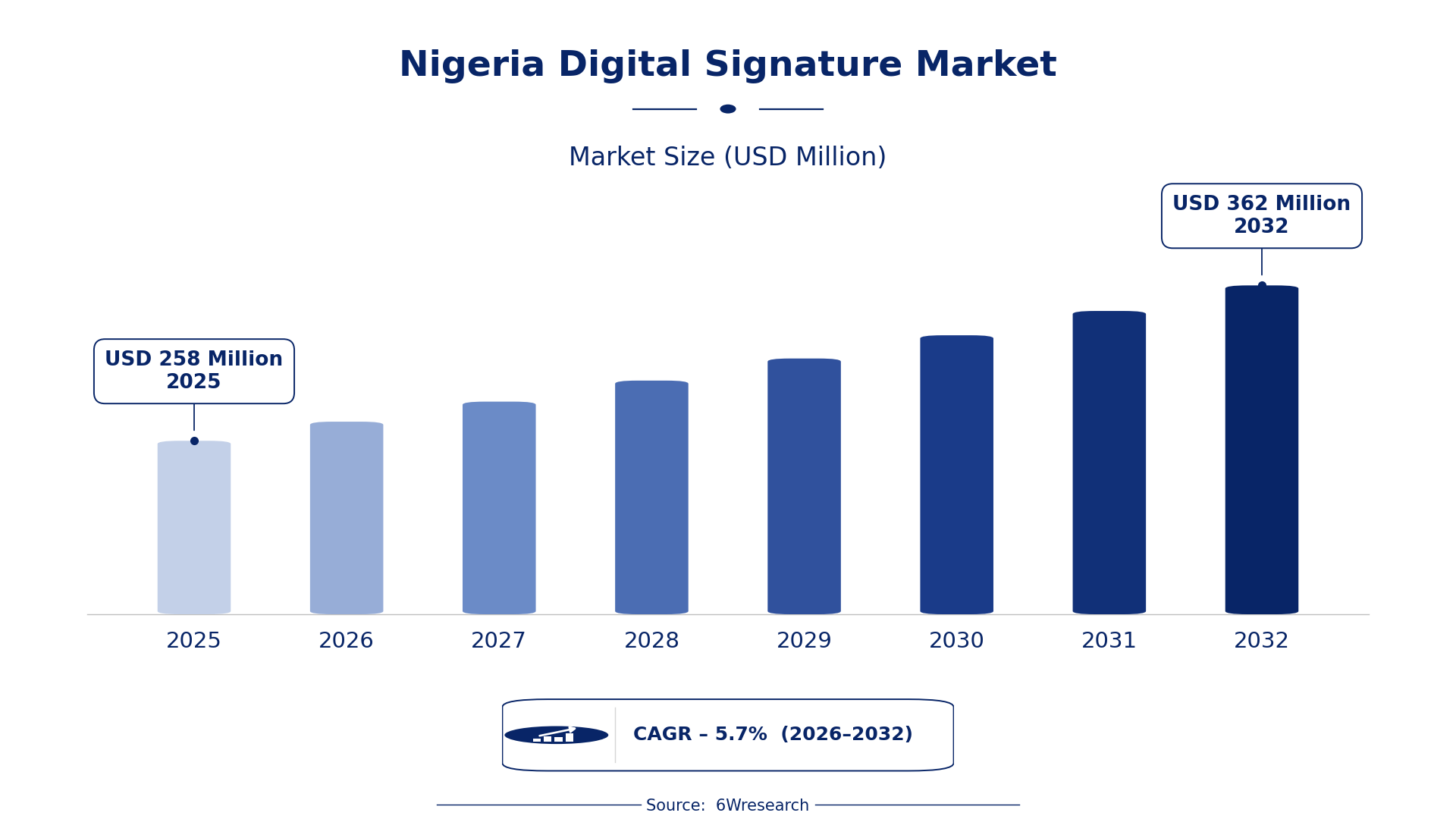
The Nigeria Digital Signature Market was estimated at USD 258 Million in 2025 and is projected to reach USD 362 Million by 2032, growing at a CAGR of 5.7% from 2026 to 2032.
Nigeria Digital Signature Market Synopsis
The Nigerian digital signature market has gained momentum recently, propelled by a heightened demand for secure electronic transactions. As the nation embraces digital transformation, the expectation is for even greater integration of digital signatures across various sectors, including finance, legal, and government services.
Looking ahead, the market is set for sustained growth driven by ongoing regulatory support and increasing awareness of the advantages digital signatures offer. However, challenges like regulatory inconsistency and trust issues will need addressing for the market to fully realize its potential.
Nigeria Digital Signature Market Year-wise Growth Rate and Key Drivers
This graph illustrates the annual growth rates of the Nigeria Digital Signature Market from 2021 to 2032, highlighting a steady upward trajectory and projected expansion over the forecast period.
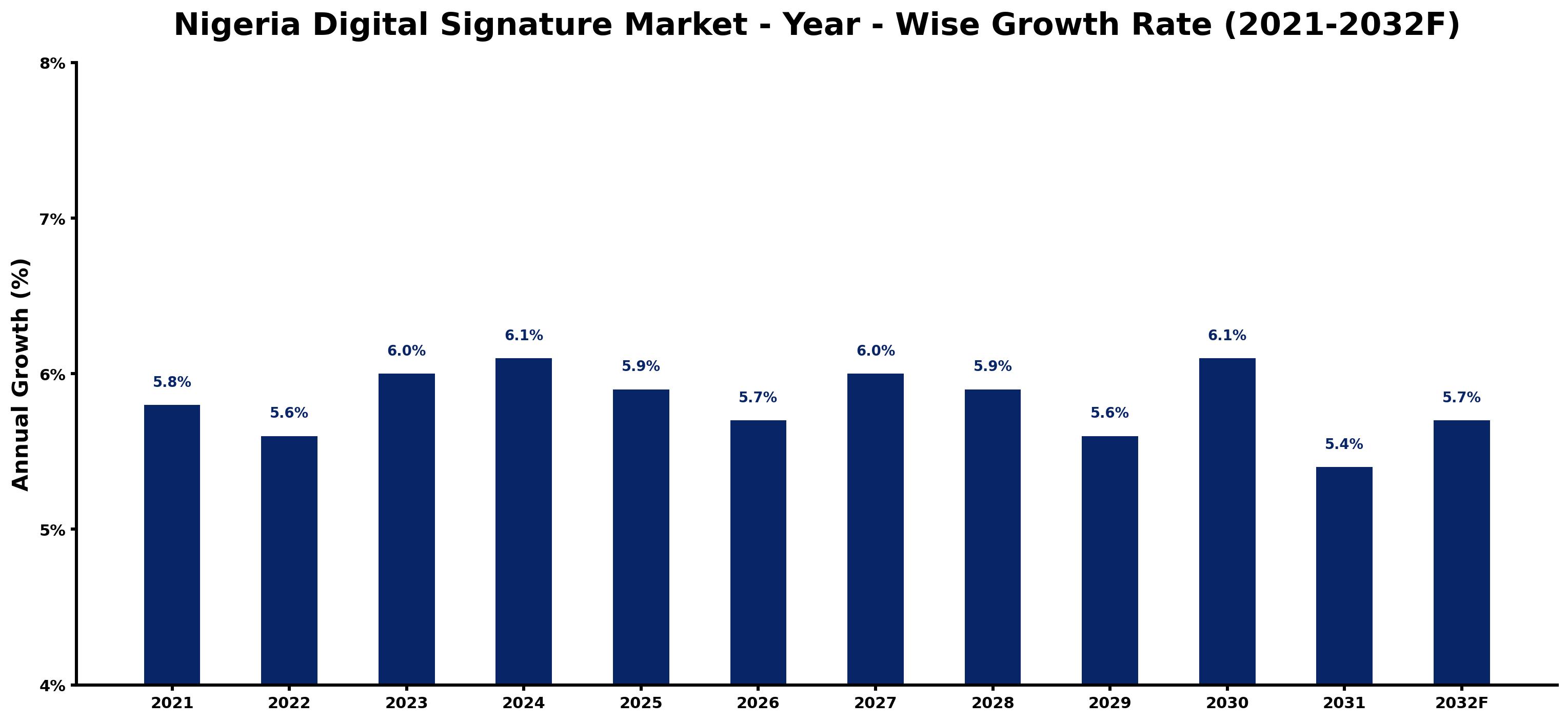
The table below presents the year‑wise growth rates along with the key drivers influencing the market
| Year | Growth Rate | Major Drivers |
| 2021 | 5.8% | National Identity Management Commission promotes e-signature adoption. |
| 2022 | 5.6% | Increased remote transactions boost demand for secure signatures. |
| 2023 | 6.0% | Cybersecurity policy mandates digital signatures for compliance. |
| 2024 | 6.1% | NITDA implements regulations enhancing digital signature trust. |
| 2025 | 5.9% | Growing digital financial services drive e-signature utilization. |
| 2026 | 5.7% | Increased internet penetration facilitates online document signing. |
| 2027 | 6.0% | Awareness campaigns on digital signatures enhance user confidence. |
| 2028 | 5.9% | Legal framework supports electronic contracts and signatures. |
| 2029 | 5.6% | Increase in online business transactions fuels digital signature need. |
| 2030 | 6.1% | Mobile commerce growth accelerates demand for e-signature solutions. |
| 2031 | 5.4% | Government initiatives promote digital document management and security. |
| 2032 | 5.7% | Rising e-commerce activities require robust digital signature tools. |
Note: Market size estimations and growth projections presented in this report are based on 6Wresearch's proprietary forecasting methodology, utilizing the latest available industry data, government publications, and primary research inputs.
Nigeria Digital Signature Market Key Takeaways
Below are some of the specific key takeaways from the market, including:
- The market is expanding due to the increasing demand for secure and efficient digital transactions.
- Government support and regulatory frameworks are enhancing the adoption of digital signatures.
- Challenges such as legal uncertainties and lack of awareness still hinder market penetration.
- The growing trend of e-commerce is driving more businesses to adopt digital signatures.
- High implementation costs are limiting access for small and medium-sized enterprises.
Evaluation of Restraints in Nigeria Digital Signature Market
Several restraints affect the growth trajectory of the digital signature market in Nigeria. Regulatory inconsistencies create confusion, as businesses often find it challenging to navigate the legal landscape. Additionally, a notable lack of awareness among potential users contributes to skepticism and hesitation regarding digital signature solutions. This is compounded by the often prohibitive costs of implementing secure digital systems, especially for smaller enterprises, which limits the overall market reach.
Nigeria Digital Signature Market Trends
Several trends are currently shaping the Nigeria digital signature market. A significant increase in digital documentation and online transactions is evident across industries, leading to heightened demand for secure authentication methods. Additionally, as government initiatives promote paperless transactions and digital frameworks, businesses are increasingly adopting digital signatures as part of their operations. This aligns with a broader global shift towards digital solutions, making security and compliance paramount considerations.
Nigeria Digital Signature Market Opportunities
Opportunities are abundant in the Nigeria digital signature market, particularly for technology providers and investors. The push for digital transformation across various sectors presents a ripe environment for innovative solutions that facilitate secure transactions. Additionally, as awareness grows, there is an opportunity to educate businesses and consumers about the legal validity and advantages of using digital signatures, which could catalyze further market expansion.
Government Initiatives in the Nigeria Digital Signature Market
Government policy in Nigeria is crucial in promoting the adoption of digital signatures, with various initiatives designed to enhance cybersecurity and facilitate digital transactions. Legislative frameworks like the Nigeria Data Protection Regulation (NDPR) lay the groundwork for secure digital communications, while ongoing efforts aim to boost public trust and promote paperless initiatives in both public and private sectors.
- A recent initiative launched in 2023 focuses on enhancing cybersecurity measures to support digital signature usage across government services.
- Current efforts are underway to implement a national digital infrastructure upgrade programme aimed at improving secure access to digital platforms.
- A planned public-private partnership expected to roll out by 2026 will facilitate broader adoption of digital signatures among small businesses.
- New regulations being introduced in 2025 will mandate the use of digital signatures for official documentation in government transactions.
Future Insights of the Nigeria Digital Signature Market
From 2026 to 2032, the Nigeria digital signature market is anticipated to flourish, driven by increasing digitalization efforts across sectors. As businesses and government entities continue to prioritize secure electronic communication, the integration of digital signatures into workflows will become more commonplace. Investment in education and infrastructure will be essential in overcoming existing barriers, leading to a market that not only grows in size but also enhances the efficiency and security of digital transactions.
Nigeria Digital Signature Market Latest Developments
In the past year, the Nigeria digital signature market has seen a flurry of activity, indicating a robust push toward digital transformation. Organizations are increasingly investing in digital authentication technologies, reflecting a growing recognition of their importance in secure transactions. This momentum is being sustained through both government initiatives and private sector innovations aimed at enhancing digital solutions.
- In early 2024, a major technology vendor unveiled a new digital signature solution designed specifically for the Nigerian market, focusing on ease of use and security.
- An ongoing partnership between a leading regional operator and government agencies aims to enhance public sector digital service delivery through secure digital signatures.
- A program scheduled for launch in mid-2025 will provide financial assistance to small businesses for the adoption of digital signature technologies.
- In late 2023, a notable legal reform was completed, clarifying the regulatory status of digital signatures in commercial transactions.
Nigeria Digital Signature Market - Key Attractiveness of the Report
- 10 Years of Market Numbers
- Historical Data Starting from 2022 to 2025
- Base Year: 2025
- Forecast Data until 2032
- Key Performance Indicators Impacting the Market
- Major Upcoming Developments and Projects
Key Highlights of the Report:
- Nigeria Digital Signature Market Outlook
- Market Size of Nigeria Digital Signature Market, 2025
- Forecast of Nigeria Digital Signature Market, 2032
- Historical Data and Forecast of Nigeria Digital Signature Revenues & Volume for the Period 2022-2032F
- Nigeria Digital Signature Market Trend Evolution
- Nigeria Digital Signature Market Drivers and Challenges
- Nigeria Digital Signature Price Trends
- Nigeria Digital Signature Porter's Five Forces
- Nigeria Digital Signature Industry Life Cycle
- Historical Data and Forecast of Nigeria Digital Signature Market Revenues & Volume By Component for the Period 2022-2032F
- Historical Data and Forecast of Nigeria Digital Signature Market Revenues & Volume By Solutions for the Period 2022-2032F
- Historical Data and Forecast of Nigeria Digital Signature Market Revenues & Volume By Services for the Period 2022-2032F
- Historical Data and Forecast of Nigeria Digital Signature Market Revenues & Volume By Solution for the Period 2022-2032F
- Historical Data and Forecast of Nigeria Digital Signature Market Revenues & Volume By Software for the Period 2022-2032F
- Historical Data and Forecast of Nigeria Digital Signature Market Revenues & Volume By Hardware for the Period 2022-2032F
- Historical Data and Forecast of Nigeria Digital Signature Market Revenues & Volume By Vertical for the Period 2022-2032F
- Historical Data and Forecast of Nigeria Digital Signature Market Revenues & Volume By BFSI for the Period 2022-2032F
- Historical Data and Forecast of Nigeria Digital Signature Market Revenues & Volume By Government for the Period 2022-2032F
- Historical Data and Forecast of Nigeria Digital Signature Market Revenues & Volume By Defense for the Period 2022-2032F
- Historical Data and Forecast of Nigeria Digital Signature Market Revenues & Volume By Legal for the Period 2022-2032F
- Historical Data and Forecast of Nigeria Digital Signature Market Revenues & Volume By Real Estate for the Period 2022-2032F
- Historical Data and Forecast of Nigeria Digital Signature Market Revenues & Volume By Organization Size for the Period 2022-2032F
- Historical Data and Forecast of Nigeria Digital Signature Market Revenues & Volume By Large Enterprises for the Period 2022-2032F
- Historical Data and Forecast of Nigeria Digital Signature Market Revenues & Volume By Small and Medium-Sized Enterprises (SMEs) for the Period 2022-2032F
- Historical Data and Forecast of Nigeria Digital Signature Market Revenues & Volume By Deployment Mode for the Period 2022-2032F
- Historical Data and Forecast of Nigeria Digital Signature Market Revenues & Volume By Cloud for the Period 2022-2032F
- Historical Data and Forecast of Nigeria Digital Signature Market Revenues & Volume By On-Premises for the Period 2022-2032F
- Nigeria Digital Signature Import Export Trade Statistics
- Market Opportunity Assessment By Component
- Market Opportunity Assessment By Solution
- Market Opportunity Assessment By Vertical
- Market Opportunity Assessment By Organization Size
- Market Opportunity Assessment By Deployment Mode
- Nigeria Digital Signature Top Companies Market Share
- Nigeria Digital Signature Competitive Benchmarking By Technical and Operational Parameters
- Nigeria Digital Signature Company Profiles
- Nigeria Digital Signature Key Strategic Recommendations






































