Nigeria Energy Security Market Size & Growth Rate (2026-2032)
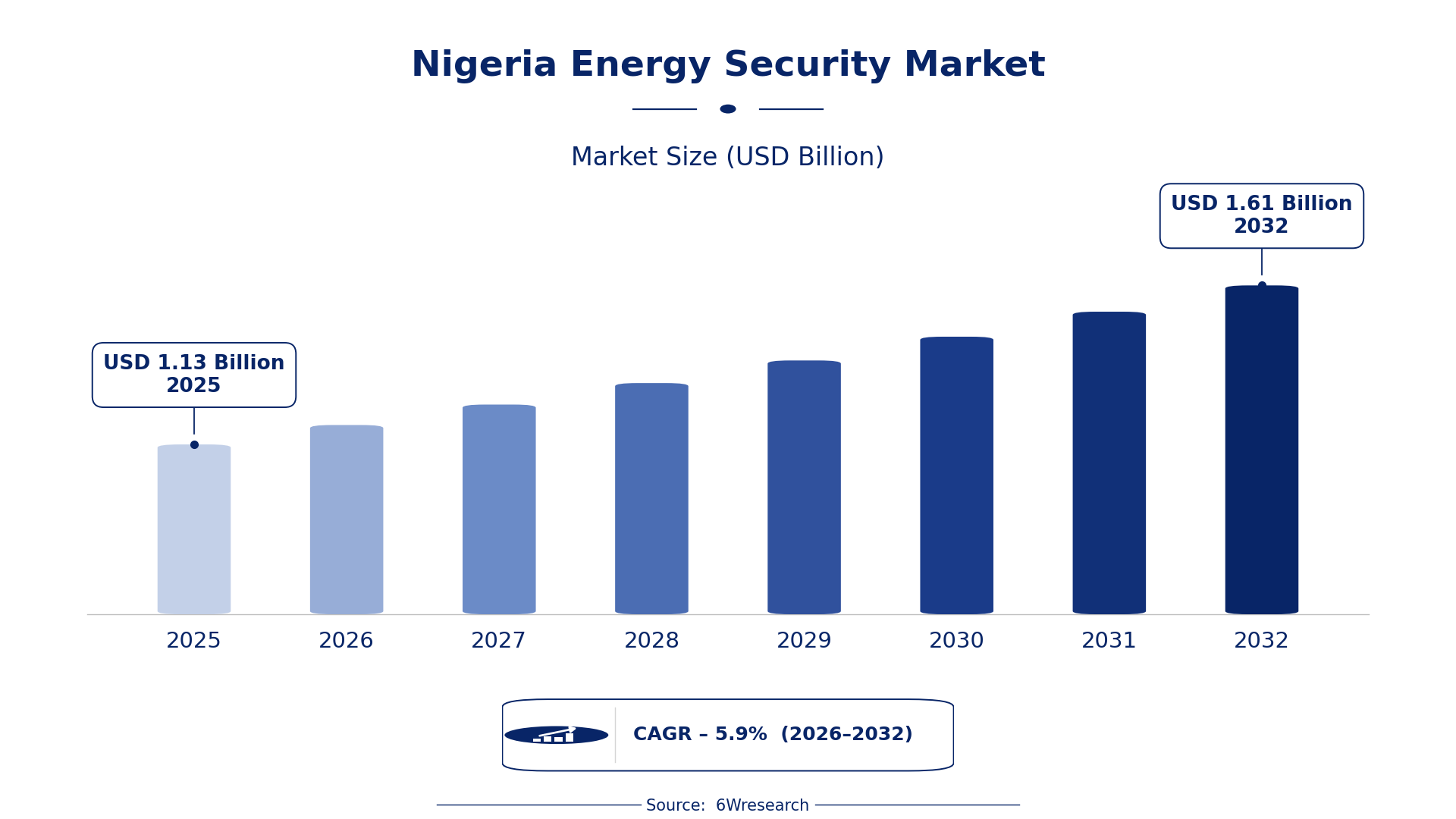
The Nigeria Energy Security Market was estimated at USD 1134 Million in 2025 and is projected to reach USD 1612 Million by 2032, growing at a CAGR of 5.9% from 2026 to 2032.
Nigeria Energy Security Market Synopsis
Nigeria’s energy sector is grappling with a persistent electricity crisis, largely attributed to inadequate infrastructure and over-reliance on fossil fuels. The gap between demand and supply underscores an urgent need for sustainable energy solutions to support industrial growth and improve living standards.
In light of these challenges, the government has accelerated efforts to diversify the energy portfolio by investing in renewables such as solar and wind. As a result, the landscape is increasingly favorable for stakeholders seeking to capitalize on emerging opportunities in the renewable energy space.
Nigeria Energy Security Market Year-wise Growth Rate and Key Drivers
This graph illustrates the annual growth rates of the Nigeria Energy Security Market from 2021 to 2032, highlighting a steady upward trajectory and projected expansion over the forecast period.
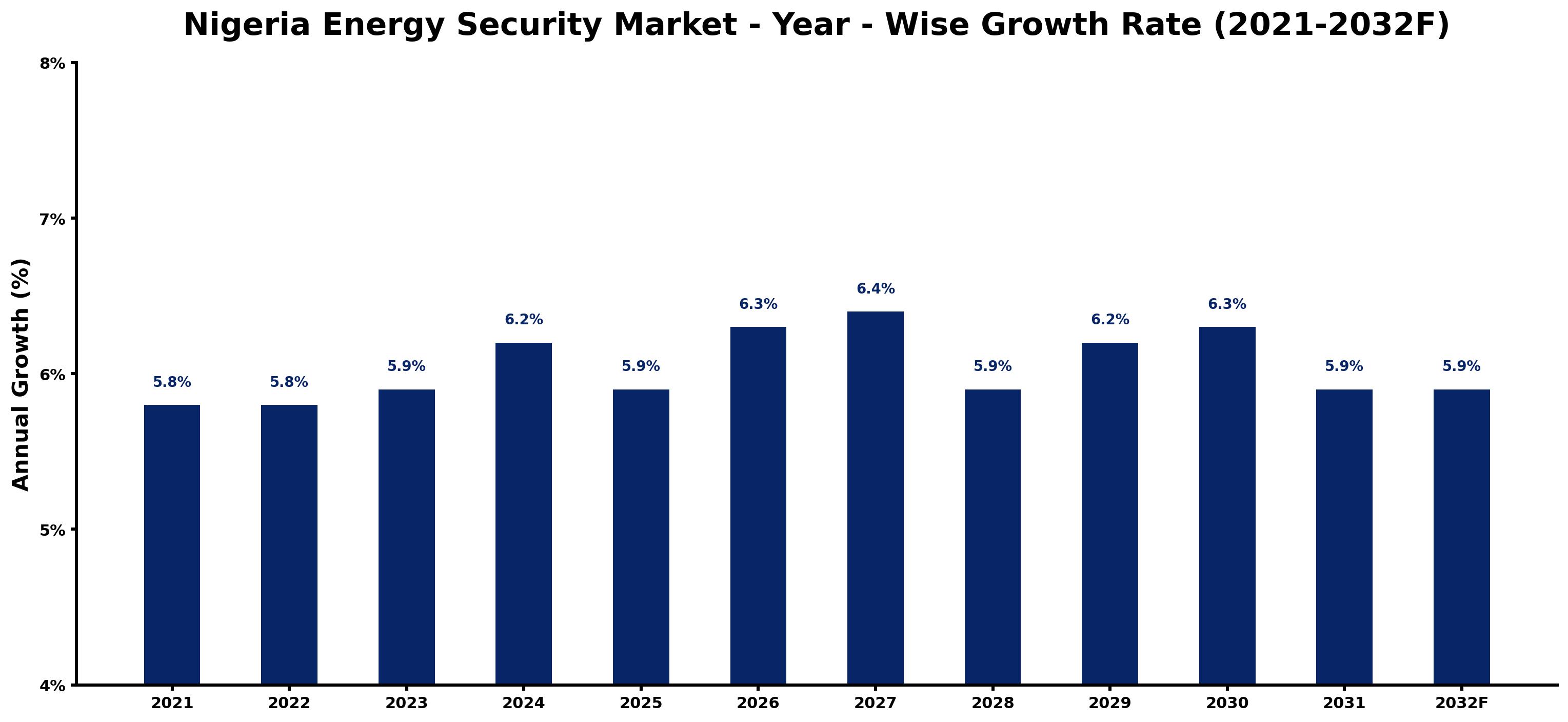
The table below presents the year‑wise growth rates along with the key drivers influencing the market
| Year | Growth Rate | Major Drivers |
| 2021 | 5.8% | Nigerian government incentivizes off-grid solar investments. |
| 2022 | 5.8% | Deployment of renewable energy technologies accelerates across Nigeria. |
| 2023 | 5.9% | Increased funding from international energy security partnerships. |
| 2024 | 6.2% | NERC implements stricter energy production regulations boosting efficiency. |
| 2025 | 5.9% | Rising population boosts demand for stable electricity supply. |
| 2026 | 6.3% | Investment in local energy startups gains government support. |
| 2027 | 6.4% | Nigeria's energy transition plan drives clean technology adoption. |
| 2028 | 5.9% | Local manufacturing of energy equipment enhances sector stability. |
| 2029 | 6.2% | Increased foreign direct investment in renewable power projects. |
| 2030 | 6.3% | Nigerian youth advocacy for sustainable energy solutions grows. |
| 2031 | 5.9% | Tax incentives for renewable energy projects attract new investors. |
| 2032 | 5.9% | Community-led energy projects gain regulatory approval and support. |
Note: Market size estimations and growth projections presented in this report are based on 6Wresearch's proprietary forecasting methodology, utilizing the latest available industry data, government publications, and primary research inputs.
Nigeria Energy Security Market Key Takeaways
Below are some of the specific key takeaways from the market, including:
- The Nigerian government is actively promoting renewable energy projects to diversify its energy mix.
- Investment in energy efficiency and grid modernization is essential to enhance overall energy security.
- There are substantial growth opportunities in energy storage solutions and smart grid technologies.
- Challenges such as policy inconsistency and corruption remain significant obstacles to market development.
- The market is expected to grow at a CAGR of 6.0% between 2026 and 2032, reflecting an increasing demand for sustainable energy sources.
Evaluation of Restraints in Nigeria Energy Security Market
The Nigeria Energy Security Market is hindered by a combination of infrastructural deficiencies and lack of funding. Outdated power infrastructure results in frequent outages, creating a climate of frustration for consumers and businesses alike. on top of that, inconsistent government policies create uncertainty that deters both domestic and foreign investment, further stifling growth potential. Corruption exacerbates these issues, leading to resource mismanagement that directly affects energy supply reliability.
Nigeria Energy Security Market Trends
A shift toward renewable energy sources is gaining momentum, as stakeholders recognize the urgency of reducing dependence on oil and gas. Investment in solar projects is on the rise, driven by favorable government policies and global trends toward cleaner energy. Additionally, there's a heightened focus on enhancing grid capabilities, promoting energy efficiency, and investing in energy storage technologies, which are essential for stabilizing energy supplies and ensuring security.
Nigeria Energy Security Market Opportunities
The true potential for growth lies in the development of renewable energy initiatives. With abundant solar and wind resources, Nigeria is positioned to become a regional leader in clean energy. Opportunities for investment exist in energy storage solutions that can help manage supply and demand fluctuations, as well as smart grid technologies that improve operational efficiency. Stakeholders can capitalize on government incentives aimed at fostering a cleaner energy transition.
Government Initiatives in the Nigeria Energy Security Market
The Nigerian government is increasingly recognizing the need to bolster energy security through strategic policy initiatives. The focus on renewable energy and energy efficiency is reflected in recent regulations and programs aimed at transforming the energy sector. This proactive stance is crucial for attracting investment and supporting a sustainable energy future.
- A recently completed initiative involved the launch of the National Renewable Energy and Energy Efficiency Policy, aimed at promoting sustainable energy practices nationwide.
- Currently ongoing is a government-backed program to enhance rural electrification, improving access to power in remote areas through renewable sources.
- Upcoming is a regulatory framework expected to be introduced in 2026 to streamline investment in renewable energy projects and facilitate public-private partnerships.
- The establishment of a national energy efficiency agency is planned to support energy conservation efforts across various sectors.
- A nationwide campaign to encourage energy audits and efficiency upgrades is set to commence in late 2025, targeting industrial and commercial sectors.
Future Insights of the Nigeria Energy Security Market
Looking ahead to 2026-2032, the Nigeria Energy Security Market is expected to undergo transformative changes driven by investment in renewable technologies and government initiatives. The pressing need for reliable energy sources will drive the evolution of the energy mix, integrating renewables with traditional power systems. While challenges remain, including infrastructural gaps and regulatory hurdles, the future outlook appears optimistic as both public and private sectors intensify their commitment to sustainable energy solutions.
Nigeria Energy Security Market Latest Developments
Over the past year, the Nigeria Energy Security Market has witnessed a surge in activity as stakeholders respond to the pressing demand for reliable energy solutions. From policy implementations to strategic partnerships, the momentum is building for a more sustainable energy framework.
- A major partnership was established in Q3 2025 between government and private investors focused on solar energy infrastructure development in underserved areas.
- Currently ongoing is a pilot program to test new energy storage technologies, expected to be completed by early 2026, aimed at enhancing grid reliability.
- A public-private initiative aimed at expanding wind energy capacity was announced in early 2025, with plans for implementation by mid-2026.
- New regulations governing the import of renewable energy technologies have been enacted to encourage local assembly and manufacturing, initiated in late 2025.
- Upcoming in 2027 is a national conference on energy security aimed at bringing together stakeholders to discuss progress and innovations in the sector.
Nigeria Energy Security Market - Key Attractiveness of the Report
- 10 Years of Market Numbers
- Historical Data Starting from 2022 to 2025
- Base Year: 2025
- Forecast Data until 2032
- Key Performance Indicators Impacting the Market
- Major Upcoming Developments and Projects
Key Highlights of the Report:
- Nigeria Energy Security Market Outlook
- Market Size of Nigeria Energy Security Market, 2025
- Forecast of Nigeria Energy Security Market, 2032
- Historical Data and Forecast of Nigeria Energy Security Revenues & Volume for the Period 2022-2032F
- Nigeria Energy Security Market Trend Evolution
- Nigeria Energy Security Market Drivers and Challenges
- Nigeria Energy Security Price Trends
- Nigeria Energy Security Porter's Five Forces
- Nigeria Energy Security Industry Life Cycle
- Historical Data and Forecast of Nigeria Energy Security Market Revenues & Volume By Power Plants for the Period 2022-2032F
- Historical Data and Forecast of Nigeria Energy Security Market Revenues & Volume By Nuclear for the Period 2022-2032F
- Historical Data and Forecast of Nigeria Energy Security Market Revenues & Volume By Thermal for the Period 2022-2032F
- Historical Data and Forecast of Nigeria Energy Security Market Revenues & Volume By Hydro for the Period 2022-2032F
- Historical Data and Forecast of Nigeria Energy Security Market Revenues & Volume By Oil for the Period 2022-2032F
- Historical Data and Forecast of Nigeria Energy Security Market Revenues & Volume By Gas for the Period 2022-2032F
- Historical Data and Forecast of Nigeria Energy Security Market Revenues & Volume By Renewable Energy for the Period 2022-2032F
- Historical Data and Forecast of Nigeria Energy Security Market Revenues & Volume By Technologies for the Period 2022-2032F
- Historical Data and Forecast of Nigeria Energy Security Market Revenues & Volume By Physical for the Period 2022-2032F
- Historical Data and Forecast of Nigeria Energy Security Market Revenues & Volume By Network Security for the Period 2022-2032F
- Nigeria Energy Security Import Export Trade Statistics
- Market Opportunity Assessment By Power Plants
- Market Opportunity Assessment By Technologies
- Nigeria Energy Security Top Companies Market Share
- Nigeria Energy Security Competitive Benchmarking By Technical and Operational Parameters
- Nigeria Energy Security Company Profiles
- Nigeria Energy Security Key Strategic Recommendations






































