Nigeria Flip Flops Market Top 5 Importing Countries and Market Competition (HHI) Analysis
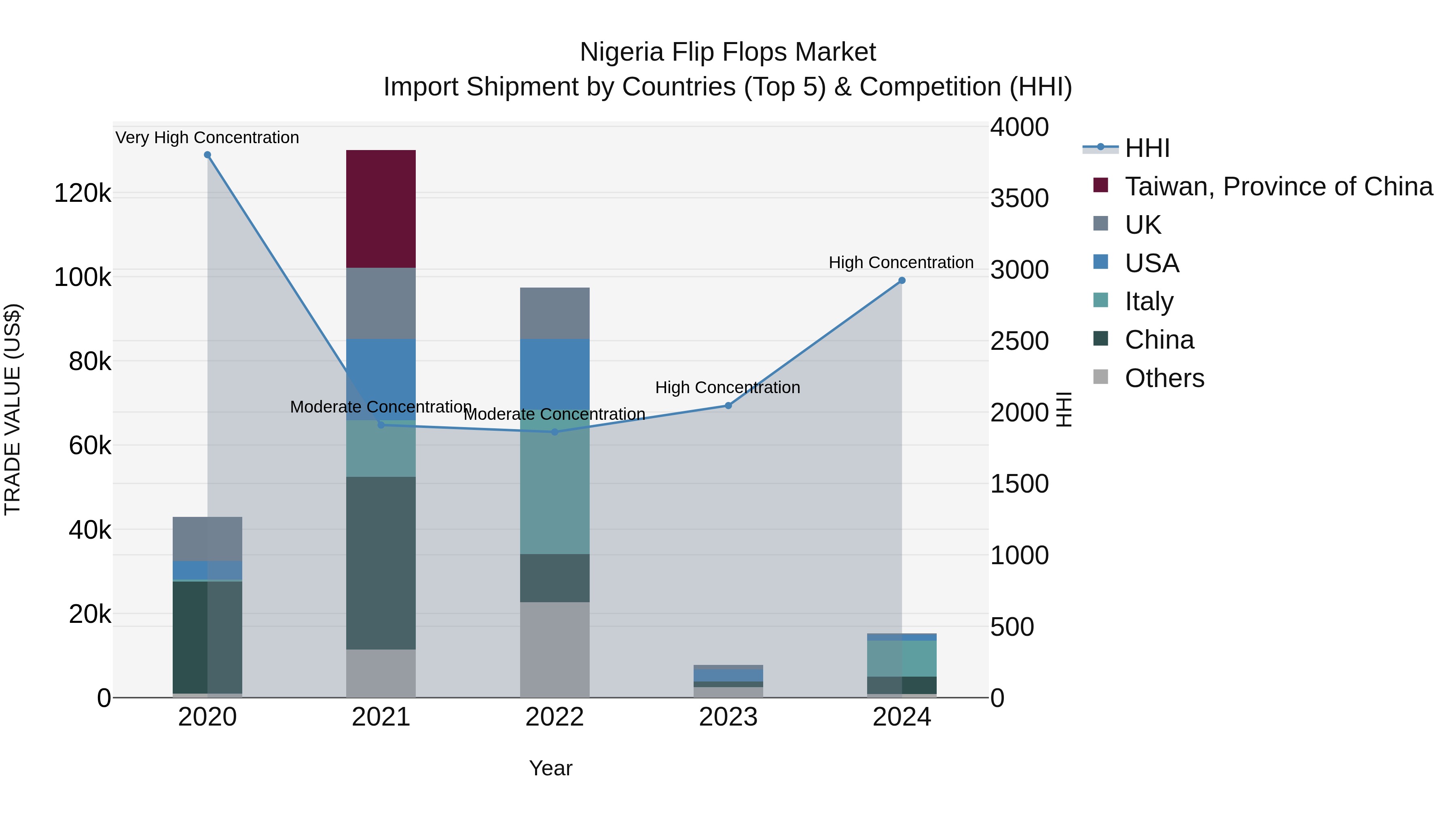
The Nigeria flip flops import market saw a surge in concentration levels in 2024, with top exporting countries being Italy, China, USA, Brazil, and UK. Despite a significant negative compound annual growth rate of -22.81% from 2020 to 2024, the market experienced an impressive growth rate of 96.1% from 2023 to 2024. This indicates a rapid shift in market dynamics and potentially lucrative opportunities for stakeholders. The dominance of these key exporting countries suggests strong competition and strategic positioning in the Nigerian flip flops market.
Nigeria Flip Flops Market Overview
The Nigeria flip flops market is a growing sector within the country`s footwear industry, driven by factors such as changing fashion trends, increasing disposable income, and a growing youth population. The market offers a wide range of flip flop styles, from basic rubber designs to more fashionable and premium options. Local brands and international manufacturers compete in this market, with a focus on offering affordable yet stylish footwear options to cater to the diverse consumer preferences in Nigeria. Distribution channels include retail stores, online platforms, and traditional markets, providing consumers with various purchasing options. As the demand for comfortable and stylish footwear continues to rise, the Nigeria flip flops market presents opportunities for further growth and innovation within the industry.
Nigeria Flip Flops Market Trends
In the Nigeria flip flops market, there is a noticeable trend towards sustainable and ethically sourced materials. Consumers are increasingly seeking eco-friendly options, such as flip flops made from recycled materials or sustainably sourced rubber. Additionally, there is a growing interest in locally produced flip flops that support Nigerian artisans and promote traditional craftsmanship. Customization and personalization options are also gaining popularity, with brands offering unique designs and colors to cater to individual preferences. Online sales channels are expanding rapidly, allowing consumers to access a wider range of products and compare prices easily. Overall, the Nigeria flip flops market is seeing a shift towards sustainability, local production, and customization to meet the evolving preferences of consumers.
Nigeria Flip Flops Market Challenges
In the Nigeria Flip Flops market, some of the main challenges include intense competition from both local and international brands, fluctuating consumer preferences and trends, unreliable supply chain infrastructure leading to potential delays in production and distribution, and counterfeit products posing a threat to brand reputation and market share. Additionally, economic instability and currency fluctuations in Nigeria can impact consumer purchasing power and demand for non-essential items like flip flops. Furthermore, inadequate intellectual property rights enforcement and regulatory issues can hinder market growth and innovation. Overcoming these challenges will require brands to focus on quality, differentiation, effective marketing strategies, and building strong distribution networks to succeed in the competitive Nigeria Flip Flops market.
Nigeria Flip Flops Market Investment Opportunities
The Nigeria flip flops market presents promising investment opportunities due to the country`s large population and warm climate, creating a high demand for affordable and durable footwear. Investing in local flip flops manufacturing companies or retail outlets can be lucrative, especially with the growing trend of casual and comfortable footwear. Collaborating with local designers to create unique and culturally relevant flip flop designs can also differentiate your brand in the market and appeal to consumers looking for trendy options. Additionally, leveraging e-commerce platforms and social media marketing can help reach a wider audience and boost sales. Overall, the Nigeria flip flops market offers potential for growth and profitability for investors willing to tap into the country`s fashion and lifestyle sector.
Nigeria Flip Flops Market Government Policy
The Nigeria Flip Flops Market is subject to various government policies, including import regulations and quality standards enforced by the Standards Organisation of Nigeria (SON). The government has implemented measures to promote local manufacturing and discourage the importation of substandard products. Additionally, there are tax policies and trade agreements that impact the pricing and availability of flip flops in the market. It is essential for businesses operating in this sector to stay informed about changes in government policies to ensure compliance and mitigate risks associated with regulatory issues.
Nigeria Flip Flops Market Future Outlook
The future outlook for the Nigeria Flip Flops Market is promising, with steady growth expected in the coming years. Factors such as increasing disposable income, changing fashion trends, and a growing awareness of comfort footwear are driving the demand for flip flops in Nigeria. The market is also benefiting from the growing popularity of casual and beachwear styles among the younger demographic. As the economy continues to develop, more consumers are likely to prioritize affordable and stylish footwear options like flip flops. Additionally, the rise of e-commerce platforms in Nigeria is making it easier for consumers to access a wider range of flip flop brands and styles. Overall, the Nigeria Flip Flops Market is poised for expansion and is expected to witness a positive trajectory in the foreseeable future.
Key Highlights of the Report:
- Nigeria Flip Flops Market Outlook
- Market Size of Nigeria Flip Flops Market, 2021
- Forecast of Nigeria Flip Flops Market, 2031
- Historical Data and Forecast of Nigeria Flip Flops Revenues & Volume for the Period 2018 - 2031
- Nigeria Flip Flops Market Trend Evolution
- Nigeria Flip Flops Market Drivers and Challenges
- Nigeria Flip Flops Price Trends
- Nigeria Flip Flops Porter's Five Forces
- Nigeria Flip Flops Industry Life Cycle
- Historical Data and Forecast of Nigeria Flip Flops Market Revenues & Volume By Sole Material for the Period 2018 - 2031
- Historical Data and Forecast of Nigeria Flip Flops Market Revenues & Volume By EVA Flip Flops for the Period 2018 - 2031
- Historical Data and Forecast of Nigeria Flip Flops Market Revenues & Volume By PVC Flip Flops for the Period 2018 - 2031
- Historical Data and Forecast of Nigeria Flip Flops Market Revenues & Volume By Rubber Flip Flops for the Period 2018 - 2031
- Historical Data and Forecast of Nigeria Flip Flops Market Revenues & Volume By EVA+Rubber Flip Flops for the Period 2018 - 2031
- Historical Data and Forecast of Nigeria Flip Flops Market Revenues & Volume By Others for the Period 2018 - 2031
- Historical Data and Forecast of Nigeria Flip Flops Market Revenues & Volume By End User for the Period 2018 - 2031
- Historical Data and Forecast of Nigeria Flip Flops Market Revenues & Volume By Women Flip Flops for the Period 2018 - 2031
- Historical Data and Forecast of Nigeria Flip Flops Market Revenues & Volume By Men Flip Flops for the Period 2018 - 2031
- Historical Data and Forecast of Nigeria Flip Flops Market Revenues & Volume By Girls Flip Flops for the Period 2018 - 2031
- Historical Data and Forecast of Nigeria Flip Flops Market Revenues & Volume By Boys Flip Flops for the Period 2018 - 2031
- Nigeria Flip Flops Import Export Trade Statistics
- Market Opportunity Assessment By Sole Material
- Market Opportunity Assessment By End User
- Nigeria Flip Flops Top Companies Market Share
- Nigeria Flip Flops Competitive Benchmarking By Technical and Operational Parameters
- Nigeria Flip Flops Company Profiles
- Nigeria Flip Flops Key Strategic Recommendations






































