Nigeria Food Processing & Handling Equipment Market Summary
The nigeria food processing & handling equipment market was estimated at USD 468 Million in 2025 and is projected to reach USD 662 Million by 2032, growing at a CAGR of 6.2% from 2026 to 2032.
Nigeria Food Processing & Handling Equipment Market Year-wise Growth Rate and Key Drivers
This graph highlights how the Nigeria Food Processing & Handling Equipment Market has steadily grown over the past five years, supported by major growth factors.
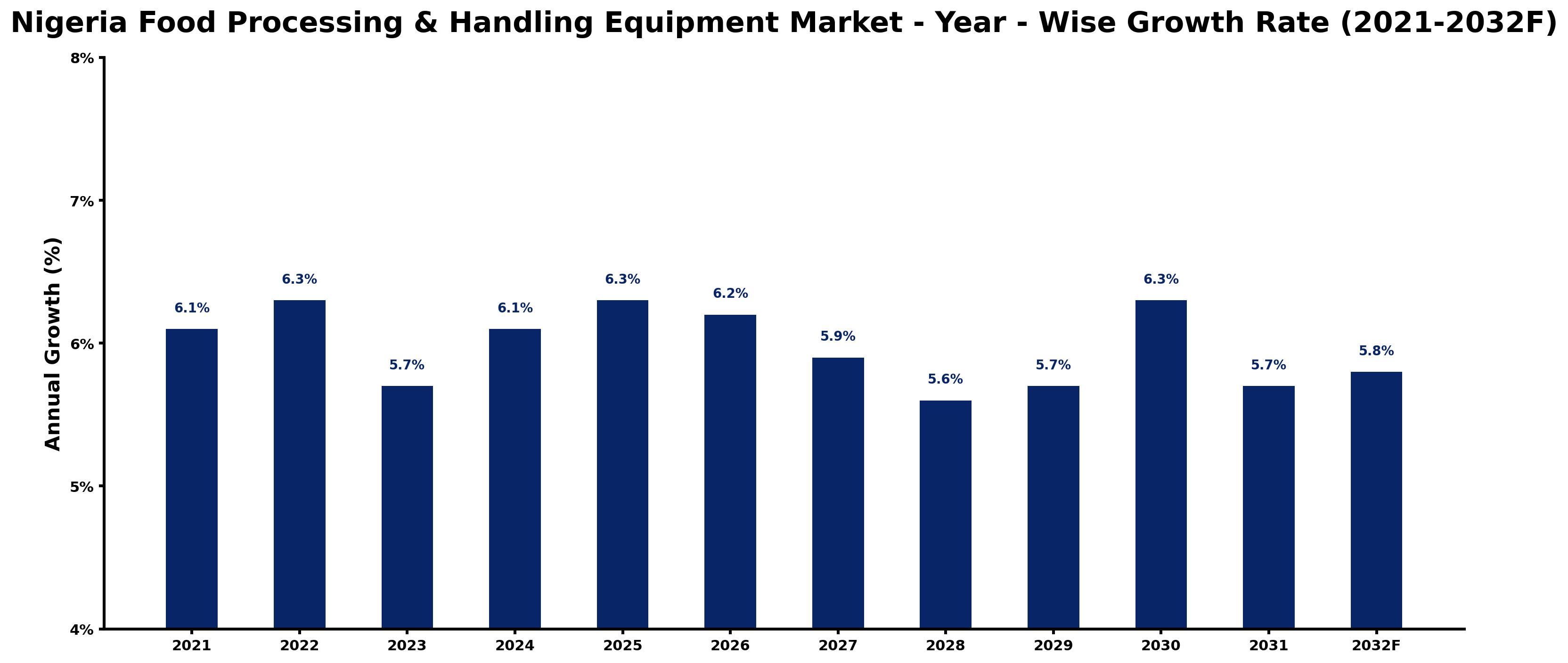
The table below presents the year wise growth rates along with the key drivers influencing the market
| Year | Growth Rate | Major Drivers |
| 2021 | 6.1% | Robust agricultural output creates demand for efficient food processing technologies. |
| 2022 | 6.3% | Local investments in infrastructure enhance distribution capabilities across urban centers. |
| 2023 | 5.7% | Increased awareness of food safety standards pushes equipment modernization efforts. |
| 2024 | 6.1% | Rising consumer preferences for packaged foods spur innovation in processing equipment. |
| 2025 | 6.3% | Access to affordable financing options empowers small-scale processors to upgrade machinery. |
| 2026 | 6.2% | Emerging technology partnerships facilitate automation in food handling processes. |
| 2027 | 5.9% | Urbanization trends lead to higher demand for convenient food processing solutions. |
| 2028 | 5.6% | Export opportunities motivate manufacturers to invest in advanced processing technologies. |
| 2029 | 5.7% | Sustainability initiatives encourage adoption of eco-friendly food processing equipment. |
| 2030 | 6.3% | Growing e-commerce platforms drive logistics and handling equipment requirements significantly. |
| 2031 | 5.7% | Increased agricultural productivity results in higher volumes needing processing capacity. |
| 2032 | 5.8% | Technological innovations improve efficiency, reducing operational costs in food processing. |
Note - Market size estimations and growth projections presented in this report are based on 6Wresearch's advanced forecasting approach, validated with industry datasets as of June 2026.
Nigeria Food Processing & Handling Equipment Market Synopsis
The Nigeria Food Processing Handling Equipment Market is projected to reach 6.2% and witness significant growth during the forecast period (2026-2032). This growth is primarily propelled by the increasing demand for processed food products, urbanization, and evolving consumer preferences that prioritize quality and convenience. As the food processing landscape evolves, there is a marked shift towards advanced technologies and innovative solutions that enhance operational efficiency and product quality.
Nigeria Food Processing & Handling Equipment Market Growth Drivers
Several factors are contributing to the growth of the Nigeria Food Processing & Handling Equipment Market. The surging urban population is leading to a heightened demand for processed and packaged food, which in turn stimulates investment in food processing technology.
- The rising disposable income among consumers enables households to purchase processed foods, thereby expanding the market for food processing equipment.
- Technological advancements in food processing equipment that facilitate automation are driving efficiency, allowing manufacturers to increase production rates and reduce labor costs.
- Government initiatives aimed at improving food security are fostering an environment conducive to investment in the food processing sector.
- There is a growing emphasis on food safety standards, prompting producers to invest in advanced equipment that meets regulatory requirements.
- The increase in consumer awareness regarding hygiene and product quality is compelling manufacturers to adopt modern processing techniques and state-of-the-art handling equipment.
Nigeria Food Processing & Handling Equipment Market Trends and Opportunities
The Nigeria Food Processing & Handling Equipment Market is experiencing several notable trends that present opportunities for growth and innovation.
- There is a significant move towards the adoption of automation and robotics in food processing, which improves productivity and consistency in food quality.
- Packaged and convenience foods are gaining popularity, prompting demand for advanced packaging technologies that can extend shelf life and enhance product appeal.
- Sustainable and energy-efficient processing technologies are becoming increasingly important, as both consumers and manufacturers aim to reduce their ecological footprint.
- Research and development in food handling equipment are focused on creating smarter machines that can provide real-time data on production processes.
- The shift towards locally sourced ingredients for processed foods creates opportunities for equipment tailored to the unique crop processing needs within Nigeria.
Nigeria Food Processing & Handling Equipment Market Challenges and Restraints
Despite the promising outlook, the Nigeria Food Processing & Handling Equipment Market faces several challenges that could impede growth.
- Inadequate infrastructure, particularly in terms of transport and power supply, poses significant challenges to food processing operations, affecting efficiency and operational costs.
- High import tariffs on machinery limit access to advanced processing technologies, making it difficult for local producers to upgrade their equipment.
- The lack of affordable financing options for small- and medium-sized enterprises (SMEs) results in many operators relying on outdated machinery, which can adversely affect product quality and market competitiveness.
- Regulatory compliance and certification processes can be cumbersome, leading to delays in equipment deployment and increased operational costs for manufacturers.
- The competitive landscape is intensified by the influx of imported equipment, often at lower prices, which can disadvantage domestic manufacturers striving to meet quality standards.
Nigeria Food Processing & Handling Equipment Market Investment Opportunities
Investment opportunities abound in the Nigeria Food Processing & Handling Equipment Market, driven by several fundamental shifts in the industry.
- The ongoing urbanization and growth in the population are creating a sustained demand for a variety of processed food products, necessitating investment in processing technologies.
- Areas such as packaging machinery, refrigeration systems, and automation technologies present lucrative opportunities for investment, catering to the rising demand for quality and convenience.
- Government incentives aimed at promoting agricultural productivity and food processing are encouraging potential investors to explore this sector.
- The increase in global food safety standards is driving the need for advanced processing equipment, which opens up avenues for innovation and investment.
- Investment in sustainable practices, including the development of environmentally friendly processing solutions, is becoming a priority, offering opportunities for innovative manufacturers to lead the market.
Nigeria Food Processing & Handling Equipment Market Government Investment and Initiatives
The Nigerian government has implemented several policies and initiatives aimed at bolstering the food processing and handling equipment market.
- The Agricultural Transformation Agenda focuses on increasing the value-addition in agriculture, promoting the use of modern processing equipment.
- Incentives such as tax breaks and import duty exemptions are provided to attract investment into the food processing sector, enhancing competitiveness.
- The National Food Safety Management Committee plays a crucial role in regulating food processing practices, ensuring that safety and quality standards are upheld.
- Public spending in infrastructure development is aimed at improving the logistical challenges faced by the food processing industry, making it easier for businesses to operate efficiently.
- Training and development programs facilitated by the government are also helping to elevate the skill levels of the workforce within the food processing sector.
Nigeria Food Processing & Handling Equipment Market Latest Developments (May 2025 - June 2026)
Recent developments in the Nigeria Food Processing & Handling Equipment Market indicate a clear direction towards modernization and technological advancement.
- There has been a marked increase in the adoption of automated systems within food processing facilities, with many operators investing in smart technologies that enhance productivity.
- The push for sustainable practices is leading manufacturers to develop eco-friendly processing solutions in response to consumer demand and regulatory pressures.
- Collaboration among industry stakeholders has intensified, with partnerships emerging to facilitate knowledge sharing and investment in new technologies.
- Training initiatives aimed at improving technical skills in the food processing sector have gained traction, addressing the human capital needs of the industry.
- Regulatory reforms are underway to streamline compliance processes, aiming to ease the obstacles faced by manufacturers in obtaining necessary certifications for their equipment.
Nigeria Food Processing & Handling Equipment Market - Key Attractiveness of the Report
- 10 Years of Market Numbers
- Historical Data Starting from 2022 to 2025
- Base Year: 2025
- Forecast Data until 2032
- Key Performance Indicators Impacting the Market
- Major Upcoming Developments and Projects
Key Highlights of the Report:
- Nigeria Food Processing & Handling Equipment Market Outlook
- Market Size of Nigeria Food Processing & Handling Equipment Market, 2025
- Forecast of Nigeria Food Processing & Handling Equipment Market, 2032F
- Historical Data and Forecast of Nigeria Food Processing & Handling Equipment Revenues & Volume for the Period 2022-2032F
- Nigeria Food Processing & Handling Equipment Market Trend Evolution
- Nigeria Food Processing & Handling Equipment Market Drivers and Challenges
- Nigeria Food Processing & Handling Equipment Price Trends
- Nigeria Food Processing & Handling Equipment Porter's Five Forces
- Nigeria Food Processing & Handling Equipment Industry Life Cycle
- Historical Data and Forecast of Nigeria Food Processing & Handling Equipment Market Revenues & Volume By Equipment Type for the Period 2022-2032F
- Historical Data and Forecast of Nigeria Food Processing & Handling Equipment Market Revenues & Volume By Food Processing equipment for the Period 2022-2032F
- Historical Data and Forecast of Nigeria Food Processing & Handling Equipment Market Revenues & Volume By Foodservice equipment for the Period 2022-2032F
- Historical Data and Forecast of Nigeria Food Processing & Handling Equipment Market Revenues & Volume By Food Packaging equipment for the Period 2022-2032F
- Historical Data and Forecast of Nigeria Food Processing & Handling Equipment Market Revenues & Volume By Application for the Period 2022-2032F
- Historical Data and Forecast of Nigeria Food Processing & Handling Equipment Market Revenues & Volume By Bakery & confectionery products for the Period 2022-2032F
- Historical Data and Forecast of Nigeria Food Processing & Handling Equipment Market Revenues & Volume By Meat & poultry products for the Period 2022-2032F
- Historical Data and Forecast of Nigeria Food Processing & Handling Equipment Market Revenues & Volume By Dairy products for the Period 2022-2032F
- Historical Data and Forecast of Nigeria Food Processing & Handling Equipment Market Revenues & Volume By Alcoholic beverages for the Period 2022-2032F
- Historical Data and Forecast of Nigeria Food Processing & Handling Equipment Market Revenues & Volume By Non-alcoholic beverages for the Period 2022-2032F
- Historical Data and Forecast of Nigeria Food Processing & Handling Equipment Market Revenues & Volume By Fish & seafood products for the Period 2022-2032F
- Historical Data and Forecast of Nigeria Food Processing & Handling Equipment Market Revenues & Volume By Others? for the Period 2022-2032F
- Historical Data and Forecast of Nigeria Food Processing & Handling Equipment Market Revenues & Volume By Form for the Period 2022-2032F
- Historical Data and Forecast of Nigeria Food Processing & Handling Equipment Market Revenues & Volume By Solid for the Period 2022-2032F
- Historical Data and Forecast of Nigeria Food Processing & Handling Equipment Market Revenues & Volume By Liquid for the Period 2022-2032F
- Historical Data and Forecast of Nigeria Food Processing & Handling Equipment Market Revenues & Volume By Semi-solid for the Period 2022-2032F
- Nigeria Food Processing & Handling Equipment Import Export Trade Statistics
- Market Opportunity Assessment By Equipment Type
- Market Opportunity Assessment By Application
- Market Opportunity Assessment By Form
- Nigeria Food Processing & Handling Equipment Top Companies Market Share
- Nigeria Food Processing & Handling Equipment Competitive Benchmarking By Technical and Operational Parameters
- Nigeria Food Processing & Handling Equipment Company Profiles
- Nigeria Food Processing & Handling Equipment Key Strategic Recommendations






































