Nigeria Frozen Food Market Top 5 Importing Countries and Market Competition (HHI) Analysis
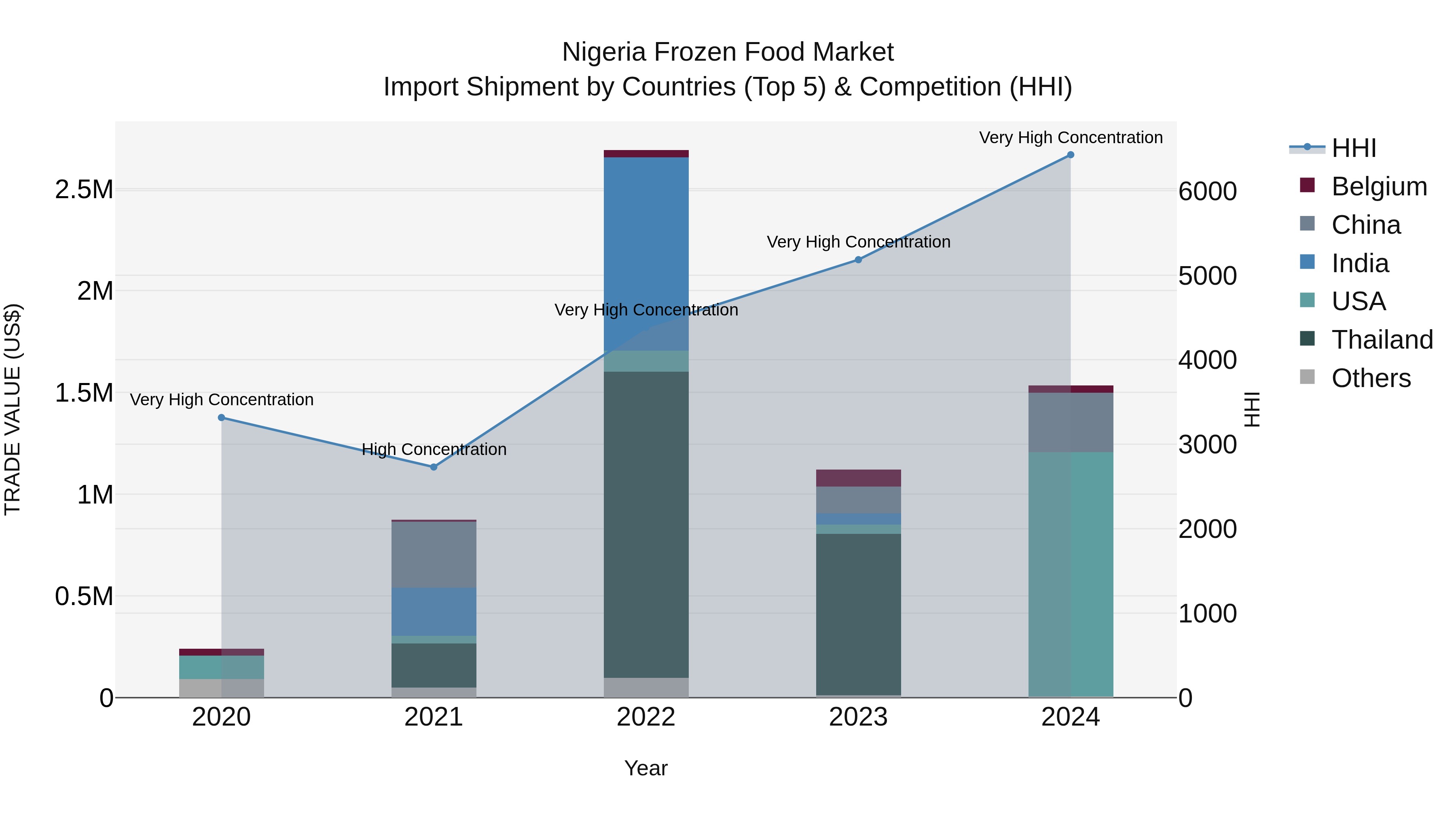
The frozen food import market in Nigeria continues to see robust growth, with key exporting countries such as the USA, China, and Belgium dominating the market in 2024. The high Herfindahl-Hirschman Index (HHI) indicates a concentrated market, while the impressive Compound Annual Growth Rate (CAGR) of 58.98% from 2020-2024 highlights the sector`s rapid expansion. Moreover, the growth rate of 36.81% from 2023-2024 underscores the increasing demand for frozen food products in Nigeria, presenting lucrative opportunities for both domestic and international suppliers.
Nigeria Frozen Food Market Highlights
| Report Name | Nigeria Frozen Food Market |
| Forecast Period | 2025-2031 |
| CAGR | 7.2% |
| Growing Sector | Ready-to-Eat Meals |
Topics Covered in the Nigeria Frozen Food Market Report
The Nigeria Frozen Food Market report provides an in-depth analysis based on Products, Distribution Channels, Consumption, and Types. It explores key trends, investment opportunities, and competitive dynamics to help stakeholders make informed decisions.
Nigeria Frozen Food Market Synopsis
The Nigeria Frozen Food Market is witnessing significant growth due to increasing urbanization, a rising working-class population, and changing dietary preferences. Convenience and longer shelf life are driving demand for frozen food products, particularly in metropolitan areas. However, challenges such as inconsistent cold chain infrastructure and high energy costs may hinder market expansion. Despite these challenges, advancements in refrigeration technology and growing investments in modern retail channels are expected to propel market growth.
According to 6Wresearch, the Nigeria Frozen Food Market is projected to grow at a CAGR of 7.2% during the forecast period 2025-2031. The frozen food market in Nigeria has witnessed significant growth in recent years, driven by a combination of factors. Rapid urbanization and population growth have increased the demand for convenient, ready-to-cook food products, as busy lifestyles leave consumers with less time for traditional cooking. Additionally, the expansion of cold chain infrastructure and improvements in storage technology have made it easier to preserve and distribute frozen foods across the country. A shift in consumer preferences towards healthier and premium-quality products has also contributed, with more individuals seeking nutritious and easily accessible meal solutions.
Nigeria’s erratic electricity supply continues to be a major obstacle to maintaining consistent cold chain operations, increasing costs for businesses and reducing product quality for consumers. The relatively high cost of frozen food compared to fresh alternatives makes affordability a concern for many middle- and low-income households. Furthermore, limited access to rural areas due to poor infrastructure hinders effective distribution, restricting market penetration.
Nigeria Frozen Food Market Trends
Some key trends shaping the market include:
- Rising Demand for Ready-to-Eat (RTE) Meals: Busy lifestyles are driving demand for quick and convenient food options.
- Expansion of Retail and E-Commerce Channels: Online grocery shopping and supermarkets are increasing accessibility to frozen foods.
- Technological Advancements in Cold Storage: Improved logistics and energy-efficient refrigeration solutions are supporting market growth.
- Growing Popularity of Protein-Rich Frozen Foods: Increased preference for frozen poultry, fish, and seafood.
Investment Opportunities in the Nigeria Frozen Food Market
Key investment opportunities include:
- Development of Cold Chain Infrastructure: Expanding storage and transportation facilities to reduce spoilage.
- Growth in Supermarkets and Online Retail: Enhancing accessibility to frozen food products.
- Expansion of Local Frozen Food Manufacturing: Reducing import reliance and boosting domestic production.
Leading Players in the Nigeria Frozen Food Market
Major companies such as UAC Foods, Chi Limited, Rite Foods, and Nestlé Nigeria are actively shaping the frozen food market. These companies focus on product innovation, supply chain efficiency, and expansion into retail and e-commerce platforms to meet growing consumer demand.
Government Regulations in the Nigeria Frozen Food Market
The frozen food market in Nigeria operates within a framework of government regulations designed to ensure food safety, quality, and fair competition. Regulatory bodies such as the National Agency for Food and Drug Administration and Control (NAFDAC) play a pivotal role in overseeing the importation, production, and distribution of frozen foods in the country. They enforce standards on packaging, labeling, and storage to protect consumers' health. Additionally, importers of frozen food are required to comply with customs regulations and obtain the necessary permits. These measures aim to prevent the influx of substandard products into the market while fostering a sustainable and competitive industry.
Future Insights of the Nigeria Frozen Food Market
The future of the frozen food market in Nigeria appears promising, driven by factors such as rapid urbanization, changing consumer lifestyles, and an increasing preference for convenient and time-saving food options. With a growing middle class and higher disposable incomes, the demand for quality frozen foods is expected to rise significantly. Technological advancements in cold chain logistics and storage infrastructure will also play a critical role in addressing challenges such as supply chain inefficiencies and inadequate refrigeration facilities. Furthermore, as consumers become more health-conscious, there is likely to be a greater emphasis on frozen food products with improved nutritional value and transparency in sourcing.
Market Segmentation Analysis
The report provides insights into the following segments and their leading categories:
Bakery Products to Dominate the Market – By Products
According to Suryakant, Senior Research Analyst at 6Wresearch, the bakery segment within Nigeria's frozen food market is experiencing significant growth, driven by increasing consumer demand for convenience and ready-to-eat products. Popular items such as frozen bread, pastries, and dough-based products offer immense appeal to busy urban dwellers who seek quick meal solutions without compromising on quality. These products are particularly popular among younger demographics and working professionals due to their long shelf life and ease of preparation. Furthermore, the rise of modern retail outlets and improved cold chain infrastructure has enabled better distribution and accessibility of frozen bakery products across the country.
Retail to Dominate the Market – By Consumption
The retail landscape in Nigeria's frozen food market has undergone a transformation in recent years, fueled by the expansion of modern retail channels such as supermarkets, hypermarkets, and convenience stores. These outlets provide a platform for enhanced accessibility and visibility of frozen food products, appealing to the country's growing middle-class population. Additionally, the adoption of advanced cold chain logistics ensures that frozen foods maintain their quality and freshness during storage and transit, further boosting consumer confidence. Traditional open markets also remain a vital part of the retail ecosystem, offering frozen food options to a broader demographic, including rural and low-income consumers.
Raw Material to Dominate the Market – By Types
The availability and quality of raw materials play a crucial role in Nigeria's frozen food market. Key raw materials, such as poultry, fish, vegetables, and other perishable commodities, are sourced locally and imported. Local agriculture and aquaculture industries contribute significantly, with farmers and fishers providing ingredients for various frozen food products. However, challenges such as inconsistent supply chains, climatic conditions, and inadequate infrastructure can impact the production and processing of these raw materials. To address these issues, investments in modern farming techniques, cold storage facilities, and better supply chain management are essential.
Offline to Dominate the Market – By Distribution Channels
Offline sales channels play a significant role in Nigeria's frozen food market, catering to a broad range of consumers across urban and rural areas. Traditional markets, supermarkets, and neighborhood grocery stores serve as key points of sale for frozen food products. These offline channels rely heavily on effective cold storage and transportation systems to maintain the quality and safety of perishable goods. Despite the growing influence of online retail, many consumers in Nigeria still prefer purchasing frozen foods through offline channels due to convenience, immediate availability, and trust in local retailers.
Key Attractiveness of the Report
- 10 Years of Market Data
- Historical Data from 2021 to 2024
- Base Year: 2024
- Forecast Data until 2031
- Key Performance Indicators Impacting the Market
- Growth Drivers and Market Challenges
- Competitive Landscape Analysis
Key Highlights of the Report:
- Nigeria Frozen Food Market Overview
- Nigeria Frozen Food Market Outlook
- Nigeria Frozen Food Market Forecast
- Nigeria Frozen Food Market Size
- Historical Data of Nigeria Frozen Food Market Revenues, for the Period 2021-2031
- Nigeria Frozen Food Market Forecast of Revenues, Until 2031
- Historical Data ofNigeria Frozen Food Market Revenues, by Products, for the Period 2021-2031
- Market Size & Forecast ofNigeria Frozen Food Market Revenues, by Products, until 2031
- Historical Data ofNigeria Frozen Food Market Revenues, by Consumption, for the Period 2021-2031
- Market Size & Forecast ofNigeria Frozen Food Market Revenues, by Consumption, until 2031
- Historical Data ofNigeria Frozen Food Market Revenues, by Types, for the Period 2021-2031
- Market Size & Forecast ofNigeria Frozen Food Market Revenues, by Types, until 2031
- Historical Data ofNigeria Frozen Food Market Revenues, by Distribution Channels, for the Period 2021-2031
- Market Size & Forecast ofNigeria Frozen Food Market Revenues, by Distribution Channels, until 2031
- Market Drivers and Restraints
- Nigeria Frozen Food Market Trends
- Market Opportunity Assessment
- Nigeria Frozen Food Market Share, By Players
- Nigeria Frozen Food Market Share, By Regions
- Nigeria Frozen Food Market Overview on Competitive Benchmarking
- Company Profiles
- Key Strategic Recommendations
Markets Covered
Nigeria frozen food market report provides a detailed analysis of the following market segments:
- By Products:
- Fruits and Vegetables
- Frozen Fruits
- Frozen Vegetables
- Dairy Products
- Bakery Products
- Breads & Pizza Crusts
- Others
- Meat and Seafood Products
- Convenience Food and Ready Meals
- Others
- By Consumption:
- Food Service
- Retail
- By Types:
- Raw Material
- Half Cooked
- Ready to Eat
- By Distribution Channels:
- Online
- Offline






































