Nigeria Hub Motor Market Top 5 Importing Countries and Market Competition (HHI) Analysis
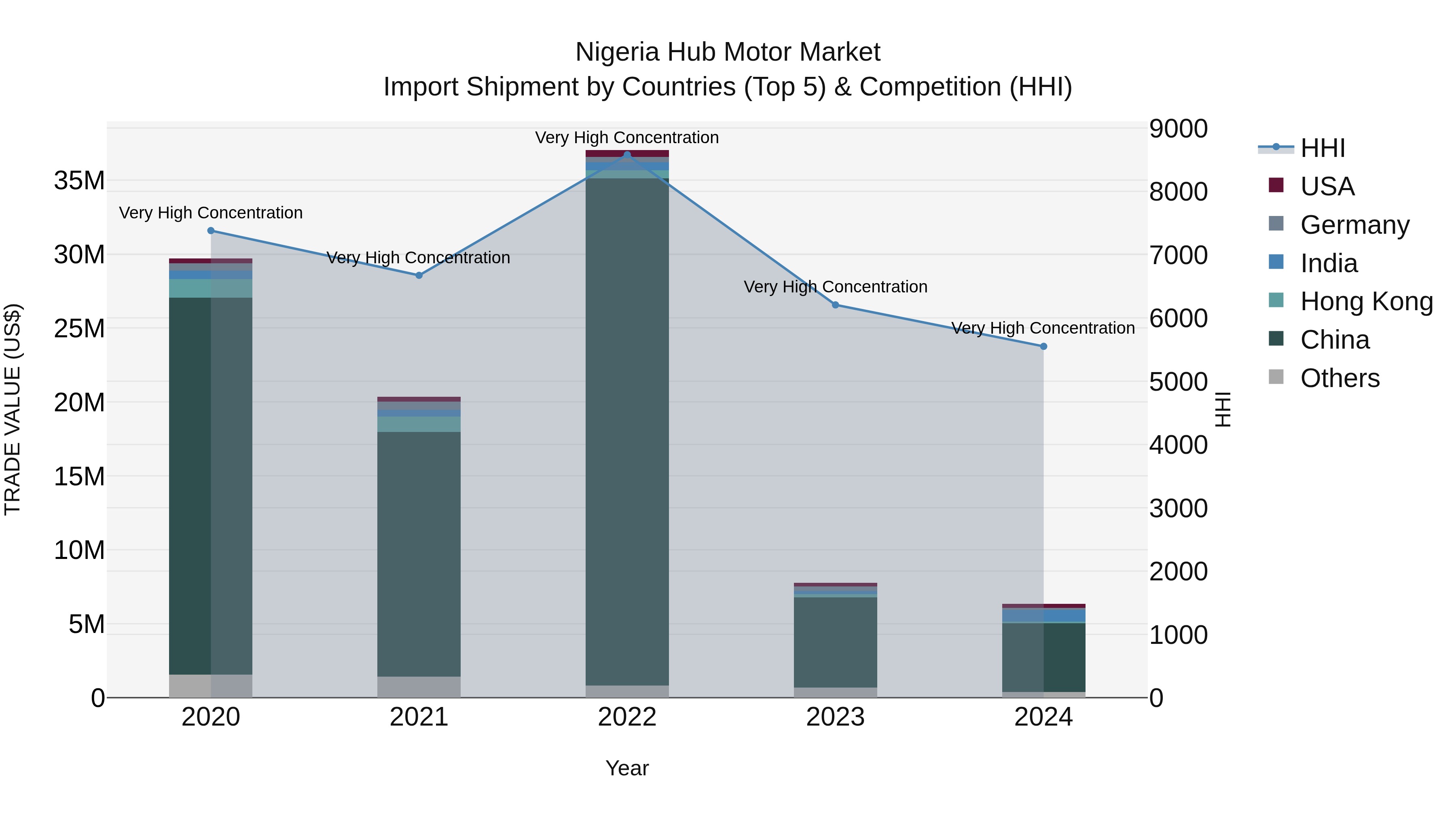
In 2024, Nigeria continued to heavily rely on imports of hub motors, with the top exporting countries being China, India, USA, Germany, and Hong Kong. The market remained highly concentrated, indicating limited competition among suppliers. The compound annual growth rate (CAGR) from 2020 to 2024 was notably negative at -32.04%, with a further decline in growth rate from 2023 to 2024 at -18.49%. These trends suggest a challenging market environment for hub motor import shipments in Nigeria, potentially influenced by various economic factors impacting the industry.
Nigeria Hub Motor Market Synopsis
The Nigeria hub motor market is witnessing steady growth due to the increasing adoption of electric bicycles and electric vehicles in the country. Hub motors are gaining popularity for their efficiency, compact design, and ease of installation, making them a preferred choice for electric vehicle manufacturers and enthusiasts. The demand for hub motors is also being supported by government initiatives promoting clean energy transportation solutions and the growing awareness about environmental sustainability. Key players in the Nigerian hub motor market are focusing on technological advancements to enhance motor performance, durability, and energy efficiency. Overall, the market is poised for further expansion as the country continues to embrace electric mobility solutions and as consumers seek cost-effective and eco-friendly transportation options.
Nigeria Hub Motor Market Trends
The Nigeria Hub Motor Market is experiencing growth due to the increasing demand for electric vehicles (EVs) and e-bikes in the country. The trend towards sustainable transportation solutions is driving the adoption of hub motors, which provide efficient and reliable propulsion for EVs and e-bikes. With a growing focus on reducing carbon emissions and promoting clean energy, the market offers opportunities for manufacturers to expand their product offerings and cater to the rising demand for electric mobility solutions in Nigeria. Additionally, the government`s initiatives to promote the use of electric vehicles through incentives and infrastructure development further contribute to the market`s growth potential. Overall, the Nigeria Hub Motor Market presents a promising landscape for industry players to capitalize on the evolving trends towards eco-friendly transportation solutions.
Nigeria Hub Motor Market Challenges
In the Nigeria Hub Motor Market, some of the key challenges include limited awareness and understanding of the technology among consumers, which can lead to slower adoption rates. Additionally, there are concerns regarding the availability of high-quality and reliable hub motors from local suppliers, leading to a reliance on imports that can drive up costs. Infrastructure limitations, such as poor road conditions and lack of charging stations, also present obstacles to the widespread use of hub motors in Nigeria. Lastly, regulatory hurdles and inconsistent government policies related to electric vehicles may create uncertainty for businesses operating in the market, impacting investment and growth opportunities. Overall, addressing these challenges will be crucial in unlocking the full potential of the hub motor market in Nigeria.
Nigeria Hub Motor Market Investment Opportunities
The Nigeria Hub Motor Market is primarily driven by the increasing demand for electric vehicles (EVs) in the country due to growing environmental concerns and government policies promoting clean energy. The rising fuel costs and the need to reduce carbon emissions have accelerated the adoption of EVs, which in turn drives the demand for hub motors used in electric bicycles, scooters, and motorcycles. Additionally, the improving infrastructure for charging stations and the availability of incentives for EV buyers further boost the market growth. Technological advancements in hub motors, such as improved efficiency and performance, also contribute to the market expansion as consumers seek more reliable and sustainable transportation solutions.
Nigeria Hub Motor Market Government Polices
The Nigerian government does not have specific policies targeted at the hub motor market. However, general regulations on automotive products and components apply to hub motors as well. These regulations include import duties and taxes, quality standards, and safety requirements. The government aims to promote the development of the automotive industry in Nigeria through various initiatives such as the National Automotive Industry Development Plan (NAIDP) which encourages local manufacturing and assembly of vehicles and components. Companies operating in the hub motor market need to comply with these regulations to ensure the quality and safety of their products. Additionally, the government`s efforts to promote renewable energy and sustainability may indirectly benefit the hub motor market by driving demand for electric vehicles and related components.
Nigeria Hub Motor Market Future Outlook
The Nigeria Hub Motor Market is expected to witness significant growth in the coming years due to the increasing demand for electric vehicles and bicycles in the country. The government`s efforts to promote clean energy and reduce carbon emissions are also driving the adoption of hub motors. Additionally, the rising awareness about the benefits of electric vehicles, such as lower operating costs and environmental sustainability, is further fueling market growth. Technological advancements in hub motor design and efficiency improvements are expected to enhance the market further. As more consumers and businesses in Nigeria shift towards sustainable transportation solutions, the demand for hub motors is projected to rise steadily, presenting lucrative opportunities for manufacturers and suppliers in the market.
Key Highlights of the Report:
- Nigeria Hub Motor Market Outlook
- Market Size of Nigeria Hub Motor Market, 2024
- Forecast of Nigeria Hub Motor Market, 2031
- Historical Data and Forecast of Nigeria Hub Motor Revenues & Volume for the Period 2021 - 2031
- Nigeria Hub Motor Market Trend Evolution
- Nigeria Hub Motor Market Drivers and Challenges
- Nigeria Hub Motor Price Trends
- Nigeria Hub Motor Porter's Five Forces
- Nigeria Hub Motor Industry Life Cycle
- Historical Data and Forecast of Nigeria Hub Motor Market Revenues & Volume By Installation for the Period 2021 - 2031
- Historical Data and Forecast of Nigeria Hub Motor Market Revenues & Volume By Front for the Period 2021 - 2031
- Historical Data and Forecast of Nigeria Hub Motor Market Revenues & Volume By Rear for the Period 2021 - 2031
- Historical Data and Forecast of Nigeria Hub Motor Market Revenues & Volume By Vehicle for the Period 2021 - 2031
- Historical Data and Forecast of Nigeria Hub Motor Market Revenues & Volume By E-Bikes for the Period 2021 - 2031
- Historical Data and Forecast of Nigeria Hub Motor Market Revenues & Volume By E-Scooters/Mopeds for the Period 2021 - 2031
- Historical Data and Forecast of Nigeria Hub Motor Market Revenues & Volume By E-Motorcycles for the Period 2021 - 2031
- Historical Data and Forecast of Nigeria Hub Motor Market Revenues & Volume By Motor for the Period 2021 - 2031
- Historical Data and Forecast of Nigeria Hub Motor Market Revenues & Volume By Geared for the Period 2021 - 2031
- Historical Data and Forecast of Nigeria Hub Motor Market Revenues & Volume By Gearless for the Period 2021 - 2031
- Nigeria Hub Motor Import Export Trade Statistics
- Market Opportunity Assessment By Installation
- Market Opportunity Assessment By Vehicle
- Market Opportunity Assessment By Motor
- Nigeria Hub Motor Top Companies Market Share
- Nigeria Hub Motor Competitive Benchmarking By Technical and Operational Parameters
- Nigeria Hub Motor Company Profiles
- Nigeria Hub Motor Key Strategic Recommendations






































