Nigeria Kyphoplasty Market Top 5 Importing Countries and Market Competition (HHI) Analysis
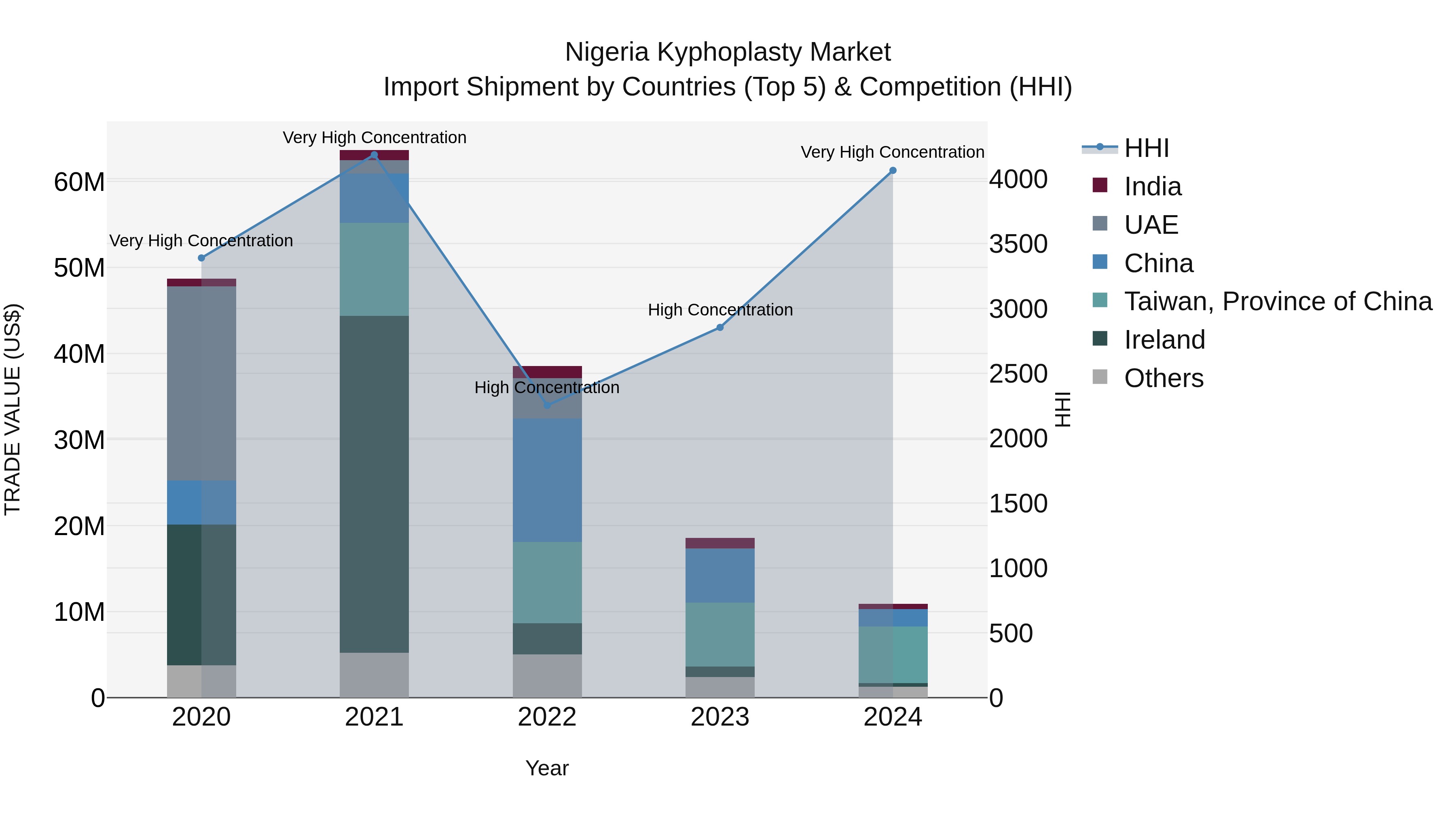
The kyphoplasty import market in Nigeria continues to show high concentration, with a significant increase in concentration levels in 2024. The top exporting countries to Nigeria in 2024 include Taiwan, China, India, Ireland, and Mexico. Despite a negative CAGR of -31.24% from 2020 to 2024 and a steep decline in growth rate of -41.34% from 2023 to 2024, these key exporters are maintaining their presence in the Nigerian market. This trend suggests a competitive landscape and evolving dynamics within the kyphoplasty import sector in Nigeria.
Nigeria Kyphoplasty Market Overview
The Nigeria Kyphoplasty market is witnessing steady growth due to increasing cases of osteoporosis-related vertebral compression fractures and a growing elderly population. Kyphoplasty procedures help in restoring vertebral height and reducing pain, thereby improving the quality of life for patients. The market is driven by advancements in medical technology, rising healthcare infrastructure, and a surge in demand for minimally invasive surgical procedures. Key players in the Nigeria Kyphoplasty market are focusing on product innovation, strategic partnerships, and expanding their presence in untapped regions. However, challenges such as limited awareness about the procedure, high costs, and a shortage of skilled healthcare professionals could hinder market growth. Overall, the Nigeria Kyphoplasty market presents opportunities for market players to cater to the increasing healthcare needs of the population and enhance their market position through targeted strategies.
Nigeria Kyphoplasty Market Trends and Opportunities
The Nigeria Kyphoplasty market is witnessing steady growth due to an increase in the prevalence of osteoporosis and spinal fractures among the aging population. There is a growing awareness about minimally invasive procedures like kyphoplasty, which offers quicker recovery times and better outcomes compared to traditional treatments. The market is also benefiting from advancements in technology, such as the development of new bone cement materials and improved surgical techniques. Opportunities lie in expanding access to kyphoplasty procedures in rural areas, educating healthcare professionals about the benefits of the procedure, and developing innovative products tailored to the specific needs of the Nigerian population. Collaborations between local hospitals and international medical device companies can further drive market growth and improve patient outcomes in Nigeria.
Nigeria Kyphoplasty Market Challenges
In the Nigeria Kyphoplasty market, some of the major challenges faced include limited awareness and education about the procedure among both patients and healthcare providers, leading to underutilization of the treatment. Additionally, the high cost of kyphoplasty procedures and the lack of insurance coverage for such interventions in many cases pose significant financial barriers for patients seeking treatment. Furthermore, there may be a shortage of skilled healthcare professionals trained in performing kyphoplasty procedures, which can result in limited access to the treatment in certain regions. Regulatory hurdles and infrastructure limitations in healthcare facilities also contribute to the challenges faced in the Nigeria Kyphoplasty market, impacting the overall adoption and availability of this minimally invasive procedure for treating vertebral compression fractures.
Nigeria Kyphoplasty Market Drivers
The Nigeria Kyphoplasty market is primarily driven by the increasing prevalence of osteoporosis and spinal fractures among the elderly population. The rising awareness about minimally invasive procedures for treating vertebral compression fractures, coupled with advancements in kyphoplasty techniques and devices, is also driving market growth. Additionally, the growing healthcare infrastructure and investments in medical technology in Nigeria are further fueling the demand for kyphoplasty procedures. Moreover, the escalating healthcare expenditure, improving access to healthcare services, and the expanding geriatric population are contributing factors to the market expansion. Overall, the combination of these factors is expected to continue driving the growth of the Nigeria Kyphoplasty market in the foreseeable future.
Nigeria Kyphoplasty Market Government Policies
The Nigerian government has implemented policies aimed at regulating and improving the healthcare sector, which indirectly impacts the Kyphoplasty market. The National Health Insurance Scheme (NHIS) provides coverage for certain medical procedures, potentially increasing access to Kyphoplasty for eligible individuals. Additionally, the government has initiatives such as the National Strategic Health Development Plan (NSHDP) to enhance healthcare infrastructure and services, which could benefit the Kyphoplasty market by improving overall healthcare quality and availability. However, challenges such as limited funding, inadequate resources, and corruption within the healthcare system continue to pose barriers to market growth. Overall, government policies in Nigeria are focused on advancing the healthcare sector, which may have positive implications for the Kyphoplasty market in the long term.
Nigeria Kyphoplasty Market Future Outlook
The Nigeria Kyphoplasty market is expected to witness steady growth in the coming years due to an increasing prevalence of osteoporosis and spine fractures among the aging population. Additionally, rising awareness about minimally invasive procedures and technological advancements in kyphoplasty techniques are likely to drive market growth. The improving healthcare infrastructure and expanding access to healthcare services in Nigeria will further contribute to market expansion. However, challenges such as limited reimbursement policies and high procedure costs may hinder the market growth to some extent. Overall, the Nigeria Kyphoplasty market is poised for growth opportunities, driven by an increasing demand for effective treatments for spine fractures and a growing focus on improving patient outcomes in the country.
Key Highlights of the Report:
- Nigeria Kyphoplasty Market Outlook
- Market Size of Nigeria Kyphoplasty Market, 2024
- Forecast of Nigeria Kyphoplasty Market, 2031
- Historical Data and Forecast of Nigeria Kyphoplasty Revenues & Volume for the Period 2021- 2031
- Nigeria Kyphoplasty Market Trend Evolution
- Nigeria Kyphoplasty Market Drivers and Challenges
- Nigeria Kyphoplasty Price Trends
- Nigeria Kyphoplasty Porter's Five Forces
- Nigeria Kyphoplasty Industry Life Cycle
- Historical Data and Forecast of Nigeria Kyphoplasty Market Revenues & Volume By Product Type for the Period 2021- 2031
- Historical Data and Forecast of Nigeria Kyphoplasty Market Revenues & Volume By Balloon for the Period 2021- 2031
- Historical Data and Forecast of Nigeria Kyphoplasty Market Revenues & Volume By Needle, X- ray Device for the Period 2021- 2031
- Historical Data and Forecast of Nigeria Kyphoplasty Market Revenues & Volume By Cement Mixing for the Period 2021- 2031
- Historical Data and Forecast of Nigeria Kyphoplasty Market Revenues & Volume By Delivery Devices for the Period 2021- 2031
- Historical Data and Forecast of Nigeria Kyphoplasty Market Revenues & Volume By Application for the Period 2021- 2031
- Historical Data and Forecast of Nigeria Kyphoplasty Market Revenues & Volume By Restoring Lost Vertebral Body for the Period 2021- 2031
- Historical Data and Forecast of Nigeria Kyphoplasty Market Revenues & Volume By Spinal Fractures for the Period 2021- 2031
- Historical Data and Forecast of Nigeria Kyphoplasty Market Revenues & Volume By Correction of the Local Kyphosis for the Period 2021- 2031
- Historical Data and Forecast of Nigeria Kyphoplasty Market Revenues & Volume By End User for the Period 2021- 2031
- Historical Data and Forecast of Nigeria Kyphoplasty Market Revenues & Volume By Hospitals for the Period 2021- 2031
- Historical Data and Forecast of Nigeria Kyphoplasty Market Revenues & Volume By Ambulatory surgical Centers for the Period 2021- 2031
- Historical Data and Forecast of Nigeria Kyphoplasty Market Revenues & Volume By Clinics for the Period 2021- 2031
- Historical Data and Forecast of Nigeria Kyphoplasty Market Revenues & Volume By Others for the Period 2021- 2031
- Nigeria Kyphoplasty Import Export Trade Statistics
- Market Opportunity Assessment By Product Type
- Market Opportunity Assessment By Application
- Market Opportunity Assessment By End User
- Nigeria Kyphoplasty Top Companies Market Share
- Nigeria Kyphoplasty Competitive Benchmarking By Technical and Operational Parameters
- Nigeria Kyphoplasty Company Profiles
- Nigeria Kyphoplasty Key Strategic Recommendations






































