Nigeria Medical Consumables Market Size Growth Rate
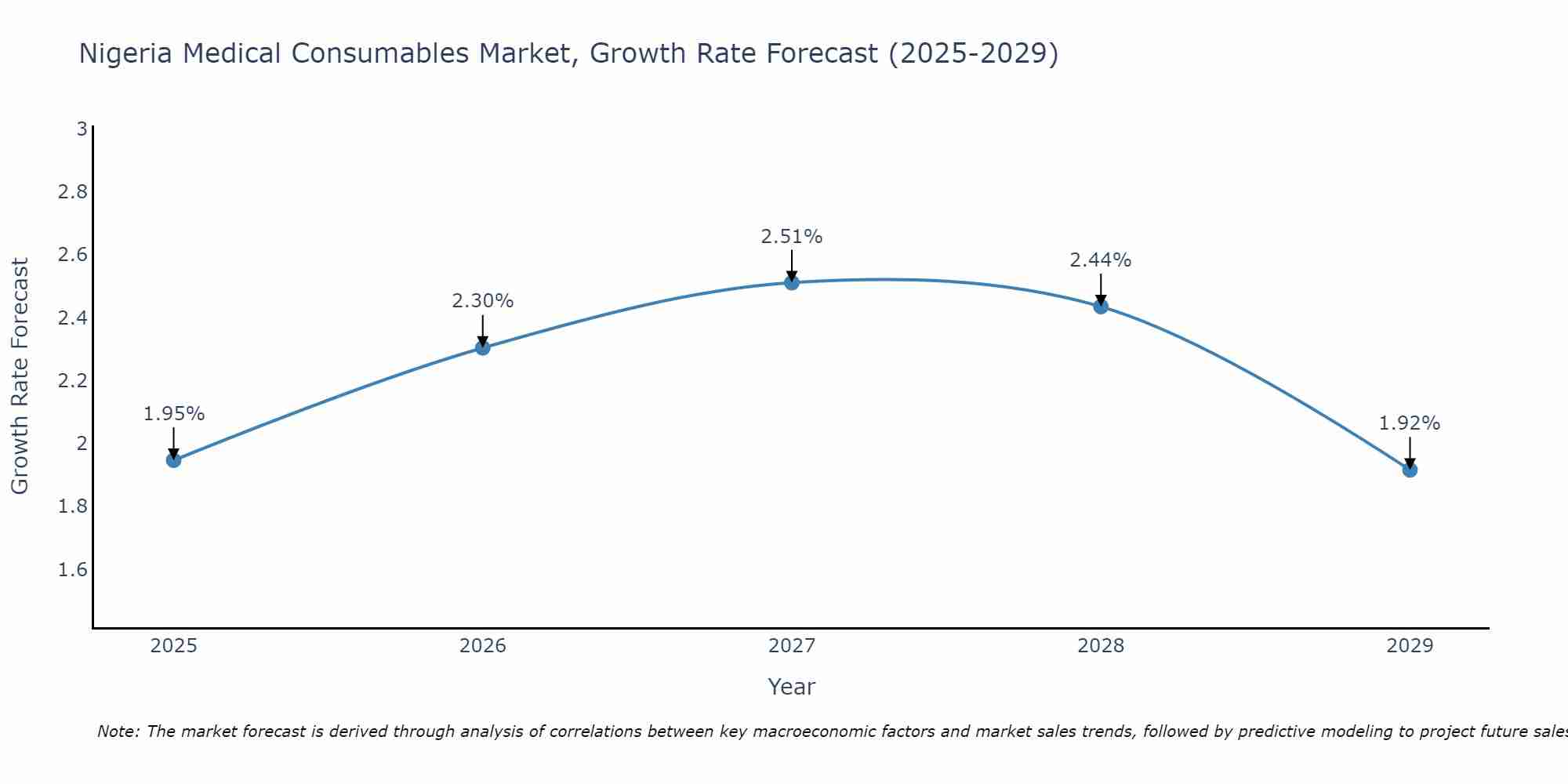
The Nigeria Medical Consumables Market is projected to witness mixed growth rate patterns during 2025 to 2029. The growth rate begins at 1.95% in 2025, climbs to a high of 2.51% in 2027, and moderates to 1.92% by 2029.
Nigeria Medical Consumables Market Synopsis
The Nigeria medical consumables market size was valued at USD 719.6 million in 2020 and is projected to reach USD 1,074.2 million by 2026, exhibiting a CAGR of 6.9% during the forecast period (2021 - 2026). The increasing prevalence of chronic diseases coupled with rising geriatric population is expected to propel the demand for medical consumables over the forecast period
In addition, government initiatives such as National Health Insurance Scheme (NHIS), which aims to provide health insurance coverage to citizens are also aiding in enhanced access to healthcare services, thus providing a boost to this market?s growth prospects over the coming years. Moreover, factors such as growing awareness about healthcare among people and increased focus on improving healthcare infrastructure are also projected to accelerate market growth in Nigeria over the next few years
Key Highlights of the Report:
- Nigeria Medical Consumables Market Outlook
- Market Size of Nigeria Medical Consumables Market, 2019
- Forecast of Nigeria Medical Consumables Market, 2026
- Historical Data and Forecast of Nigeria Medical Consumables Revenues & Volume for the Period 2016 - 2026
- Nigeria Medical Consumables Market Trend Evolution
- Nigeria Medical Consumables Market Drivers and Challenges
- Nigeria Medical Consumables Price Trends
- Nigeria Medical Consumables Porter's Five Forces
- Nigeria Medical Consumables Industry Life Cycle
- Historical Data and Forecast of Nigeria Medical Consumables Market Revenues & Volume By Type for the Period 2016 - 2026
- Historical Data and Forecast of Nigeria Medical Consumables Market Revenues & Volume By Blood Bags for the Period 2016 - 2026
- Historical Data and Forecast of Nigeria Medical Consumables Market Revenues & Volume By IV Solutions for the Period 2016 - 2026
- Historical Data and Forecast of Nigeria Medical Consumables Market Revenues & Volume By Syringes for the Period 2016 - 2026
- Historical Data and Forecast of Nigeria Medical Consumables Market Revenues & Volume By IV Catheters for the Period 2016 - 2026
- Historical Data and Forecast of Nigeria Medical Consumables Market Revenues & Volume By Urine Catheters for the Period 2016 - 2026
- Historical Data and Forecast of Nigeria Medical Consumables Market Revenues & Volume By Urine Bags for the Period 2016 - 2026
- Historical Data and Forecast of Nigeria Medical Consumables Market Revenues & Volume By Wound Care for the Period 2016 - 2026
- Historical Data and Forecast of Nigeria Medical Consumables Market Revenues & Volume By Applications for the Period 2016 - 2026
- Historical Data and Forecast of Nigeria Medical Consumables Market Revenues & Volume By Hospitals for the Period 2016 - 2026
- Historical Data and Forecast of Nigeria Medical Consumables Market Revenues & Volume By Clinics for the Period 2016 - 2026
- Nigeria Medical Consumables Import Export Trade Statistics
- Market Opportunity Assessment By Type
- Market Opportunity Assessment By Applications
- Nigeria Medical Consumables Top Companies Market Share
- Nigeria Medical Consumables Competitive Benchmarking By Technical and Operational Parameters
- Nigeria Medical Consumables Company Profiles
- Nigeria Medical Consumables Key Strategic Recommendations






































