Nigeria Melamine Market Top 5 Importing Countries and Market Competition (HHI) Analysis
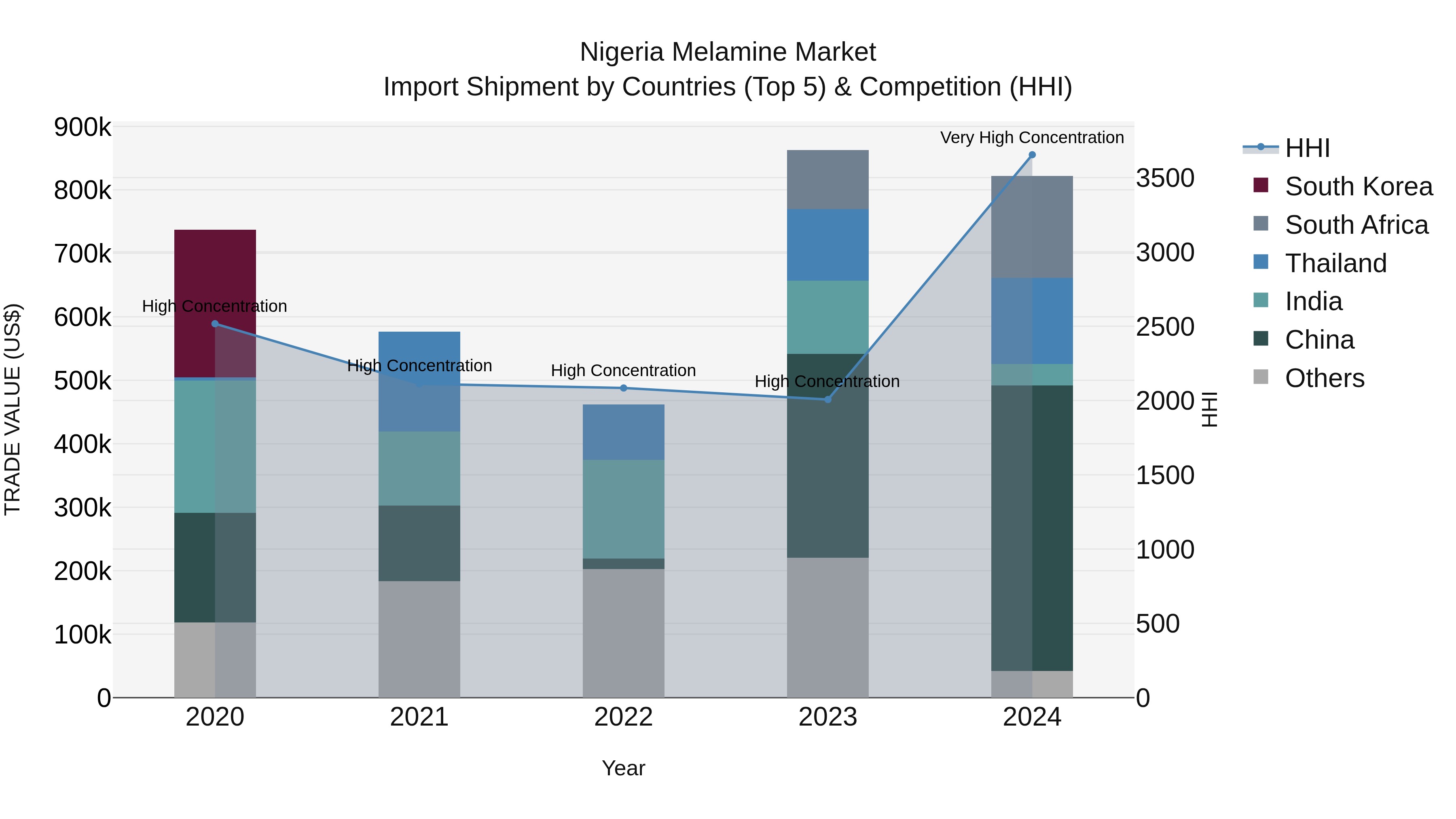
The Nigeria melamine import market saw a significant increase in concentration in 2024, with top exporting countries being China, South Africa, Thailand, Norway, and India. Despite a slight decline in growth rate from 2023 to 2024, the compound annual growth rate (CAGR) over the period 2020-2024 remained positive at 2.76%. This high concentration of imports suggests a competitive landscape among key suppliers, potentially driving strategic partnerships and market positioning efforts in the coming years. It will be crucial for stakeholders to closely monitor market dynamics and adapt their strategies to navigate this increasingly competitive environment.
Nigeria Melamine Market Overview
The Nigeria melamine market is experiencing steady growth driven by the expanding construction and automotive industries. Melamine, a chemical compound used primarily in the production of laminates, tableware, and coatings, is in high demand due to its heat-resistant and durable properties. The market is also influenced by the rising consumer preference for aesthetically pleasing and durable home decor products. Key players in the Nigeria melamine market include manufacturers such as BUA Group, Indorama Corporation, and Dangote Industries Limited. The market is expected to witness further growth due to increasing urbanization, infrastructure development projects, and the growing middle-class population with higher disposable incomes. However, challenges such as fluctuating raw material prices and regulatory constraints may impact the market`s growth trajectory.
Nigeria Melamine Market Trends
In the Nigeria Melamine Market, there is a growing trend towards eco-friendly and sustainable melamine products. Consumers are increasingly seeking melamine products that are BPA-free and food-safe, as well as those that are recyclable and environmentally friendly. Manufacturers are responding to this trend by introducing eco-conscious melamine dinnerware and kitchenware options that appeal to the environmentally conscious consumer. Additionally, there is a rising demand for innovative and stylish melamine designs that mimic the look of porcelain and ceramic, providing consumers with a wider range of options beyond traditional melamine patterns. Overall, the Nigeria Melamine Market is witnessing a shift towards more sustainable and aesthetically appealing products to meet the evolving preferences of consumers.
Nigeria Melamine Market Challenges
In the Nigeria Melamine market, some key challenges include limited awareness and understanding of the product among consumers and manufacturers, leading to slow adoption rates. Additionally, the presence of counterfeit and low-quality melamine products in the market poses a threat to the reputation and trust of genuine manufacturers. Infrastructure issues such as inconsistent power supply and transportation logistics also impact the manufacturing and distribution processes, affecting the overall market growth. Price fluctuations in raw materials and currency exchange rates further add to the challenges faced by melamine manufacturers in Nigeria. Overcoming these obstacles will require increased marketing efforts, quality control measures, investment in infrastructure improvements, and strategic pricing strategies to stimulate demand and ensure long-term sustainability in the market.
Nigeria Melamine Market Investment Opportunities
The Nigeria Melamine Market presents several investment opportunities for interested parties. With the growing demand for melamine in various industries such as construction, automotive, and consumer goods, investing in melamine production facilities or trading companies could be lucrative. Additionally, the increasing urbanization and disposable income in Nigeria are driving the demand for melamine-based products like kitchenware, tableware, and laminates, creating a promising market for investors. Furthermore, exploring partnerships with local manufacturers or distributors to establish a presence in the market and capitalize on the country`s economic growth could also be a viable investment strategy in the Nigeria Melamine Market.
Nigeria Melamine Market Government Policy
The Nigerian government does not have specific policies focused solely on the melamine market. However, melamine is regulated under the National Agency for Food and Drug Administration and Control (NAFDAC) guidelines, which set maximum allowable limits for melamine in food products to ensure consumer safety. Additionally, the Standards Organization of Nigeria (SON) provides quality standards for products containing melamine to protect consumers and promote fair trade practices. Overall, the Nigerian government aims to regulate the use of melamine in products to prevent health risks and maintain product quality standards in the market.
Nigeria Melamine Market Future Outlook
The Nigeria melamine market is expected to experience steady growth in the coming years due to increasing demand from the construction, automotive, and packaging industries. The growing population and urbanization in Nigeria are driving the need for more durable and heat-resistant materials, thus boosting the demand for melamine products. Additionally, the government`s focus on infrastructure development and the rise in disposable income among consumers are likely to further fuel the market growth. However, challenges such as fluctuating raw material prices and competition from alternative materials may impact the market dynamics. Overall, with the expanding industrial sectors and rising consumer preferences for quality products, the Nigeria melamine market is poised for positive growth in the foreseeable future.
Key Highlights of the Report:
- Nigeria Melamine Market Outlook
- Market Size of Nigeria Melamine Market, 2021
- Forecast of Nigeria Melamine Market, 2031
- Historical Data and Forecast of Nigeria Melamine Revenues & Volume for the Period 2021 - 2031
- Nigeria Melamine Market Trend Evolution
- Nigeria Melamine Market Drivers and Challenges
- Nigeria Melamine Price Trends
- Nigeria Melamine Porter's Five Forces
- Nigeria Melamine Industry Life Cycle
- Historical Data and Forecast of Nigeria Melamine Market Revenues & Volume By Forms for the Period 2021 - 2031
- Historical Data and Forecast of Nigeria Melamine Market Revenues & Volume By Melamine Resin for the Period 2021 - 2031
- Historical Data and Forecast of Nigeria Melamine Market Revenues & Volume By Melamine Foams for the Period 2021 - 2031
- Historical Data and Forecast of Nigeria Melamine Market Revenues & Volume By Applications for the Period 2021 - 2031
- Historical Data and Forecast of Nigeria Melamine Market Revenues & Volume By Laminates for the Period 2021 - 2031
- Historical Data and Forecast of Nigeria Melamine Market Revenues & Volume By Wood Adhesives for the Period 2021 - 2031
- Historical Data and Forecast of Nigeria Melamine Market Revenues & Volume By Surface Coatings for the Period 2021 - 2031
- Historical Data and Forecast of Nigeria Melamine Market Revenues & Volume By Thermoset Plastics for the Period 2021 - 2031
- Historical Data and Forecast of Nigeria Melamine Market Revenues & Volume By End-users for the Period 2021 - 2031
- Historical Data and Forecast of Nigeria Melamine Market Revenues & Volume By Construction for the Period 2021 - 2031
- Historical Data and Forecast of Nigeria Melamine Market Revenues & Volume By Chemical for the Period 2021 - 2031
- Historical Data and Forecast of Nigeria Melamine Market Revenues & Volume By Textile for the Period 2021 - 2031
- Historical Data and Forecast of Nigeria Melamine Market Revenues & Volume By Automotive for the Period 2021 - 2031
- Nigeria Melamine Import Export Trade Statistics
- Market Opportunity Assessment By Forms
- Market Opportunity Assessment By Applications
- Market Opportunity Assessment By End-users
- Nigeria Melamine Top Companies Market Share
- Nigeria Melamine Competitive Benchmarking By Technical and Operational Parameters
- Nigeria Melamine Company Profiles
- Nigeria Melamine Key Strategic Recommendations






































