Nigeria Oil and Gas Cloud Applications Market Size & Growth Rate (2026-2032)
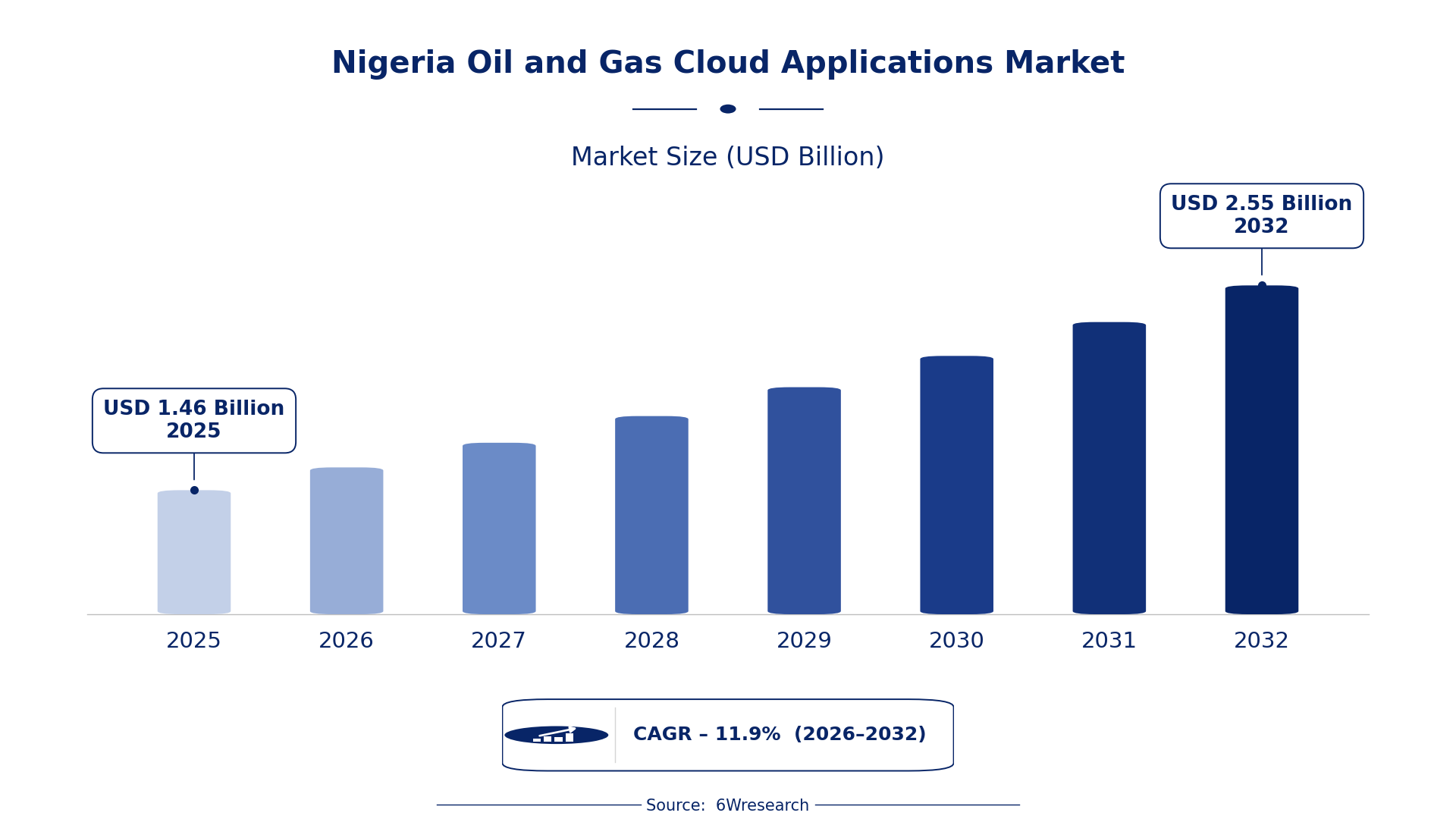
The Nigeria Oil and Gas Cloud Applications Market was estimated at USD 1461 Million in 2025 and is projected to reach USD 2546 Million by 2032, growing at a CAGR of 11.9% from 2026 to 2032.
Nigeria Oil and Gas Cloud Applications Market Synopsis
In Nigeria, oil and gas companies are increasingly turning to cloud applications to enhance operational efficiency and data management. The shift towards cloud computing is driven by the industry's urgent need for real-time data analytics and improved decision-making processes.
As digital transformation gains momentum, businesses are adopting cloud-based solutions for asset management and production optimization. This trend is reshaping traditional operations and facilitating a more agile response to market fluctuations.
Nigeria Oil and Gas Cloud Applications Market Year-wise Growth Rate and Key Drivers
This graph illustrates the annual growth rates of the Nigeria Oil and Gas Cloud Applications Market from 2021 to 2032, highlighting a steady upward trajectory and projected expansion over the forecast period.
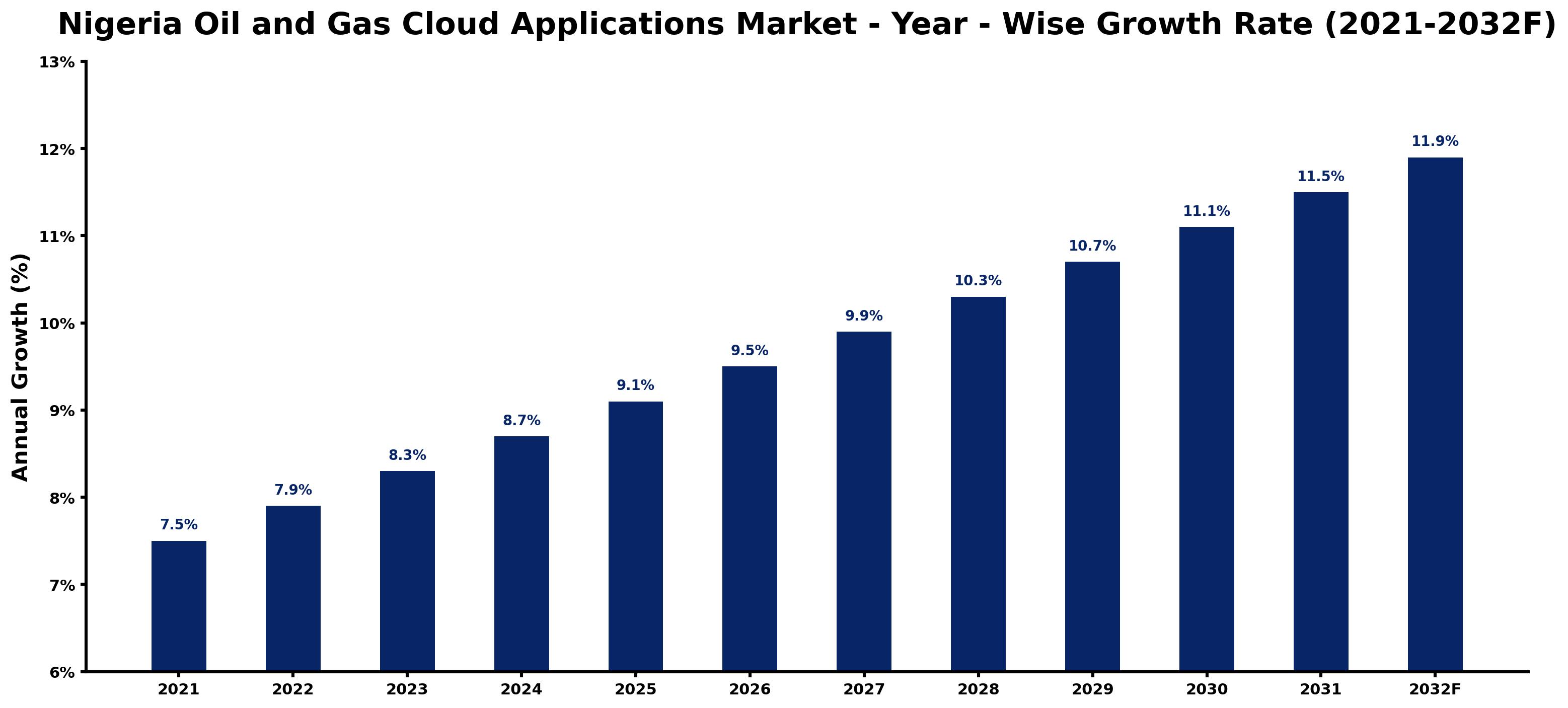
The table below presents the year‑wise growth rates along with the key drivers influencing the market
| Year | Growth Rate | Major Drivers |
| 2021 | 7.5% | Nigerian government promotes digitalization in oil sector. |
| 2022 | 7.9% | Adoption of cloud solutions for resource management increases. |
| 2023 | 8.3% | Nigerian National Petroleum Corporation pushes for modernization. |
| 2024 | 8.7% | Local startups innovate in cloud applications for oil rigs. |
| 2025 | 9.1% | Increased cybersecurity regulations accelerate cloud adoption. |
| 2026 | 9.5% | Partnerships with tech firms enhance oil data management. |
| 2027 | 9.9% | Subsidies for tech adoption drive cloud platform usage. |
| 2028 | 10.3% | Growing foreign investments boost technology integration in oil. |
| 2029 | 10.7% | Rise in offshore drilling necessitates advanced cloud solutions. |
| 2030 | 11.1% | Increasing automation in oil field operations favors cloud tech. |
| 2031 | 11.5% | Government incentives promote digitization of oil contracts. |
| 2032 | 11.9% | Emerging regulatory frameworks enhance transparency via cloud systems. |
Note: Market size estimations and growth projections presented in this report are based on 6Wresearch's proprietary forecasting methodology, utilizing the latest available industry data, government publications, and primary research inputs.
Nigeria Oil and Gas Cloud Applications Market Key Takeaways
Below are some of the specific key takeaways from the market, including:
- The market is undergoing rapid growth, fueled by digital transformation initiatives.
- Cloud applications are becoming essential for data analytics and operational efficiency.
- Security and compliance concerns are being addressed through advancements in cloud technology.
- Scalability and flexibility of cloud solutions enable better resource management.
- Government policies are actively promoting the adoption of cloud technologies in the sector.
Evaluation of Restraints in Nigeria Oil and Gas Cloud Applications Market
Despite the promising growth, the Nigeria oil and gas cloud applications market faces notable challenges. Data security remains a top concern, as companies handle sensitive information that requires robust protection against breaches. Additionally, regulatory compliance adds complexity, with firms needing to navigate a framework that is constantly evolving.
Infrastructure limitations also hinder wider adoption. Connectivity issues, particularly in remote areas, restrict access to cloud services, making it difficult for some companies to fully realize the benefits of digital solutions. These factors collectively create a cautious environment where firms must balance innovation with risk management.
Nigeria Oil and Gas Cloud Applications Market Trends
A significant trend is the increasing reliance on data analytics to drive decision-making processes. Companies are utilizing cloud applications to gather and analyze vast amounts of data, facilitating more informed strategic choices. This trend is particularly evident in production optimization and predictive maintenance, where real-time insights can lead to substantial cost savings.
Another emerging trend is the growing focus on cloud security solutions. As companies transition to cloud environments, there is a heightened awareness of the need for secure infrastructures. Investments in advanced security measures are becoming commonplace, ensuring that data integrity and compliance are not compromised.
Nigeria Oil and Gas Cloud Applications Market Opportunities
The landscape is ripe with opportunities for vendors offering innovative cloud solutions tailored to the oil and gas sector. As companies seek to modernize operations, there is a demand for specialized applications that address specific industry challenges, such as compliance and asset management.
Additionally, the ongoing push from the government for digital transformation presents a favorable environment for investment. Companies that can provide tailored solutions aligning with regulatory frameworks will find themselves in a strong position to capture market share.
Government Initiatives in the Nigeria Oil and Gas Cloud Applications Market
The Nigerian government is actively fostering an environment conducive to the adoption of cloud applications within the oil and gas sector. By implementing supportive policies and regulatory frameworks, the government aims to enhance operational efficiency and ensure compliance with international standards. This initiative is crucial in a sector where digital transformation is essential for competitiveness.
- A recently completed national digital infrastructure upgrade program has improved connectivity for oil and gas companies.
- Current initiatives include regulatory frameworks focused on enhancing data security and compliance standards.
- A planned public-private partnership is expected to expand cloud technology access across the sector by 2028.
- Ongoing investments in cybersecurity measures are aimed at protecting sensitive data within cloud applications.
- Future policies will likely emphasize the integration of renewable energy sources, encouraging the adoption of cloud solutions for diversified operations.
Future Insights of the Nigeria Oil and Gas Cloud Applications Market
Looking ahead to 2026-2032, the Nigeria oil and gas cloud applications market is set for significant transformation. The ongoing digital shift will continue to drive demand for cloud solutions, with companies increasingly seeking to leverage data analytics for competitive advantage.
As regulatory frameworks evolve, companies that adapt swiftly to compliance requirements will thrive. The integration of advanced technologies, such as artificial intelligence and machine learning, within cloud applications is expected to further enhance operational capabilities, making the sector more efficient and resilient.
Nigeria Oil and Gas Cloud Applications Market Latest Developments
In the past year, the Nigeria oil and gas cloud applications market has witnessed a surge in activity as companies strive to modernize operations. This trend is evident in the partnerships formed between tech firms and oil companies to enhance digital capabilities.
- A major technology vendor launched a new cloud-based analytics platform in early 2025 to help companies optimize production processes.
- Ongoing collaborations between regional operators and cloud service providers aim to improve data management practices across the sector.
- A rollout of enhanced cybersecurity measures is currently underway, addressing data privacy concerns among companies.
- A planned initiative to introduce cloud solutions for regulatory compliance is expected to begin in late 2026, responding to industry needs.
- Several oil companies are upgrading their existing cloud infrastructures to incorporate AI-driven analytics, with projects currently in development.
Nigeria Oil and Gas Cloud Applications Market - Key Attractiveness of the Report
- 10 Years of Market Numbers
- Historical Data Starting from 2022 to 2025
- Base Year: 2025
- Forecast Data until 2032
- Key Performance Indicators Impacting the Market
- Major Upcoming Developments and Projects
Key Highlights of the Report:
- Nigeria Oil and Gas Cloud Applications Market Outlook
- Market Size of Nigeria Oil and Gas Cloud Applications Market, 2025
- Forecast of Nigeria Oil and Gas Cloud Applications Market, 2032
- Historical Data and Forecast of Nigeria Oil and Gas Cloud Applications Revenues & Volume for the Period 2022-2032F
- Nigeria Oil and Gas Cloud Applications Market Trend Evolution
- Nigeria Oil and Gas Cloud Applications Market Drivers and Challenges
- Nigeria Oil and Gas Cloud Applications Price Trends
- Nigeria Oil and Gas Cloud Applications Porter's Five Forces
- Nigeria Oil and Gas Cloud Applications Industry Life Cycle
- Historical Data and Forecast of Nigeria Oil and Gas Cloud Applications Market Revenues & Volume By Component for the Period 2022-2032F
- Historical Data and Forecast of Nigeria Oil and Gas Cloud Applications Market Revenues & Volume By Solution for the Period 2022-2032F
- Historical Data and Forecast of Nigeria Oil and Gas Cloud Applications Market Revenues & Volume By Services for the Period 2022-2032F
- Historical Data and Forecast of Nigeria Oil and Gas Cloud Applications Market Revenues & Volume By Deployment Type for the Period 2022-2032F
- Historical Data and Forecast of Nigeria Oil and Gas Cloud Applications Market Revenues & Volume By Private for the Period 2022-2032F
- Historical Data and Forecast of Nigeria Oil and Gas Cloud Applications Market Revenues & Volume By Public Cloud for the Period 2022-2032F
- Historical Data and Forecast of Nigeria Oil and Gas Cloud Applications Market Revenues & Volume By Operation for the Period 2022-2032F
- Historical Data and Forecast of Nigeria Oil and Gas Cloud Applications Market Revenues & Volume By Upstream for the Period 2022-2032F
- Historical Data and Forecast of Nigeria Oil and Gas Cloud Applications Market Revenues & Volume By Midstream for the Period 2022-2032F
- Historical Data and Forecast of Nigeria Oil and Gas Cloud Applications Market Revenues & Volume By Downstream for the Period 2022-2032F
- Nigeria Oil and Gas Cloud Applications Import Export Trade Statistics
- Market Opportunity Assessment By Component
- Market Opportunity Assessment By Deployment Type
- Market Opportunity Assessment By Operation
- Nigeria Oil and Gas Cloud Applications Top Companies Market Share
- Nigeria Oil and Gas Cloud Applications Competitive Benchmarking By Technical and Operational Parameters
- Nigeria Oil and Gas Cloud Applications Company Profiles
- Nigeria Oil and Gas Cloud Applications Key Strategic Recommendations































