Nigeria Personal Hygiene Market Top 5 Importing Countries and Market Competition (HHI) Analysis
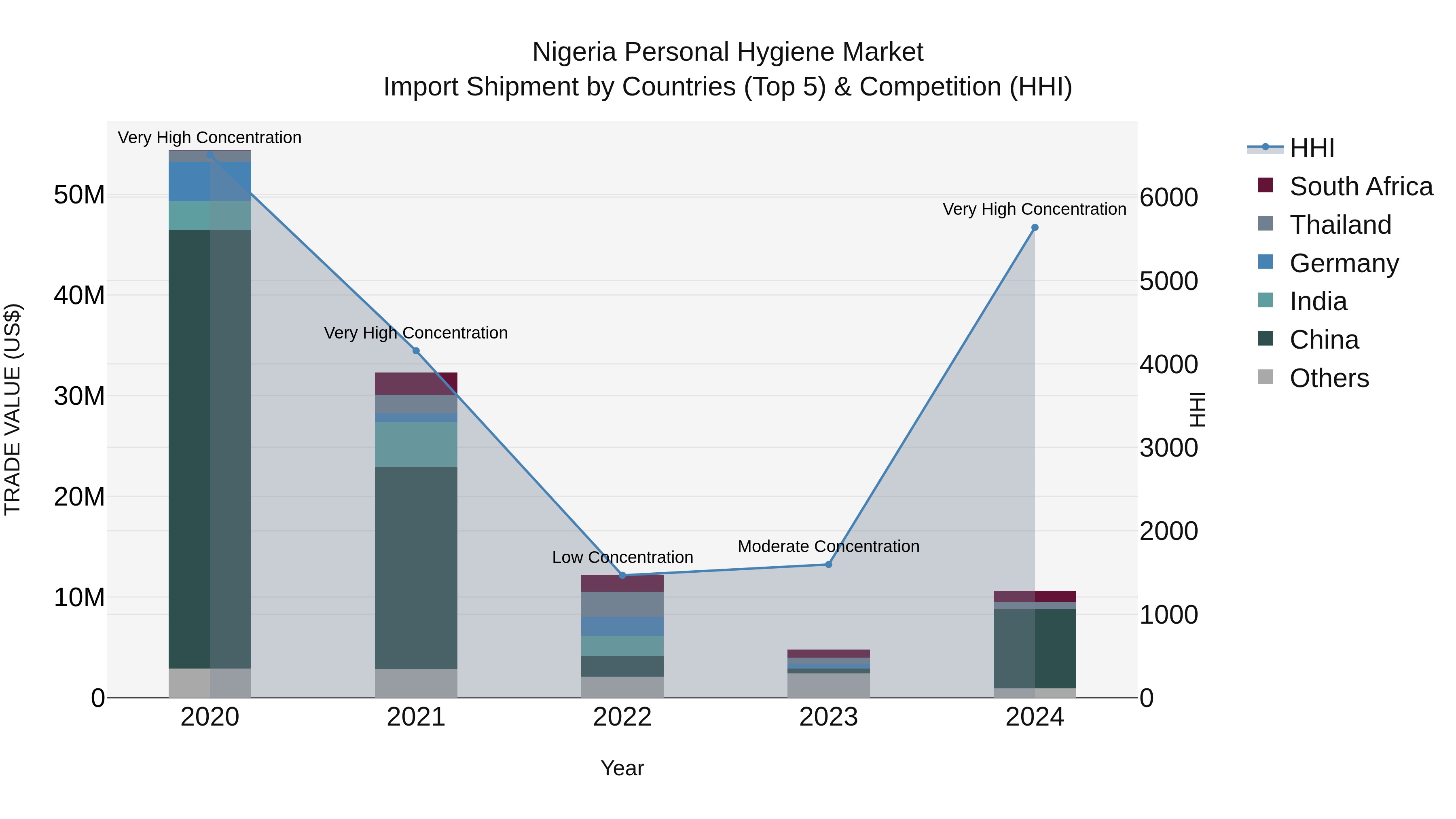
The personal hygiene import market in Nigeria experienced a significant shift in 2024, with China, South Africa, Thailand, Poland, and the UK emerging as the top exporters. The market concentration, as measured by the Herfindahl-Hirschman Index (HHI), escalated from moderate to very high in just one year, indicating a more consolidated market landscape. Despite a negative compound annual growth rate (CAGR) from 2020 to 2024, the market showed a remarkable growth spurt in 2024 with a growth rate of 121.32%, suggesting potential opportunities for further expansion and competition among key players.
Nigeria Personal Hygiene Market Synopsis
The personal hygiene market in Nigeria is experiencing steady growth driven by increasing awareness of hygiene practices, urbanization, and a growing middle class. The market includes products such as soaps, lotions, deodorants, oral care products, and feminine hygiene products. Key players in the market offer a wide range of products catering to different consumer preferences and price points. Local and international brands compete in this market, with consumers showing a preference for products that offer quality, efficacy, and affordability. Factors such as changing lifestyles, a focus on personal grooming, and an increase in disposable income are driving the demand for personal hygiene products in Nigeria. Additionally, the COVID-19 pandemic has heightened awareness of hygiene practices, further boosting the market`s growth potential.
Nigeria Personal Hygiene Market Trends
The Nigeria Personal Hygiene Market is experiencing a shift towards natural and organic products as consumers become more conscious of ingredients and their impact on health. There is a growing demand for products that are free from harmful chemicals, with a focus on plant-based and eco-friendly options. Personal hygiene products such as soaps, shampoos, and skincare items are incorporating more natural ingredients like shea butter, coconut oil, and essential oils to cater to this trend. Additionally, there is a rising interest in sustainable packaging solutions to reduce environmental impact. E-commerce platforms are also playing a significant role in driving sales by offering convenience and a wide range of product choices to consumers. Overall, the market is witnessing a move towards cleaner, greener, and more sustainable personal hygiene products in Nigeria.
Nigeria Personal Hygiene Market Challenges
In the Nigeria Personal Hygiene Market, some of the key challenges include low consumer awareness and education about the importance of personal hygiene practices, limited access to affordable and high-quality personal hygiene products in rural areas, and competition from informal and unregulated local vendors. Additionally, inconsistent regulatory enforcement and counterfeit products pose a threat to consumer safety and trust in the market. Infrastructure issues such as unreliable water supply and sanitation services also hinder the widespread adoption of proper personal hygiene practices. Addressing these challenges requires collaboration between government bodies, industry stakeholders, and public health organizations to improve education, accessibility, and regulation in the Nigeria Personal Hygiene Market.
Nigeria Personal Hygiene Market Investment Opportunities
The Nigeria Personal Hygiene Market presents attractive investment opportunities in various segments such as skincare products, hair care products, oral care products, and feminine hygiene products. With a growing population, increasing urbanization, and rising disposable incomes, there is a growing demand for high-quality personal hygiene products in Nigeria. Investors can capitalize on this trend by investing in local manufacturing facilities, distribution networks, and marketing strategies to cater to the diverse needs of consumers. Additionally, there is potential for innovation and product development to meet the specific preferences of the Nigerian market. Partnerships with local suppliers and retailers can also enhance market penetration and brand visibility. Overall, the Nigeria Personal Hygiene Market offers promising investment prospects for those looking to tap into the country`s evolving consumer landscape.
Jordan Agar Market Government Policies
The Nigerian government has implemented various policies to promote personal hygiene in the country. These include the National Environmental Sanitation Policy, which aims to improve the overall cleanliness and hygiene of the environment. Additionally, the National Policy on Water Supply and Sanitation provides guidelines for ensuring access to clean water and sanitation facilities for all citizens. The government has also launched campaigns such as the Clean Nigeria Program, which focuses on promoting proper waste management and sanitation practices. These policies and initiatives play a crucial role in raising awareness about the importance of personal hygiene and ensuring that individuals have access to the necessary resources to maintain good hygiene practices in Nigeria.
Nigeria Personal Hygiene Market Future Outlook
The Nigeria Personal Hygiene Market is expected to show steady growth in the coming years, driven by factors such as rising disposable income, increasing awareness of personal hygiene, and a growing urban population. Consumers are becoming more conscious of their health and well-being, leading to a higher demand for personal hygiene products such as soaps, sanitizers, and oral care products. The market is also witnessing a shift towards natural and organic products due to a rising trend towards sustainability and eco-friendliness. With a large young population in Nigeria, there is a significant opportunity for market players to innovate and introduce new products tailored to the preferences of the younger demographic. Overall, the Nigeria Personal Hygiene Market is poised for expansion and is likely to attract investments and new entrants in the near future.
Key Highlights of the Report:
- Nigeria Personal Hygiene Market Outlook
- Market Size of Nigeria Personal Hygiene Market, 2024
- Forecast of Nigeria Personal Hygiene Market, 2031
- Historical Data and Forecast of Nigeria Personal Hygiene Revenues & Volume for the Period 2021- 2031
- Nigeria Personal Hygiene Market Trend Evolution
- Nigeria Personal Hygiene Market Drivers and Challenges
- Nigeria Personal Hygiene Price Trends
- Nigeria Personal Hygiene Porter's Five Forces
- Nigeria Personal Hygiene Industry Life Cycle
- Historical Data and Forecast of Nigeria Personal Hygiene Market Revenues & Volume By Product for the Period 2021- 2031
- Historical Data and Forecast of Nigeria Personal Hygiene Market Revenues & Volume By Soaps for the Period 2021- 2031
- Historical Data and Forecast of Nigeria Personal Hygiene Market Revenues & Volume By Hand Sanitizers for the Period 2021- 2031
- Historical Data and Forecast of Nigeria Personal Hygiene Market Revenues & Volume By Bath and Shower Products for the Period 2021- 2031
- Historical Data and Forecast of Nigeria Personal Hygiene Market Revenues & Volume By Face Care Products for the Period 2021- 2031
- Historical Data and Forecast of Nigeria Personal Hygiene Market Revenues & Volume By Other Products for the Period 2021- 2031
- Historical Data and Forecast of Nigeria Personal Hygiene Market Revenues & Volume By Gender for the Period 2021- 2031
- Historical Data and Forecast of Nigeria Personal Hygiene Market Revenues & Volume By Unisex for the Period 2021- 2031
- Historical Data and Forecast of Nigeria Personal Hygiene Market Revenues & Volume By Male for the Period 2021- 2031
- Historical Data and Forecast of Nigeria Personal Hygiene Market Revenues & Volume By Female for the Period 2021- 2031
- Historical Data and Forecast of Nigeria Personal Hygiene Market Revenues & Volume By Distribution Channel for the Period 2021- 2031
- Historical Data and Forecast of Nigeria Personal Hygiene Market Revenues & Volume By Retail Pharmacies for the Period 2021- 2031
- Historical Data and Forecast of Nigeria Personal Hygiene Market Revenues & Volume By Hospital based Pharmacies for the Period 2021- 2031
- Historical Data and Forecast of Nigeria Personal Hygiene Market Revenues & Volume By Supermarkets for the Period 2021- 2031
- Historical Data and Forecast of Nigeria Personal Hygiene Market Revenues & Volume By E-commerce for the Period 2021- 2031
- Nigeria Personal Hygiene Import Export Trade Statistics
- Market Opportunity Assessment By Product
- Market Opportunity Assessment By Gender
- Market Opportunity Assessment By Distribution Channel
- Nigeria Personal Hygiene Top Companies Market Share
- Nigeria Personal Hygiene Competitive Benchmarking By Technical and Operational Parameters
- Nigeria Personal Hygiene Company Profiles
- Nigeria Personal Hygiene Key Strategic Recommendations






































