Nigeria Physiotherapy Equipment Market Summary
The nigeria physiotherapy equipment market was estimated at USD 342 Million in 2025 and is projected to reach USD 483 Million by 2032, growing at a CAGR of 5.9% from 2026 to 2032.
Nigeria Physiotherapy Equipment Market Year-wise Growth Rate and Key Drivers
This graph highlights how the Nigeria Physiotherapy Equipment Market has steadily grown over the past five years, supported by major growth factors.
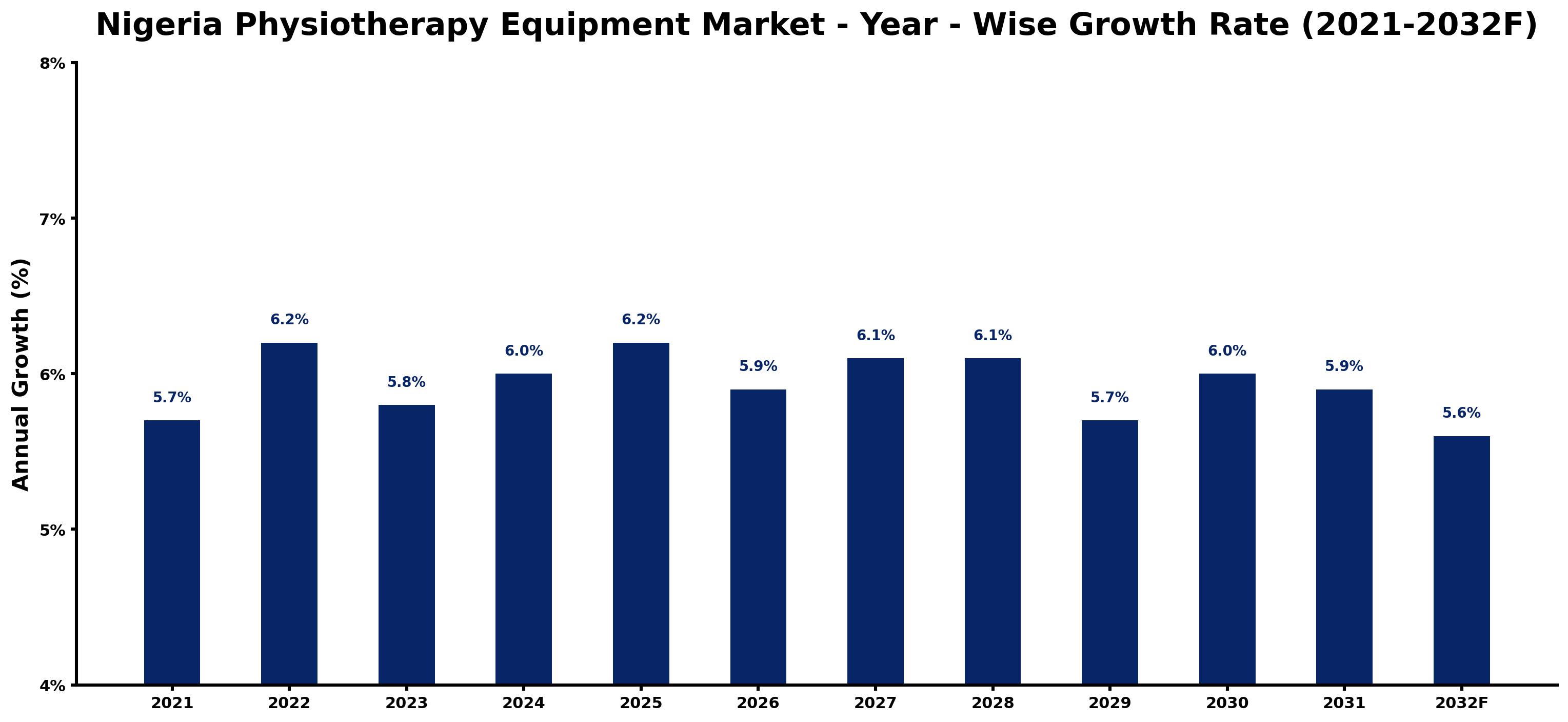
The table below presents the year wise growth rates along with the key drivers influencing the market
| Year | Growth Rate | Major Drivers |
| 2021 | 5.7% | Post-pandemic healthcare investments prompted increased interest in rehabilitation services and equipment. |
| 2022 | 6.2% | Healthcare professionals emphasized the importance of physiotherapy in chronic disease management and recovery. |
| 2023 | 5.8% | Urbanization trends resulted in higher patient volumes seeking physiotherapy services in cities. |
| 2024 | 6.0% | Technological innovations in diagnostic tools facilitated improved patient assessments and treatment plans. |
| 2025 | 6.2% | An influx of private healthcare facilities expanded the availability of physiotherapy services nationwide. |
| 2026 | 5.9% | Rising awareness about preventive healthcare increased demand for outpatient physiotherapy interventions. |
| 2027 | 6.1% | Partnerships between educational institutions and healthcare providers enhanced training for physiotherapy professionals. |
| 2028 | 6.1% | Corporate wellness programs promoted physiotherapy integration to improve employee health and productivity. |
| 2029 | 5.7% | Government-sponsored health campaigns aimed at reducing disability rates emphasized physiotherapy's role. |
| 2030 | 6.0% | Expansion of telehealth services allowed remote access to physiotherapy consultations and resources. |
| 2031 | 5.9% | A focus on sports performance prompted investment in specialized physiotherapy equipment and training. |
| 2032 | 5.6% | Increased aging population necessitated accessible physiotherapy solutions for age-related health issues. |
Note - Market size estimations and growth projections presented in this report are based on 6Wresearch's advanced forecasting approach, validated with industry datasets as of June 2026.
Nigeria Physiotherapy Equipment Market Synopsis
The Nigeria Physiotherapy Equipment Market is projected to reach 5.9% and witness significant growth during the forecast period (2026-2032). In recent years, the market has experienced a notable increase in demand driven by various factors, including a growing prevalence of chronic diseases, injuries, and disabilities. These health challenges have prompted a surge in the need for effective rehabilitation services, further fueling market expansion.
Nigeria Physiotherapy Equipment Market Growth Drivers
Several key drivers are propelling the growth of the Nigeria physiotherapy equipment market. Primarily, the rise in disposable income among the population has enhanced individuals' ability to invest in medical treatments, including physiotherapy. This trend reflects a greater societal realization of the importance of health and wellness.
- The increasing prevalence of lifestyle-related diseases, such as diabetes and hypertension, necessitates effective rehabilitation solutions, resulting in heightened demand for physiotherapy equipment.
- Injuries from sports and accidents are becoming more common, further driving the need for advanced physiotherapeutic treatment options.
- A growing awareness regarding the importance of maintaining physical health and rehabilitation has led to more people seeking physiotherapy services.
- The influx of foreign investments into the healthcare sector has facilitated the introduction of advanced physiotherapy modalities, thereby expanding market opportunities.
- Technological advancements, such as the development of sophisticated electrotherapy devices and laser modules, have made physiotherapy more effective and accessible, appealing to a wider range of patients.
Nigeria Physiotherapy Equipment Market Trends and Opportunities
The Nigeria physiotherapy equipment market is witnessing several trends that provide ample opportunities for growth. A significant shift towards the adoption of technologically advanced medical devices is evident, as healthcare facilities aim to improve patient outcomes through enhanced treatment options. This trend is evident in urban areas where healthcare infrastructure is evolving rapidly.
- Collaborative efforts between local institutions and international manufacturers are fostering innovation in product development, leading to the introduction of cutting-edge rehabilitation technologies.
- The demand for portable and home-use physiotherapy devices is increasing, reflecting a trend where patients seek convenience in their rehabilitation processes.
- Telehealth services are gaining traction, allowing physiotherapists to monitor and guide at-home therapy sessions, thus increasing the reach and efficiency of rehabilitation services.
- Public health initiatives aimed at raising awareness about the benefits of physiotherapy are encouraging more individuals to seek treatment, expanding the potential customer base.
- Investment in training programs for physiotherapists is elevating the standards of care, further enhancing the appeal of physiotherapy services to patients.
Nigeria Physiotherapy Equipment Market Challenges and Restraints
While the market presents numerous growth avenues, certain challenges may hinder its progress. Understanding these factors is critical for stakeholders aiming to navigate the dynamic landscape effectively.
- The high cost of advanced physiotherapy equipment may pose a barrier for small clinics and private practitioners, limiting access to necessary tools for effective treatment.
- Infrastructure challenges, particularly in rural areas, restrict the availability of high-quality physiotherapy services, necessitating focused solutions to bridge the gap.
- Regulatory hurdles, including the need for compliance with national safety standards for medical devices, can delay the introduction of new products into the market.
- Healthcare professionals may lack adequate training in the latest physiotherapy techniques and equipment, impacting the overall efficacy of treatment.
- Public perception of physiotherapy and its benefits remains a barrier in certain communities, necessitating increased awareness campaigns to educate the population.
Nigeria Physiotherapy Equipment Market Government Investment and Initiatives
The Nigerian government has recognized the significance of rehabilitation services in enhancing the overall healthcare ecosystem. Numerous initiatives are underway to promote the physiotherapy equipment market and improve access to rehabilitation.
- Government policies are focusing on increasing public health expenditure, enabling healthcare facilities to upgrade their physiotherapy equipment and services.
- Initiatives aimed at establishing rehabilitation centers in underserved areas are in place to address the existing disparities in access to physiotherapy.
- Public-private partnerships are being encouraged to facilitate innovation and investment in the healthcare sector, particularly in physiotherapy.
- Awareness campaigns led by government agencies are educating the public about the importance of physiotherapy and its benefits for various health issues.
- Regulatory frameworks established by organizations such as the National Agency for Food Drug Administration & Control (NAFDAC) ensure that manufacturers adhere to safety and quality standards, promoting trust in physiotherapy products.
Nigeria Physiotherapy Equipment Market Latest Developments (May 2025 - June 2026)
Between May 2025 and June 2026, the Nigeria physiotherapy equipment market has observed several key developments indicating a positive trajectory. Trends show an increasing number of healthcare providers adopting advanced physiotherapy technologies, which are reshaping treatment methodologies.
- Healthcare facilities are increasingly investing in digital solutions that integrate telehealth functionalities, enhancing patient engagement and treatment adherence.
- Emerging partnerships between local healthcare providers and international firms have led to the importation of innovative physiotherapy technologies, making cutting-edge solutions more accessible to Nigerian clinicians.
- Training programs for healthcare professionals have been expanded, empowering physiotherapists with the skills required to utilize the latest equipment effectively.
- Greater emphasis is being placed on evidence-based physiotherapy practices, with local studies being conducted to tailor treatments to the needs of the Nigerian population.
- Increased government focus on rehabilitation through the establishment of dedicated funding channels has also contributed to market growth, ensuring that more individuals receive adequate treatment.
Nigeria Physiotherapy Equipment Market - Key Attractiveness of the Report
- 10 Years of Market Numbers
- Historical Data Starting from 2022 to 2025
- Base Year: 2025
- Forecast Data until 2032
- Key Performance Indicators Impacting the Market
- Major Upcoming Developments and Projects
Key Highlights of the Report:
- Nigeria Physiotherapy Equipment Market Outlook
- Market Size of Nigeria Physiotherapy Equipment Market, 2025
- Forecast of Nigeria Physiotherapy Equipment Market, 2032F
- Historical Data and Forecast of Nigeria Physiotherapy Equipment Revenues & Volume for the Period 2022-2032F
- Nigeria Physiotherapy Equipment Market Trend Evolution
- Nigeria Physiotherapy Equipment Market Drivers and Challenges
- Nigeria Physiotherapy Equipment Price Trends
- Nigeria Physiotherapy Equipment Porter's Five Forces
- Nigeria Physiotherapy Equipment Industry Life Cycle
- Historical Data and Forecast of Nigeria Physiotherapy Equipment Market Revenues & Volume By Product Types for the Period 2022-2032F
- Historical Data and Forecast of Nigeria Physiotherapy Equipment Market Revenues & Volume By Equipment for the Period 2022-2032F
- Historical Data and Forecast of Nigeria Physiotherapy Equipment Market Revenues & Volume By Accessories for the Period 2022-2032F
- Historical Data and Forecast of Nigeria Physiotherapy Equipment Market Revenues & Volume By Application? for the Period 2022-2032F
- Historical Data and Forecast of Nigeria Physiotherapy Equipment Market Revenues & Volume By Musculoskeletal Applications for the Period 2022-2032F
- Historical Data and Forecast of Nigeria Physiotherapy Equipment Market Revenues & Volume By Neurological Applications for the Period 2022-2032F
- Historical Data and Forecast of Nigeria Physiotherapy Equipment Market Revenues & Volume By Cardiovascular & Pulmonary Applications for the Period 2022-2032F
- Historical Data and Forecast of Nigeria Physiotherapy Equipment Market Revenues & Volume By Pediatric Applications for the Period 2022-2032F
- Historical Data and Forecast of Nigeria Physiotherapy Equipment Market Revenues & Volume By Gynecological Applications for the Period 2022-2032F
- Historical Data and Forecast of Nigeria Physiotherapy Equipment Market Revenues & Volume By Other? for the Period 2022-2032F
- Historical Data and Forecast of Nigeria Physiotherapy Equipment Market Revenues & Volume By End-user for the Period 2022-2032F
- Historical Data and Forecast of Nigeria Physiotherapy Equipment Market Revenues & Volume By Physiotherapy & Rehabilitation Centers for the Period 2022-2032F
- Historical Data and Forecast of Nigeria Physiotherapy Equipment Market Revenues & Volume By Hospitals for the Period 2022-2032F
- Historical Data and Forecast of Nigeria Physiotherapy Equipment Market Revenues & Volume By Home Care Settings for the Period 2022-2032F
- Historical Data and Forecast of Nigeria Physiotherapy Equipment Market Revenues & Volume By Physician Offices for the Period 2022-2032F
- Historical Data and Forecast of Nigeria Physiotherapy Equipment Market Revenues & Volume By Others for the Period 2022-2032F
- Nigeria Physiotherapy Equipment Import Export Trade Statistics
- Market Opportunity Assessment By Product Types
- Market Opportunity Assessment By Application?
- Market Opportunity Assessment By End-user
- Nigeria Physiotherapy Equipment Top Companies Market Share
- Nigeria Physiotherapy Equipment Competitive Benchmarking By Technical and Operational Parameters
- Nigeria Physiotherapy Equipment Company Profiles
- Nigeria Physiotherapy Equipment Key Strategic Recommendations






































