Nigeria Radio And Audio Equipment Market Top 5 Importing Countries and Market Competition (HHI) Analysis
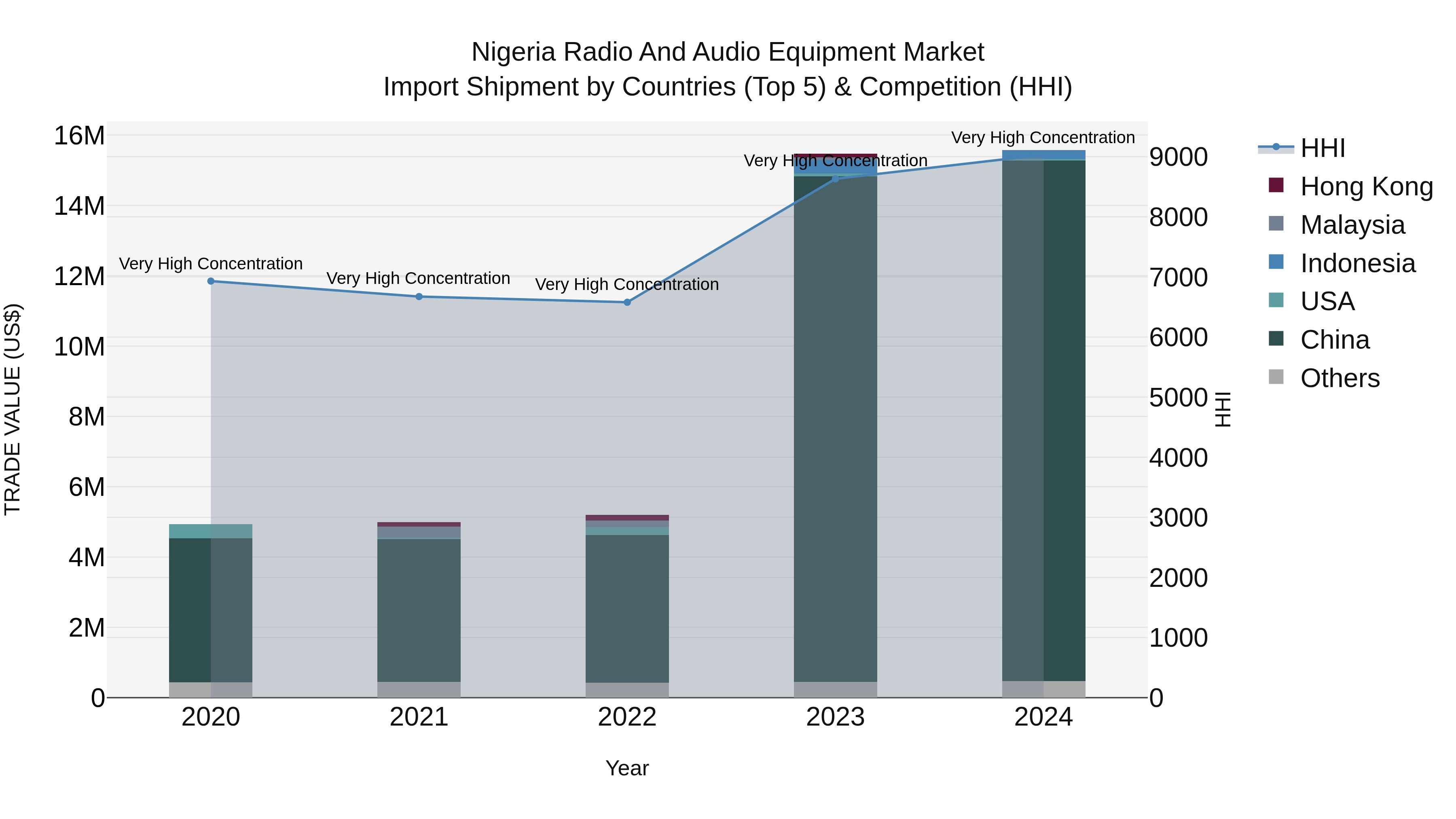
In 2024, Nigeria continued to see a high volume of radio and audio equipment imports, with top exporters being China, Indonesia, Japan, Germany, and South Korea. The market remained highly concentrated, with a high Herfindahl-Hirschman Index (HHI). The compound annual growth rate (CAGR) from 2020 to 2024 was impressive at 33.24%, indicating a robust market expansion. Despite a slight slowdown in growth from 2023 to 2024, with a growth rate of 0.67%, the Nigerian market for radio and audio equipment imports remains dynamic and promising for both local consumers and international suppliers.
Topics Covered in the Nigeria Radio and Audio Equipment Market Report
The Nigeria Radio and Audio Equipment Market report comprehensively covers the market by radio type, audio equipment type, and end-users. It provides a balanced and detailed analysis of current market trends, opportunities, high-growth sectors, and market drivers, supporting stakeholders in devising strategies aligned with evolving market dynamics.
Nigeria Radio and Audio Equipment Market Synopsis
The Nigeria Radio and Audio Equipment Market is expected to experience steady growth over the forecast period, driven by a combination of increasing urbanization, a burgeoning music industry, and a rising consumer preference for high-quality audio experiences. As online streaming platforms gain popularity and digitalization increases, demand for both broadcast and online radio equipment has surged, supported by advancements in mobile technology and improved internet penetration.
According to 6Wresearch, the Nigeria Radio and Audio Equipment Market is projected to grow at a CAGR of 5.5% from 2025 to 2031. The primary drivers of the Nigeria Radio and Audio Equipment Market include rapid technological advancements and increasing digitalization. As internet connectivity improves, online and mobile radio channels have gained popularity, especially among younger audiences. This trend is expected to drive market growth as more businesses, including advertisers and content creators, seek to leverage radio as a communication tool. Additionally, Nigeria robust music and media industry contributes significantly to demand, as consumers look for advanced audio equipment to enhance their listening experiences. This trend is reflected in the Nigeria Radio and Audio Equipment Market Growth.
However, the market faces several challenges, including issues with electricity supply and connectivity in certain regions, which can limit the accessibility of both traditional and online radio channels. High import taxes on electronic goods also make audio equipment costly, presenting affordability challenges for consumers in the lower-income bracket. Addressing these obstacles will be essential for achieving consistent growth across Nigeria diverse demographics.
Nigeria Radio and Audio Equipment Market Trends
A notable trend in Nigeria radio and audio equipment market is the shift toward online and mobile radio, driven by the rising use of smartphones and increased data accessibility. Broadcast radio, however, remains popular in rural areas, where it is often a primary information source. As more Nigerians adopt digital lifestyles, the preference for smart audio devices with streaming capabilities has increased, leading manufacturers to develop internet-enabled devices to capture this market segment.
Additionally, there is growing demand for professional audio equipment such as microphones, loudspeakers, and amplifiers due to a thriving entertainment industry. The rise of home studios and independent content creation has led to increased interest in high-quality audio equipment, supporting local production and enhancing Nigeria music and media footprint on a global scale.
Investment Opportunities in the Nigeria Radio and Audio Equipment Market
Investment opportunities in Nigeria radio and audio equipment market are vast, particularly in online radio and digital audio solutions. Companies that provide affordable, internet-enabled devices that support streaming and connectivity are likely to capture a growing share of the market. Investments in infrastructure that improve internet access in rural areas will also facilitate greater market penetration, as online and mobile radio become increasingly popular.
There is also considerable scope for investment in the B2B sector, particularly for high-quality audio solutions targeting Nigeria burgeoning event management and entertainment industries. Businesses offering sound equipment rental services, for instance, can benefit from demand within the music, film, and corporate sectors, which regularly require advanced audio solutions for events and productions.
Leading Players in the Nigeria Radio and Audio Equipment Market
Leading players in Nigeria radio and audio equipment market include renowned brands such as Sony Corporation, Bose Corporation, LG Electronics, and local distributors who specialize in high-quality audio solutions. These companies have established a strong presence by providing durable and technologically advanced products that cater to the needs of both business and consumer markets. Strategic partnerships with local distributors have also helped these players reach a broader audience.
Government Regulations Introduced in the Nigeria Radio and Audio Equipment Market
The Nigerian government has implemented several regulations concerning radio broadcasting standards and electronic equipment quality. Licensing regulations require radio stations to comply with operational standards that impact the demand for broadcast radio equipment. For audio equipment, the government has set quality standards for imports to ensure consumer protection, though the process can be cumbersome for smaller businesses trying to enter the market.
Environmental policies regarding electronic waste management are gradually being introduced. Manufacturers and distributors are encouraged to adopt sustainable practices and contribute to recycling efforts. These regulations aim to create a safer and more sustainable market environment while promoting local manufacturing and reducing dependence on imported goods.
Future Insights of the Nigeria Radio and Audio Equipment Market
The Nigeria Radio and Audio Equipment Market is set to experience significant transformations as technology advances and consumer preferences evolve. The increasing integration of smart technology, such as voice control and streaming compatibility, into audio equipment will attract tech-savvy customers and support growth in the B2C segment.
The expansion of internet services across Nigeria will further enable online radio platforms, attracting younger audiences and shifting traditional listening habits. In the long term, Nigeria music and entertainment industry is expected to drive consistent demand for audio equipment, from personal devices to professional setups. As more Nigerians engage with digital content, the market will see increased adoption of innovative audio technologies that cater to both casual listeners and professionals. This shift will position the Nigeria Radio and Audio Equipment Market for sustained growth.
Market Segmentation Analysis
The report provides a detailed analysis of the market segments, highlighting the leading categories.
Broadcast Radio to Lead - By Radio Type
According to Ravi Bhandari, Research Head at 6Wresearch, Broadcast Radio is anticipated to maintain its dominance due to its wide reach and cultural significance in Nigeria. In rural areas, broadcast radio is often the primary source of information, helping bridge the gap in regions with limited internet connectivity.
Loudspeakers to Dominate - By Audio Equipment Type
Loudspeakers are expected to dominate the audio equipment segment, driven by high demand within the entertainment and event industries. Their adaptability to various uses, from personal listening to professional event setups, reinforces their position as a top choice among Nigerian consumers.
B2C Segment to Grow Rapidly - By End-Users
The B2C segment is projected to grow rapidly due to rising consumer interest in high-quality audio equipment for personal use. This growth is supported by an increasing preference for internet-enabled devices that offer streaming and smart technology integration.
Key Attractiveness of the Report
- 10 Years of Market Numbers.
- Historical Data Starting from 2021 to 2024.
- Base Year: 2024.
- Forecast Data until 2031.
- Key Performance Indicators Impacting the Market.
- Major Upcoming Developments and Projects.
Key Highlights of the Report:
- Nigeria Radio and Audio Equipment Market Outlook
- Market Size of Nigeria Radio and Audio Equipment Market, 2024
- Forecast of Nigeria Radio and Audio Equipment Market, 2031
- Historical Data and Forecast of Nigeria Radio and Audio Equipment Revenues & Volume for the Period 2021-2031
- Nigeria Radio and Audio Equipment Market Trend Evolution
- Nigeria Radio and Audio Equipment Market Drivers and Challenges
- Nigeria Radio and Audio Equipment Price Trends
- Nigeria Radio and Audio Equipment Porter's Five Forces
- Nigeria Radio and Audio Equipment Industry Life Cycle
- Historical Data and Forecast of Nigeria Radio and Audio Equipment Market Revenues & Volume By Radio Type for the Period 2021-2031
- Historical Data and Forecast of Nigeria Radio and Audio Equipment Market Revenues & Volume By Broadcast Radio for the Period 2021-2031
- Historical Data and Forecast of Nigeria Radio and Audio Equipment Market Revenues & Volume By Online/Mobile Radio for the Period 2021-2031
- Historical Data and Forecast of Nigeria Radio and Audio Equipment Market Revenues & Volume By Satellite Radio for the Period 2021-2031
- Historical Data and Forecast of Nigeria Radio and Audio Equipment Market Revenues & Volume By Audio Equipment Type for the Period 2021-2031
- Historical Data and Forecast of Nigeria Radio and Audio Equipment Market Revenues & Volume By Loudspeakers for the Period 2021-2031
- Historical Data and Forecast of Nigeria Radio and Audio Equipment Market Revenues & Volume By Microphones for the Period 2021-2031
- Historical Data and Forecast of Nigeria Radio and Audio Equipment Market Revenues & Volume By Amplifiers for the Period 2021-2031
- Historical Data and Forecast of Nigeria Radio and Audio Equipment Market Revenues & Volume By Turntables for the Period 2021-2031
- Historical Data and Forecast of Nigeria Radio and Audio Equipment Market Revenues & Volume By Others ? for the Period 2021-2031
- Historical Data and Forecast of Nigeria Radio and Audio Equipment Market Revenues & Volume By End-users for the Period 2021-2031
- Historical Data and Forecast of Nigeria Radio and Audio Equipment Market Revenues & Volume By B2B for the Period 2021-2031
- Historical Data and Forecast of Nigeria Radio and Audio Equipment Market Revenues & Volume By B2C for the Period 2021-2031
- Nigeria Radio and Audio Equipment Import Export Trade Statistics
- Market Opportunity Assessment By Radio Type
- Market Opportunity Assessment By Audio Equipment Type
- Market Opportunity Assessment By End-users
- Nigeria Radio and Audio Equipment Top Companies Market Share
- Nigeria Radio and Audio Equipment Competitive Benchmarking By Technical and Operational Parameters
- Nigeria Radio and Audio Equipment Company Profiles
- Nigeria Radio and Audio Equipment Key Strategic Recommendations
Markets Covered
The Market report includes the following segments:
By Radio Type
- Broadcast Radio
- Online/Mobile Radio
- Satellite Radio
By Audio Equipment Type
- Loudspeakers
- Microphones
- Amplifiers
- Turntables
- Others
By End-Users
- B2B
- B2C






































