Nigeria Shaving Foam Market Top 5 Importing Countries and Market Competition (HHI) Analysis
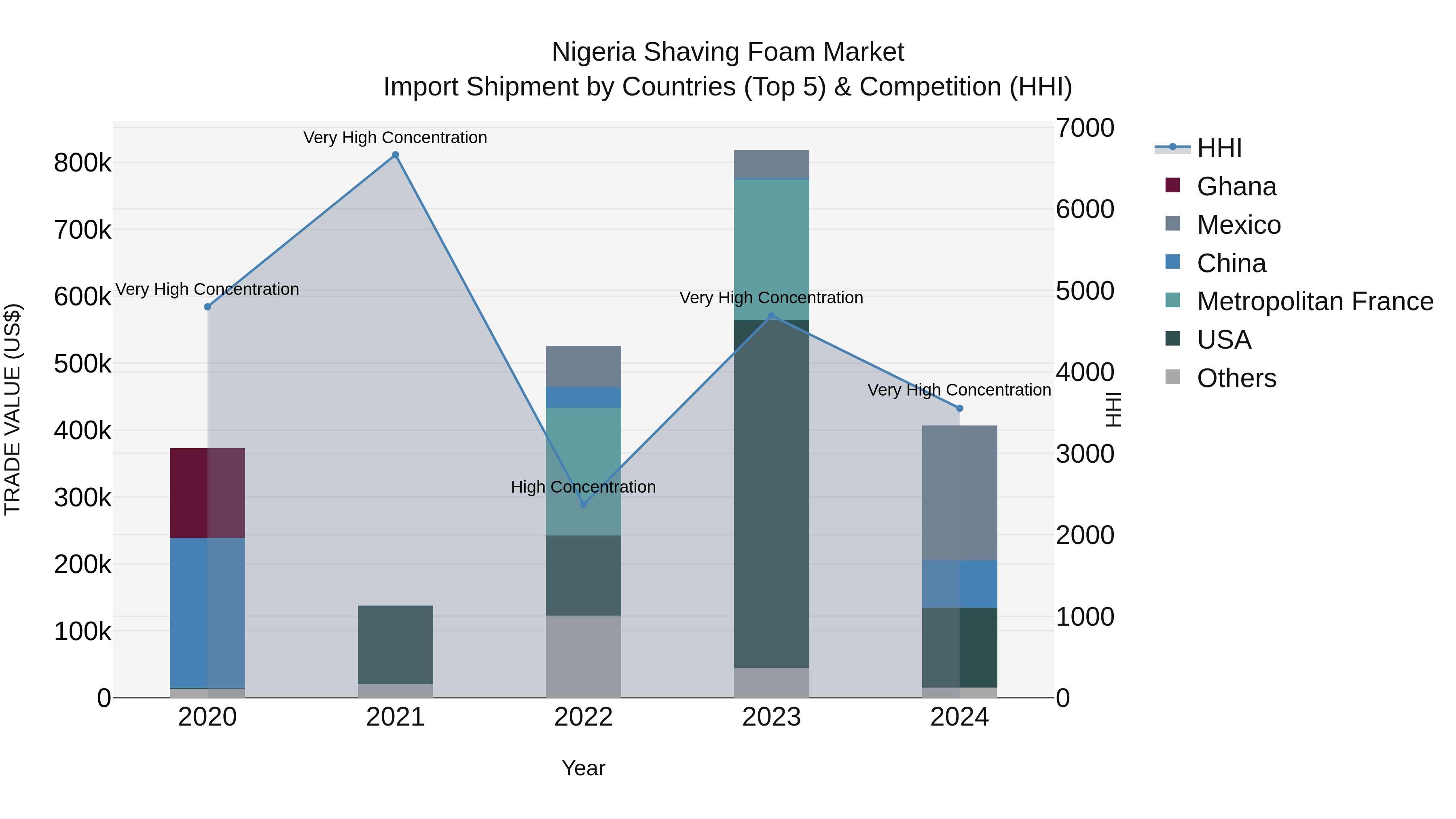
Despite a significant decline in growth rate in 2024, Nigeria`s shaving foam import market continues to be dominated by a few key players. The top exporting countries to Nigeria, including Mexico, USA, China, UK, and Poland, have maintained a strong presence in the market. The high Herfindahl-Hirschman Index (HHI) indicates a concentrated market structure, suggesting limited competition. With a modest compound annual growth rate (CAGR) of 2.19% from 2020 to 2024, the market is showing steady but moderate growth, highlighting potential opportunities for both existing and new players in the industry.
Nigeria Shaving Foam Market Synopsis
The Nigeria Shaving Foam Market is witnessing steady growth driven by an increasing grooming consciousness among the male population, urbanization, and a rising trend towards personal care products. Key players in the market are offering a wide range of shaving foam products to cater to different skin types and preferences, with a focus on natural ingredients and innovative formulations. The market is also benefiting from aggressive marketing campaigns, celebrity endorsements, and the expansion of distribution channels both online and offline. However, challenges such as price sensitivity, competition from traditional shaving methods, and counterfeit products remain prevalent in the market. Overall, the Nigeria Shaving Foam Market presents opportunities for growth through product differentiation, targeted marketing strategies, and partnerships with retailers and e-commerce platforms.
Nigeria Shaving Foam Market Trends
In the Nigeria Shaving Foam Market, there is a growing trend towards natural and organic ingredients, as consumers are becoming more conscious about the products they use on their skin. This shift towards natural formulations presents an opportunity for companies to introduce eco-friendly and sustainable shaving foam options to cater to this demand. Additionally, the rising popularity of grooming and personal care among Nigerian men is driving the growth of the shaving foam market. Companies can capitalize on this trend by developing innovative products targeting specific consumer needs, such as sensitive skin or specific fragrance preferences. Collaborations with influencers and celebrities in the grooming industry can also help in increasing brand visibility and attracting a larger customer base in the Nigerian market.
Nigeria Shaving Foam Market Challenges
In the Nigeria Shaving Foam Market, some key challenges include intense competition from both local and international brands, price sensitivity among consumers due to varying income levels, and the presence of counterfeit products that erode consumer trust in the market. Additionally, fluctuations in raw material prices and currency exchange rates can impact production costs and pricing strategies for companies operating in the market. Distribution challenges, such as inadequate infrastructure and logistical issues, also pose hurdles in reaching a wide customer base across the country. To succeed in the Nigeria Shaving Foam Market, companies need to differentiate their products through effective marketing strategies, maintain competitive pricing strategies, ensure product quality and authenticity, and optimize their distribution channels to reach a diverse consumer base.
Nigeria Shaving Foam Market Investment Opportunities
The Nigeria Shaving Foam Market is primarily driven by factors such as an increasing focus on personal grooming and hygiene among the population, rising disposable incomes leading to higher spending on grooming products, and the growing influence of media and advertising promoting grooming standards. Additionally, the expanding urban population, changing lifestyles, and a shift towards Western grooming trends are also contributing to the growth of the market. Innovations in product formulations, packaging, and marketing strategies by key players in the industry are further driving consumer interest and adoption of shaving foam products in Nigeria. Overall, the market is expected to continue growing as consumers seek convenient and effective grooming solutions to meet their evolving needs and preferences.
Nigeria Shaving Foam Market Government Polices
The Nigerian government has implemented policies that regulate the production, importation, and sale of shaving foam in the country. These policies focus on ensuring product quality, safety, and compliance with health and environmental standards. The National Agency for Food and Drug Administration and Control (NAFDAC) oversees the registration and approval of shaving foam products to guarantee their safety for consumer use. Importation of shaving foam is subject to strict regulations to prevent the entry of substandard or harmful products into the market. Additionally, the government imposes tariffs and taxes on imported shaving foam to promote local manufacturing and protect domestic producers. Overall, these policies aim to safeguard consumer health, promote fair competition, and support the growth of the Nigerian shaving foam market.
Nigeria Shaving Foam Market Future Outlook
The Nigeria Shaving Foam Market is expected to witness steady growth in the coming years due to increasing urbanization, rising disposable incomes, and a growing grooming culture among men. The demand for shaving foam is likely to be driven by a growing male population who are increasingly conscious about personal grooming and appearance. Additionally, the influence of social media and the rise of e-commerce platforms are expected to boost the accessibility and awareness of shaving foam products among consumers. Manufacturers in the market are anticipated to innovate and introduce new product variants to cater to changing consumer preferences and to stay competitive in the market. Overall, the Nigeria Shaving Foam Market is poised for growth with opportunities for expansion and market penetration in the forecast period.
Key Highlights of the Report:
- Nigeria Shaving Foam Market Outlook
- Market Size of Nigeria Shaving Foam Market, 2024
- Forecast of Nigeria Shaving Foam Market, 2031
- Historical Data and Forecast of Nigeria Shaving Foam Revenues & Volume for the Period 2021- 2031
- Nigeria Shaving Foam Market Trend Evolution
- Nigeria Shaving Foam Market Drivers and Challenges
- Nigeria Shaving Foam Price Trends
- Nigeria Shaving Foam Porter's Five Forces
- Nigeria Shaving Foam Industry Life Cycle
- Historical Data and Forecast of Nigeria Shaving Foam Market Revenues & Volume By Product for the Period 2021- 2031
- Historical Data and Forecast of Nigeria Shaving Foam Market Revenues & Volume By Organic for the Period 2021- 2031
- Historical Data and Forecast of Nigeria Shaving Foam Market Revenues & Volume By Conventional for the Period 2021- 2031
- Historical Data and Forecast of Nigeria Shaving Foam Market Revenues & Volume By Distribution Channel for the Period 2021- 2031
- Historical Data and Forecast of Nigeria Shaving Foam Market Revenues & Volume By Hypermarkets/Supermarkets for the Period 2021- 2031
- Historical Data and Forecast of Nigeria Shaving Foam Market Revenues & Volume By Departmental Stores for the Period 2021- 2031
- Historical Data and Forecast of Nigeria Shaving Foam Market Revenues & Volume By Speciality Stores for the Period 2021- 2031
- Historical Data and Forecast of Nigeria Shaving Foam Market Revenues & Volume By Online for the Period 2021- 2031
- Nigeria Shaving Foam Import Export Trade Statistics
- Market Opportunity Assessment By Product
- Market Opportunity Assessment By Distribution Channel
- Nigeria Shaving Foam Top Companies Market Share
- Nigeria Shaving Foam Competitive Benchmarking By Technical and Operational Parameters
- Nigeria Shaving Foam Company Profiles
- Nigeria Shaving Foam Key Strategic Recommendations






































