Nigeria Vending machines Market Summary
The nigeria vending machines market was estimated at USD 411 Million in 2025 and is projected to reach USD 574 Million by 2032, growing at a CAGR of 5.8% from 2026 to 2032.
Nigeria Vending machines Market Year-wise Growth Rate and Key Drivers
This graph highlights how the Nigeria Vending machines Market has steadily grown over the past five years, supported by major growth factors.
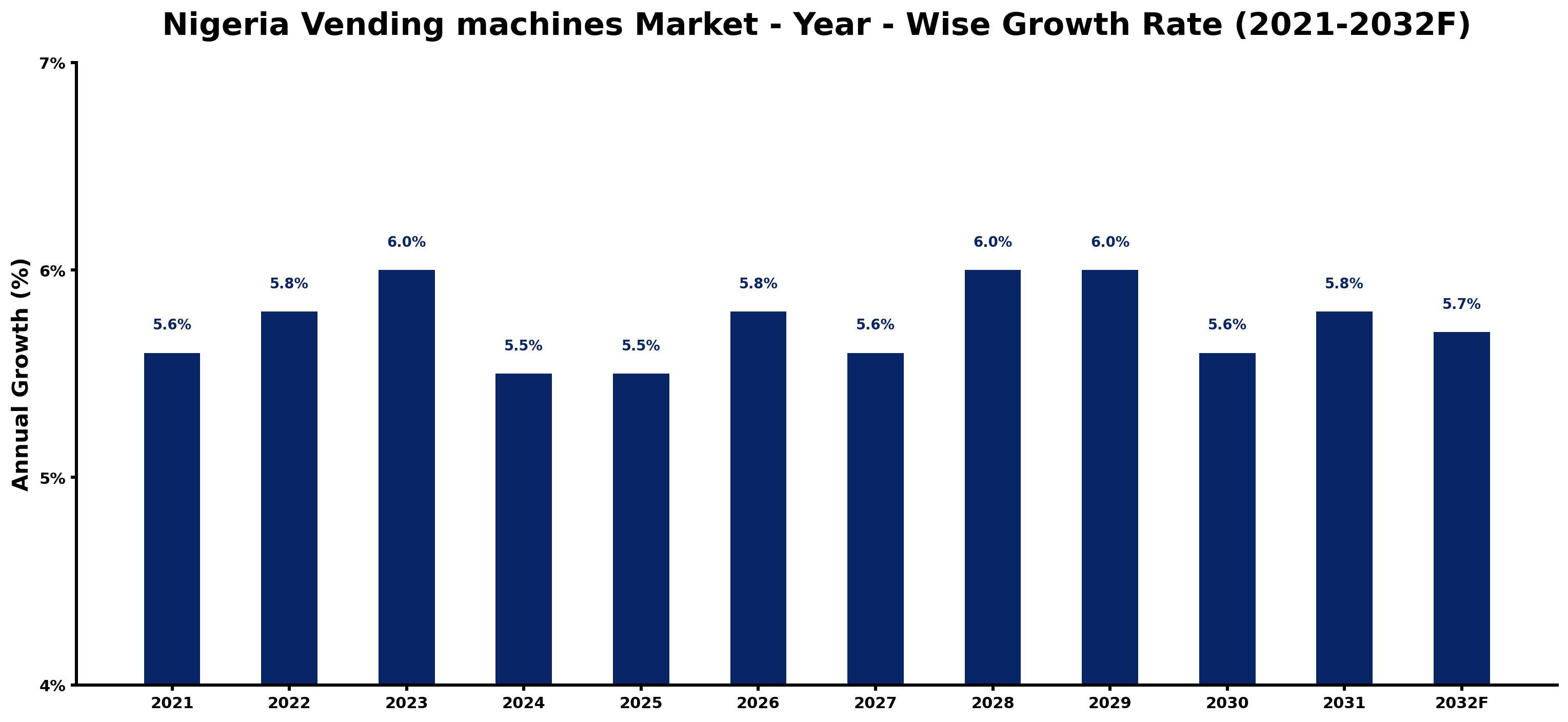
The table below presents the year wise growth rates along with the key drivers influencing the market
| Year | Growth Rate | Major Drivers |
| 2021 | 5.6% | Post-lockdown consumer behavior shifted towards convenience-oriented buying experiences. |
| 2022 | 5.8% | Increased urbanization in Nigeria led to more potential locations for vending machines. |
| 2023 | 6.0% | Technological advancements improved vending machine functionalities, enhancing user interaction and sales. |
| 2024 | 5.5% | Local manufacturing capabilities are reducing costs and improving supply chain efficiency. |
| 2025 | 5.5% | Youth population growth fuels demand for quick snack solutions in urban areas. |
| 2026 | 5.8% | Expansion of retail environments increases competition and diversifies vending options available. |
| 2027 | 5.6% | Health-conscious consumers are pushing for healthier snack options in vending machines. |
| 2028 | 6.0% | Integration of cashless payment systems attracts more tech-savvy customers to vending machines. |
| 2029 | 6.0% | Rising e-commerce trends encourage businesses to explore automated retail solutions. |
| 2030 | 5.6% | Partnerships with local brands enhance product variety and consumer engagement in machines. |
| 2031 | 5.8% | Environmental concerns drive demand for eco-friendly vending machines and packaging solutions. |
| 2032 | 5.7% | Continued economic growth supports increased investment in automated retail technologies. |
Note - Market size estimations and growth projections presented in this report are based on 6Wresearch's advanced forecasting approach, validated with industry datasets as of June 2026.
Nigeria Vending machines Market Synopsis
The Nigeria Vending machines Market is projected to reach 5.8% and witness significant growth during the forecast period (2026-2032). This market is characterized by the increasing adoption of vending machines across various sectors, catering to a diverse array of consumer needs. The ongoing trends in urbanization and rising consumer expectations are reshaping the landscape of how products are accessed, driving the evolution of vending solutions within the country.
Nigeria Vending machines Market Growth Drivers
The expansion of the Nigeria vending machines market is primarily fueled by several interlinked drivers:
- Changing consumer lifestyles are significantly influencing market dynamics, as more individuals seek convenient, quick access to products while on the go, leading to a surge in vending machine placements.
- The rapid urbanization across Nigeria has resulted in increased foot traffic in urban areas, making vending machines a practical solution for consumers looking for immediate purchase options in busy environments.
- Technological advancements such as cashless payment systems are enhancing the user experience, making transactions faster and more secure, which in turn is encouraging greater uptake of vending solutions.
- Diversification in the range of products offered through vending machines, from traditional snacks and beverages to electronics and personal care items, is drawing in a broader customer demographic.
- Increased investment in vending technology, including remote monitoring capabilities, is optimizing operational efficiency, thus boosting profitability for vending operators in Nigeria.
Nigeria Vending machines Market Challenges and Restraints
Despite the positive growth trends, the Nigeria vending machines market faces several challenges that could impede its expansion:
- Unreliable power supply significantly hinders the operation of vending machines, as fluctuating electricity availability can disrupt services and deter both operators and customers.
- Logistical constraints, including issues related to transportation and maintenance of machines, create barriers for operators, particularly in remote or underserved areas where accessibility can be challenging.
- Diverse consumer preferences across various regions necessitate tailored marketing strategies, as one-size-fits-all approaches may not effectively engage different demographic groups.
- Heightened competition from traditional retail outlets and online shopping channels adds pressure on vending machine operators to innovate and maintain relevance in a rapidly evolving retail landscape.
- Regulatory compliance, particularly in terms of food safety and hygiene standards, demands continuous attention and adaptation from operators, which can increase operational costs.
Nigeria Vending machines Market Trends and Opportunities
The Nigeria vending machines market is ripe with trends and opportunities that can shape its future:
- The rise of health-conscious consumers is prompting vending operators to incorporate healthier product options, including organic snacks and beverages, catering to the increasing demand for nutritious choices.
- Integration of smart technology into vending machines is on the rise, with features such as touchless interfaces and mobile app connectivity enhancing customer engagement and operational efficiency.
- Partnerships with local suppliers for product sourcing not only helps in promoting local businesses but also addresses concerns related to product freshness, thus enhancing customer satisfaction.
- Growing acceptance of vending machines as a legitimate retail channel is paving the way for more strategic placements in high-traffic areas, including transportation hubs and educational institutions.
- Adoption of eco-friendly vending machines, which utilize sustainable materials and energy-efficient systems, resonates with environmentally conscious consumers, setting the stage for positive brand differentiation.
Nigeria Vending machines Market Government Investment and Initiatives
Government investment and initiatives play a crucial role in shaping the Nigeria vending machines market. Policies aimed at food safety, hygiene, and consumer protection are enforced by the National Agency for Food and Drug Administration and Control (NAFDAC), which establishes necessary guidelines for vending machine operations. Furthermore, there are efforts to localize the production of vending machines to not only stimulate economic growth but also foster job creation within the country.
The government has initiated programs to support small and medium enterprises (SMEs), encouraging the growth of vending machine businesses through access to funding and resources. Additionally, infrastructural improvements in urban areas are vital for enhancing accessibility and reliability for vending operations, showcasing the government's commitment to create a conducive environment for market expansion.
Nigeria Vending machines Market Latest Developments (May 2025 - June 2026)
Recent developments in the Nigeria vending machines market indicate a shift towards innovation and technological integration. Operators are increasingly deploying advanced vending solutions equipped with cashless payment options, enhancing user convenience. There is a notable rise in the variety of products offered, reflecting changing consumer preferences towards healthier and more diverse options.
Industry stakeholders are also focusing on strategic placements of vending machines in high-traffic locations to maximize accessibility and sales. Additionally, some operators are exploring partnerships with local businesses to improve product sourcing and freshness, aligning with consumer interests in supporting local economies. The government remains active in promoting policies that facilitate the growth of this sector, emphasizing food safety and hygiene as pivotal components of vending operations.
Nigeria Vending machines Market - Key Attractiveness of the Report
- 10 Years of Market Numbers
- Historical Data Starting from 2022 to 2025
- Base Year: 2025
- Forecast Data until 2032
- Key Performance Indicators Impacting the Market
- Major Upcoming Developments and Projects
Key Highlights of the Report:
- Nigeria Vending machines Market Outlook
- Market Size of Nigeria Vending machines Market, 2025
- Forecast of Nigeria Vending machines Market, 2032
- Historical Data and Forecast of Nigeria Vending machines Revenues & Volume for the Period 2022-2032F
- Nigeria Vending machines Market Trend Evolution
- Nigeria Vending machines Market Drivers and Challenges
- Nigeria Vending machines Price Trends
- Nigeria Vending machines Porter's Five Forces
- Nigeria Vending machines Industry Life Cycle
- Historical Data and Forecast of Nigeria Vending machines Market Revenues & Volume By Applications for the Period 2022-2032F
- Historical Data and Forecast of Nigeria Vending machines Market Revenues & Volume By Commercial Places for the Period 2022-2032F
- Historical Data and Forecast of Nigeria Vending machines Market Revenues & Volume By Offices for the Period 2022-2032F
- Historical Data and Forecast of Nigeria Vending machines Market Revenues & Volume By Public Places for the Period 2022-2032F
- Historical Data and Forecast of Nigeria Vending machines Market Revenues & Volume By Others for the Period 2022-2032F
- Historical Data and Forecast of Nigeria Vending machines Market Revenues & Volume By Payment Mode for the Period 2022-2032F
- Historical Data and Forecast of Nigeria Vending machines Market Revenues & Volume By Cash for the Period 2022-2032F
- Historical Data and Forecast of Nigeria Vending machines Market Revenues & Volume By Cashless for the Period 2022-2032F
- Nigeria Vending machines Import Export Trade Statistics
- Market Opportunity Assessment By Applications
- Market Opportunity Assessment By Payment Mode
- Nigeria Vending machines Top Companies Market Share
- Nigeria Vending machines Competitive Benchmarking By Technical and Operational Parameters
- Nigeria Vending machines Company Profiles
- Nigeria Vending machines Key Strategic Recommendations






































