Norway Bathroom Furniture Market Growth Rate Analysis (2025 - 2031)
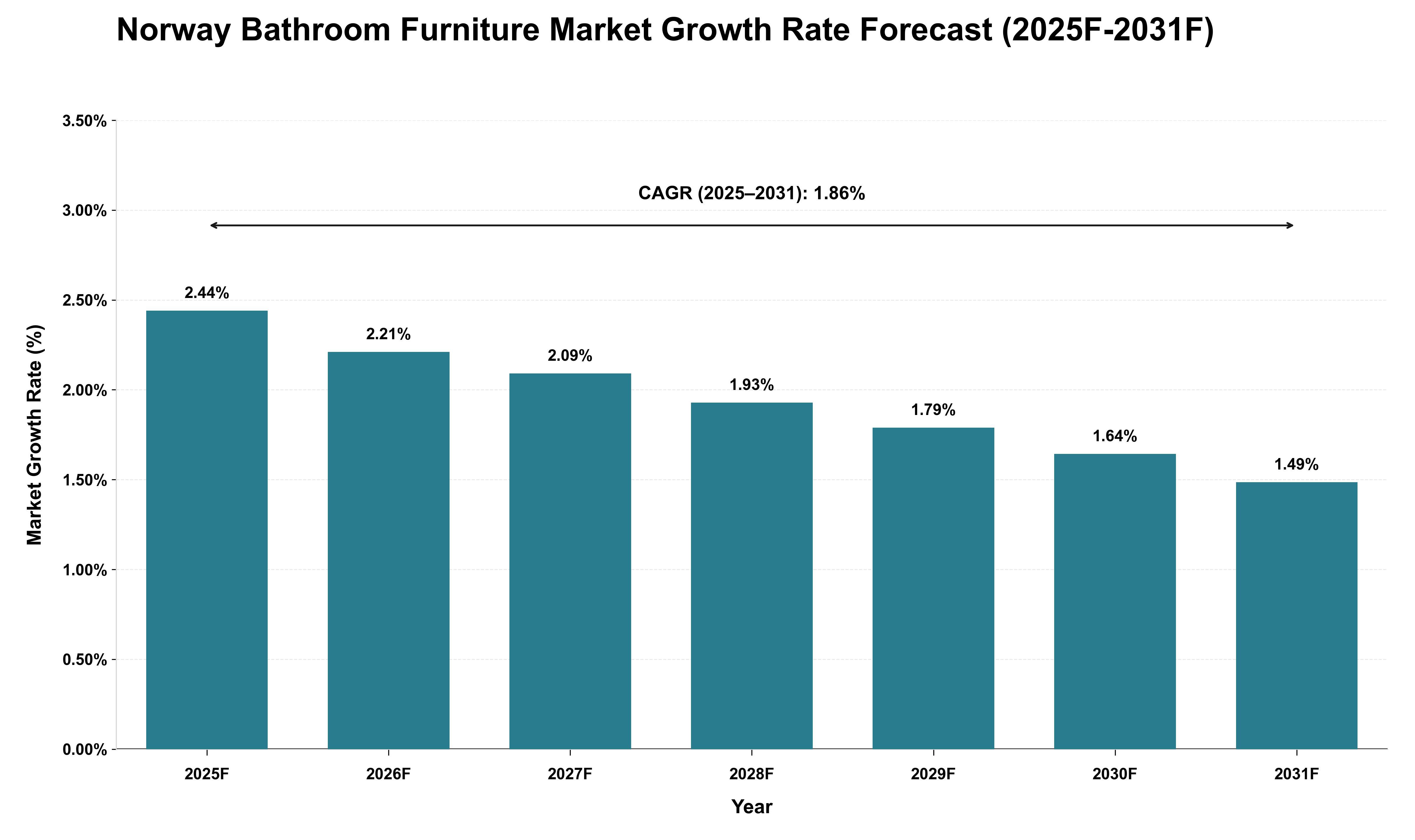
From 2025 onward, the Norway bathroom furniture market will experience a gradual decline in growth rates, reflecting evolving end-use demand dynamics influenced by macroeconomic factors. The projected CAGR of 1.86% indicates a shift towards more sustainable and multifunctional designs as consumers increasingly prioritize eco-friendly materials and space optimization in their purchasing decisions. Annual growth rates will start at 2.44% in 2025 but will taper to 1.49% by 2031, suggesting that while demand remains stable, it will be tempered by rising import dependencies and potential supply chain disruptions affecting material costs. Additionally, cyclical trends in the housing market may impact renovation activities, further influencing consumer spending patterns on bathroom furniture. As such, manufacturers will need to adapt their strategies to align with these changing preferences while navigating the complexities of international trade dynamics within this sector.
Key Highlights of the Report:
- Norway Bathroom Furniture Market Outlook
- Market Size of Norway Bathroom Furniture Market, 2025
- Forecast of Norway Bathroom Furniture Market, 2032
- Historical Data and Forecast of Norway Bathroom Furniture Revenues & Volume for the Period 2022 - 2032F
- Norway Bathroom Furniture Market Trend Evolution
- Norway Bathroom Furniture Market Drivers and Challenges
- Norway Bathroom Furniture Price Trends
- Norway Bathroom Furniture Porter`s Five Forces
- Norway Bathroom Furniture Industry Life Cycle
- Historical Data and Forecast of Norway Bathroom Furniture Market Revenues & Volume By Type for the Period 2022 - 2032F
- Historical Data and Forecast of Norway Bathroom Furniture Market Revenues & Volume By Bath Vanities for the Period 2022 - 2032F
- Historical Data and Forecast of Norway Bathroom Furniture Market Revenues & Volume By Console Vanity for the Period 2022 - 2032F
- Historical Data and Forecast of Norway Bathroom Furniture Market Revenues & Volume By Vanity Tops for the Period 2022 - 2032F
- Historical Data and Forecast of Norway Bathroom Furniture Market Revenues & Volume By Bathroom Mirrors for the Period 2022 - 2032F
- Historical Data and Forecast of Norway Bathroom Furniture Market Revenues & Volume By Other for the Period 2022 - 2032F
- Historical Data and Forecast of Norway Bathroom Furniture Market Revenues & Volume By Application for the Period 2022 - 2032F
- Historical Data and Forecast of Norway Bathroom Furniture Market Revenues & Volume By Household for the Period 2022 - 2032F
- Historical Data and Forecast of Norway Bathroom Furniture Market Revenues & Volume By Commercial for the Period 2022 - 2032F
- Historical Data and Forecast of Norway Bathroom Furniture Market Revenues & Volume By Other for the Period 2022 - 2032F
- Norway Bathroom Furniture Import Export Trade Statistics
- Market Opportunity Assessment By Type
- Market Opportunity Assessment By Application
- Norway Bathroom Furniture Top Companies Market Share
- Norway Bathroom Furniture Competitive Benchmarking By Technical and Operational Parameters
- Norway Bathroom Furniture Company Profiles
- Norway Bathroom Furniture Key Strategic Recommendations






































