Norway Bearings Market Growth Rate Analysis (2025 - 2031)
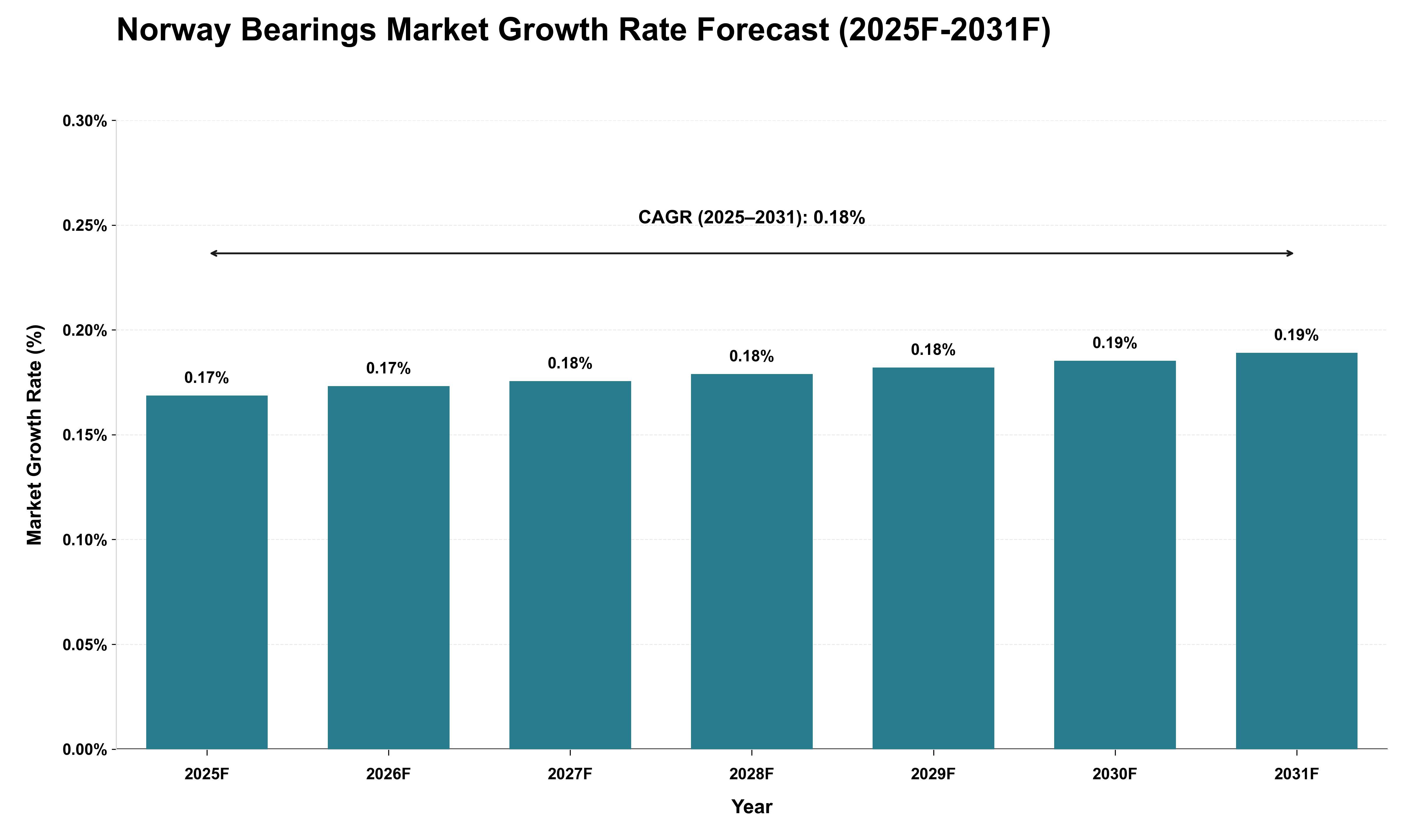
The Norway bearings market will experience a modest growth trajectory from 2025 to 2031, driven primarily by technological advancements and product substitution dynamics. As industries increasingly adopt automation and precision engineering, the demand for high-performance bearings will rise, albeit at a CAGR of only 0.18%. This growth will be supported by the gradual transition towards more efficient materials and designs that enhance durability and reduce maintenance costs. Additionally, Norway's reliance on imports for specialized bearing components may influence pricing structures and availability, potentially impacting local manufacturers' competitiveness. The cyclical nature of industrial activity in sectors such as manufacturing and energy will also play a role; fluctuations in these sectors could lead to incremental shifts in demand patterns. Overall, while growth remains subdued, the interplay of innovation and import dependencies will shape the market landscape during this forecast period.
Key Highlights of the Report:
- Norway Bearings Market Outlook
- Market Size of Norway Bearings Market, 2024
- Forecast of Norway Bearings Market, 2031
- Historical Data and Forecast of Norway Bearings Revenues & Volume for the Period 2021-2031
- Norway Bearings Market Trend Evolution
- Norway Bearings Market Drivers and Challenges
- Norway Bearings Price Trends
- Norway Bearings Porter`s Five Forces
- Norway Bearings Industry Life Cycle
- Historical Data and Forecast of Norway Bearings Market Revenues & Volume By Product for the Period 2021-2031
- Historical Data and Forecast of Norway Bearings Market Revenues & Volume By Ball Bearings for the Period 2021-2031
- Historical Data and Forecast of Norway Bearings Market Revenues & Volume By Roller Bearings for the Period 2021-2031
- Historical Data and Forecast of Norway Bearings Market Revenues & Volume By Application for the Period 2021-2031
- Historical Data and Forecast of Norway Bearings Market Revenues & Volume By Automotive for the Period 2021-2031
- Historical Data and Forecast of Norway Bearings Market Revenues & Volume By Agriculture for the Period 2021-2031
- Historical Data and Forecast of Norway Bearings Market Revenues & Volume By Electrical for the Period 2021-2031
- Historical Data and Forecast of Norway Bearings Market Revenues & Volume By Mining & Construction for the Period 2021-2031
- Historical Data and Forecast of Norway Bearings Market Revenues & Volume By Railway & Aerospace for the Period 2021-2031
- Historical Data and Forecast of Norway Bearings Market Revenues & Volume By Automotive Aftermarket for the Period 2021-2031
- Historical Data and Forecast of Norway Bearings Market Revenues & Volume By Others for the Period 2021-2031
- Norway Bearings Import Export Trade Statistics
- Market Opportunity Assessment By Product
- Market Opportunity Assessment By Application
- Norway Bearings Top Companies Market Share
- Norway Bearings Competitive Benchmarking By Technical and Operational Parameters
- Norway Bearings Company Profiles
- Norway Bearings Key Strategic Recommendations






































