Norway Construction Machinery Market Growth Rate Analysis (2025 - 2031)
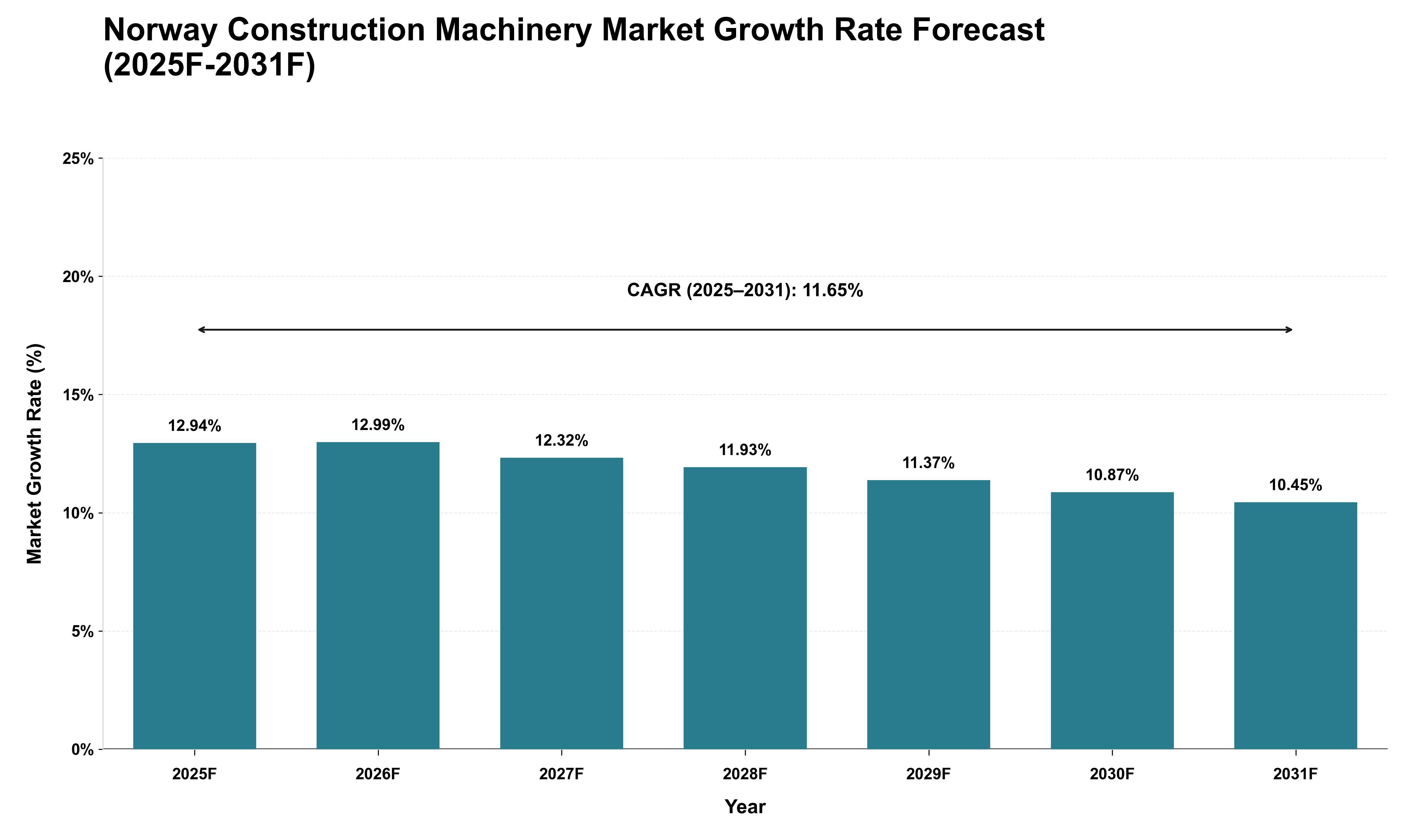
The Norway construction machinery market is projected to experience a robust compound annual growth rate of 11.65% from 2025 to 2031, driven by increasing end-use demand across various sectors, including infrastructure development and residential construction. The anticipated annual growth rates indicate a strong initial surge, with 12.94% in 2025 and gradually tapering off to 10.45% by 2031, reflecting a dynamic yet stabilizing market environment. This trend will likely be influenced by macroeconomic factors such as government investments in public infrastructure and the ongoing transition towards sustainable construction practices, which will necessitate advanced machinery solutions. Additionally, Norway's reliance on imports for specialized construction equipment may create opportunities for local manufacturers to innovate and capture market share as demand evolves. Overall, the cyclical nature of construction projects will further shape the demand landscape, ensuring sustained growth throughout the forecast period.
Key Highlights of the Report:
- Norway Construction Machinery Market Outlook
- Market Size of Norway Construction Machinery Market, 2024
- Forecast of Norway Construction Machinery Market, 2031
- Historical Data and Forecast of Norway Construction Machinery Revenues & Volume for the Period 2021- 2031
- Norway Construction Machinery Market Trend Evolution
- Norway Construction Machinery Market Drivers and Challenges
- Norway Construction Machinery Price Trends
- Norway Construction Machinery Porter's Five Forces
- Norway Construction Machinery Industry Life Cycle
- Historical Data and Forecast of Norway Construction Machinery Market Revenues & Volume By Machine Type for the Period 2021- 2031
- Historical Data and Forecast of Norway Construction Machinery Market Revenues & Volume By Cranes for the Period 2021- 2031
- Historical Data and Forecast of Norway Construction Machinery Market Revenues & Volume By Excavators for the Period 2021- 2031
- Historical Data and Forecast of Norway Construction Machinery Market Revenues & Volume By Loaders for the Period 2021- 2031
- Historical Data and Forecast of Norway Construction Machinery Market Revenues & Volume By Backhoe for the Period 2021- 2031
- Historical Data and Forecast of Norway Construction Machinery Market Revenues & Volume By Motor Graders for the Period 2021- 2031
- Historical Data and Forecast of Norway Construction Machinery Market Revenues & Volume By Other Machine Types for the Period 2021- 2031
- Historical Data and Forecast of Norway Construction Machinery Market Revenues & Volume By Application for the Period 2021- 2031
- Historical Data and Forecast of Norway Construction Machinery Market Revenues & Volume By Concrete and Road Construction for the Period 2021- 2031
- Historical Data and Forecast of Norway Construction Machinery Market Revenues & Volume By Earth Moving for the Period 2021- 2031
- Historical Data and Forecast of Norway Construction Machinery Market Revenues & Volume By Material Handling for the Period 2021- 2031
- Norway Construction Machinery Import Export Trade Statistics
- Market Opportunity Assessment By Machine Type
- Market Opportunity Assessment By Application
- Norway Construction Machinery Top Companies Market Share
- Norway Construction Machinery Competitive Benchmarking By Technical and Operational Parameters
- Norway Construction Machinery Company Profiles
- Norway Construction Machinery Key Strategic Recommendations






































