Norway Dairy Protein Market Top 5 Importing Countries and Market Competition (HHI) Analysis
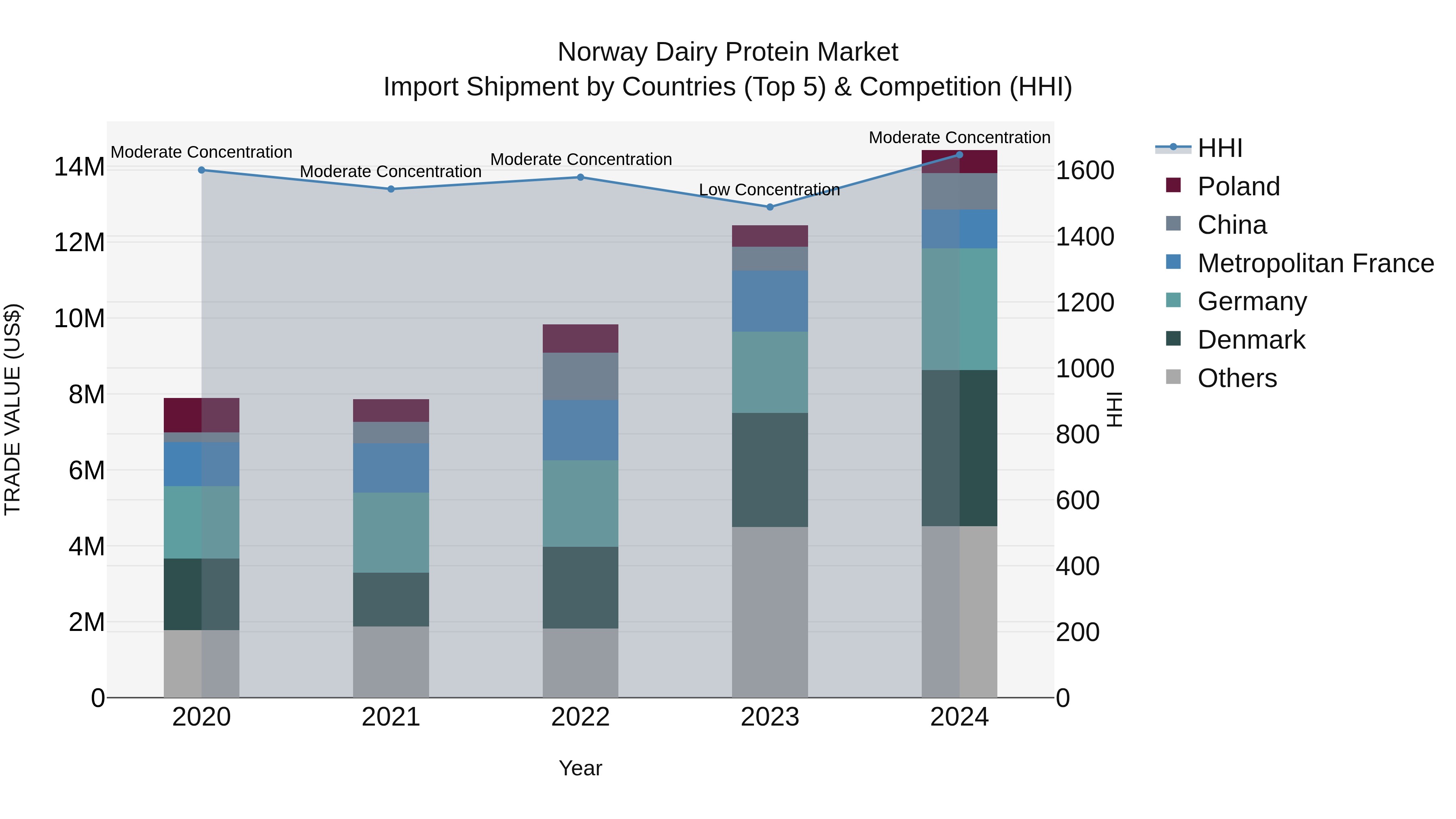
Norway`s dairy protein import market in 2024 saw a significant increase in concentration, shifting from low to moderate levels, indicating a more focused supplier base. Denmark, Germany, Spain, Metropolitan France, and China emerged as the top countries exporting dairy protein to Norway. With a notable Compound Annual Growth Rate (CAGR) of 16.24% from 2020 to 2024 and a strong growth rate of 15.91% from 2023 to 2024, the Norwegian dairy protein import market is experiencing robust expansion and evolving dynamics in terms of supplier relationships and market competitiveness.
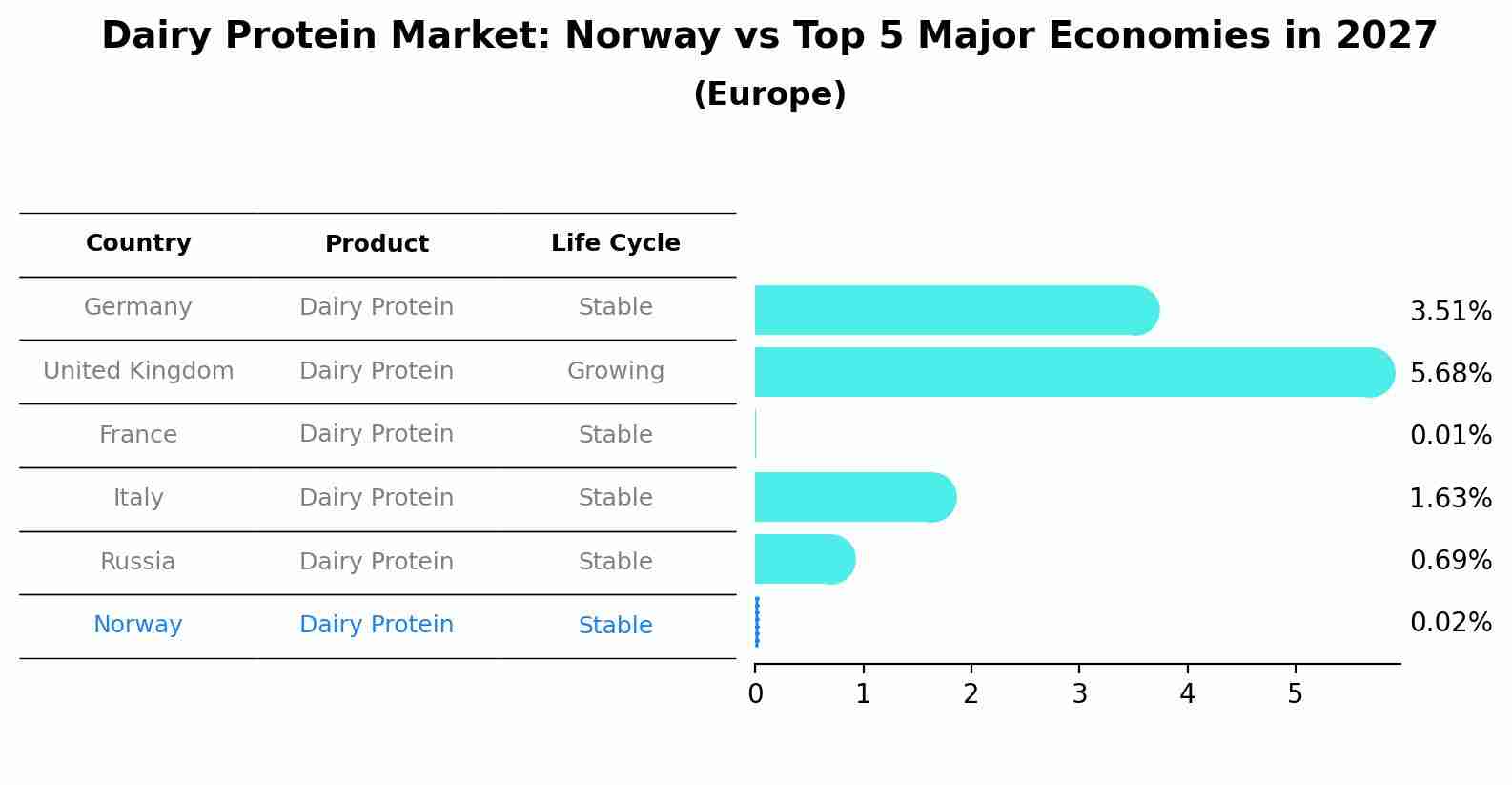
Dairy Protein Market: Norway vs Top 5 Major Economies in 2027 (Europe)
The Dairy Protein market in Norway is projected to grow at a stable growth rate of 0.02% by 2027, highlighting the country's increasing focus on advanced technologies within the Europe region, where Germany holds the dominant position, followed closely by United Kingdom, France, Italy and Russia, shaping overall regional demand.
Norway Dairy Protein Market Overview
The market for dairy proteins includes products such as whey and casein, essential for various nutritional and food manufacturing industries.
Drivers of the market
The dairy protein market in Norway is driven by the increasing demand for dairy proteins used in dietary supplements, functional foods, and sports nutrition products. Dairy proteins, such as whey protein and casein, are valued for their high nutritional content and health benefits. The market benefits from growing consumer awareness of protein benefits, advancements in protein extraction technologies, and the rising popularity of health and fitness-oriented products.
Challenges of the market
The Norway dairy protein market faces competition from plant-based proteins, which are gaining popularity due to consumer health consciousness. Regulatory scrutiny and the need for sustainable production processes also present challenges. Additionally, fluctuations in milk production due to environmental factors affect the supply chain.
Government Policy of the market
The dairy protein market in Norway is regulated by policies that aim to ensure product safety, quality, and nutritional value. The government sets standards for dairy protein products to ensure they meet health and safety regulations. There are also policies to promote the development and use of high-quality dairy proteins in various applications, including nutritional supplements and food products.
Key Highlights of the Report:
- Norway Dairy Protein Market Outlook
- Market Size of Norway Dairy Protein Market, 2024
- Forecast of Norway Dairy Protein Market, 2031
- Historical Data and Forecast of Norway Dairy Protein Revenues & Volume for the Period 2021-2031
- Norway Dairy Protein Market Trend Evolution
- Norway Dairy Protein Market Drivers and Challenges
- Norway Dairy Protein Price Trends
- Norway Dairy Protein Porter`s Five Forces
- Norway Dairy Protein Industry Life Cycle
- Historical Data and Forecast of Norway Dairy Protein Market Revenues & Volume By Type for the Period 2021-2031
- Historical Data and Forecast of Norway Dairy Protein Market Revenues & Volume By Casein and Derivatives for the Period 2021-2031
- Historical Data and Forecast of Norway Dairy Protein Market Revenues & Volume By Whey protein for the Period 2021-2031
- Historical Data and Forecast of Norway Dairy Protein Market Revenues & Volume By Milk Protein Concentrate for the Period 2021-2031
- Historical Data and Forecast of Norway Dairy Protein Market Revenues & Volume By Application for the Period 2021-2031
- Historical Data and Forecast of Norway Dairy Protein Market Revenues & Volume By Food & Beverages for the Period 2021-2031
- Historical Data and Forecast of Norway Dairy Protein Market Revenues & Volume By Nutrition for the Period 2021-2031
- Historical Data and Forecast of Norway Dairy Protein Market Revenues & Volume By Personal Care & Cosmetics for the Period 2021-2031
- Historical Data and Forecast of Norway Dairy Protein Market Revenues & Volume By Feed for the Period 2021-2031
- Historical Data and Forecast of Norway Dairy Protein Market Revenues & Volume By Others for the Period 2021-2031
- Historical Data and Forecast of Norway Dairy Protein Market Revenues & Volume By Form for the Period 2021-2031
- Historical Data and Forecast of Norway Dairy Protein Market Revenues & Volume By Solid for the Period 2021-2031
- Historical Data and Forecast of Norway Dairy Protein Market Revenues & Volume By Liquid for the Period 2021-2031
- Norway Dairy Protein Import Export Trade Statistics
- Market Opportunity Assessment By Type
- Market Opportunity Assessment By Application
- Market Opportunity Assessment By Form
- Norway Dairy Protein Top Companies Market Share
- Norway Dairy Protein Competitive Benchmarking By Technical and Operational Parameters
- Norway Dairy Protein Company Profiles
- Norway Dairy Protein Key Strategic Recommendations






































