Norway Electrical and Electronics Market Growth Rate Analysis (2025 - 2031)
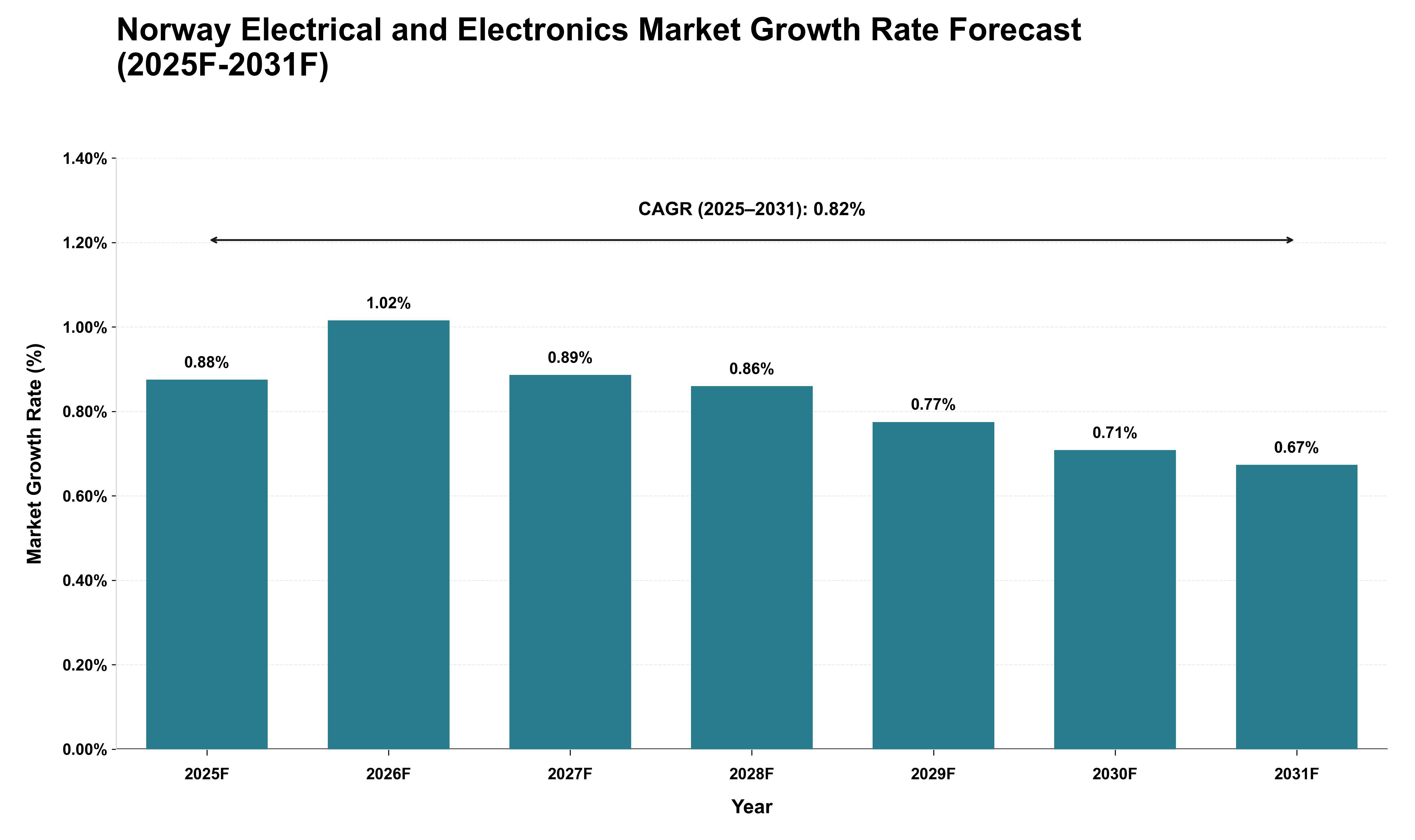
From 2025 onward, the Norway electrical and electronics market will likely experience a gradual growth trajectory, with a projected compound annual growth rate (CAGR) of 0.82%. This modest expansion will be influenced by several macroeconomic factors, including fluctuating input costs and supply chain dynamics. As global demand for electronic components continues to evolve, Norway's reliance on imports for critical materials may lead to increased vulnerability to price volatility and supply disruptions. The forecasted annual growth rates indicate a slight decline over the period, reflecting potential challenges in sourcing raw materials and components amid geopolitical tensions and trade policies. Additionally, cyclical trends in consumer electronics demand could further impact production schedules and inventory management strategies. Consequently, stakeholders will need to navigate these complexities while optimizing their supply chains to maintain competitiveness in an increasingly interconnected market environment.
Key Highlights of the Report:
- Norway Electrical and electronics Market Outlook
- Market Size of Norway Electrical and electronics Market, 2024
- Forecast of Norway Electrical and electronics Market, 2031
- Historical Data and Forecast of Norway Electrical and electronics Revenues & Volume for the Period 2021-2031
- Norway Electrical and electronics Market Trend Evolution
- Norway Electrical and electronics Market Drivers and Challenges
- Norway Electrical and electronics Price Trends
- Norway Electrical and electronics Porter`s Five Forces
- Norway Electrical and electronics Industry Life Cycle
- Historical Data and Forecast of Norway Electrical and electronics Market Revenues & Volume By Type for the Period 2021-2031
- Historical Data and Forecast of Norway Electrical and electronics Market Revenues & Volume By Electric Motors for the Period 2021-2031
- Historical Data and Forecast of Norway Electrical and electronics Market Revenues & Volume By Primary And Storage Batteries for the Period 2021-2031
- Historical Data and Forecast of Norway Electrical and electronics Market Revenues & Volume By Generators for the Period 2021-2031
- Historical Data and Forecast of Norway Electrical and electronics Market Revenues & Volume By Semiconductors for the Period 2021-2031
- Historical Data and Forecast of Norway Electrical and electronics Market Revenues & Volume By Household Appliances for the Period 2021-2031
- Historical Data and Forecast of Norway Electrical and electronics Market Revenues & Volume By Applications for the Period 2021-2031
- Historical Data and Forecast of Norway Electrical and electronics Market Revenues & Volume By Online for the Period 2021-2031
- Historical Data and Forecast of Norway Electrical and electronics Market Revenues & Volume By Offline for the Period 2021-2031
- Norway Electrical and electronics Import Export Trade Statistics
- Market Opportunity Assessment By Type
- Market Opportunity Assessment By Applications
- Norway Electrical and electronics Top Companies Market Share
- Norway Electrical and electronics Competitive Benchmarking By Technical and Operational Parameters
- Norway Electrical and electronics Company Profiles
- Norway Electrical and electronics Key Strategic Recommendations






































