Norway Flexible Intermediate Bulk Container Market Growth Rate Analysis (2025 - 2031)
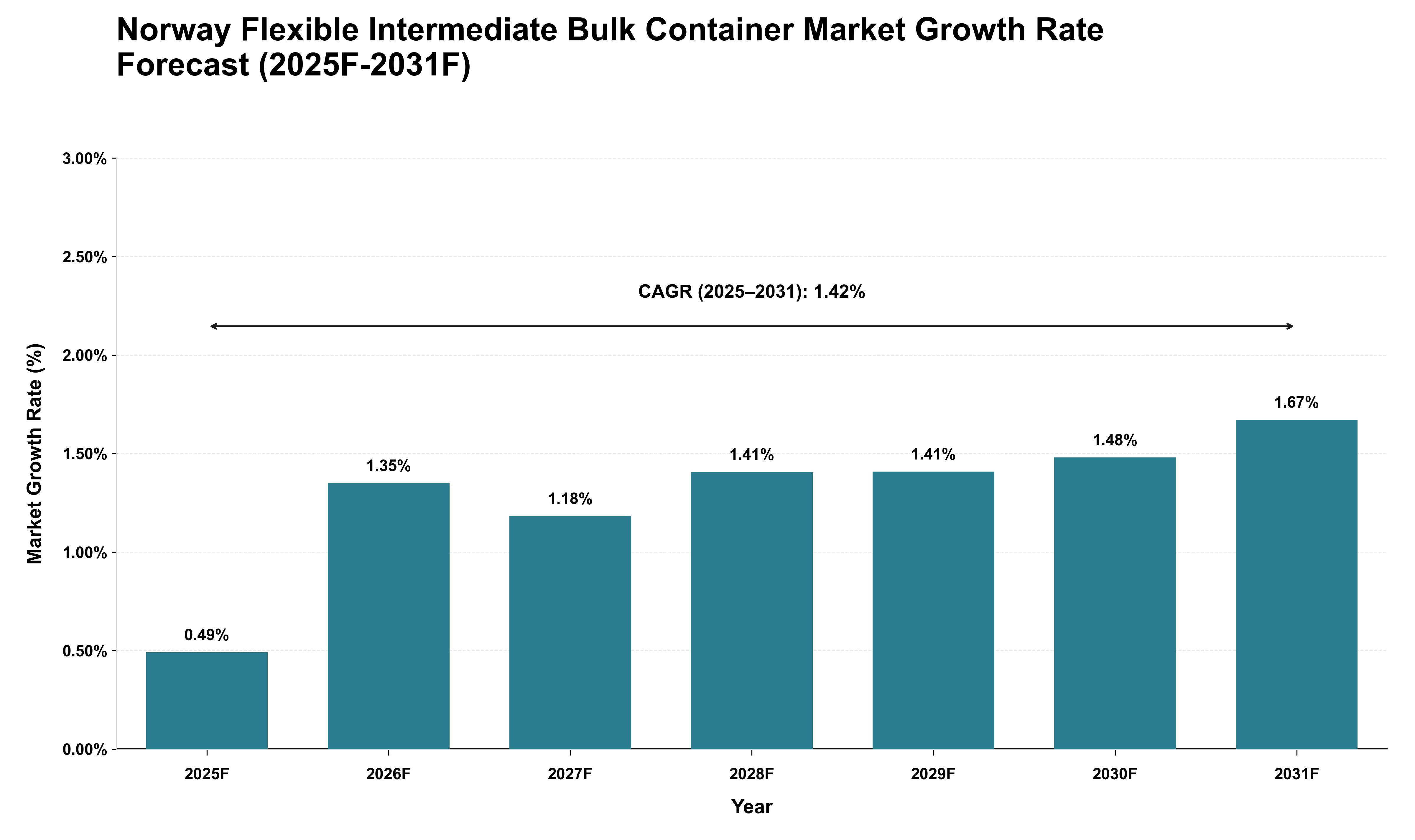
The forecasted growth trajectory for the Norway Flexible Intermediate Bulk Container market will exhibit a gradual acceleration, as indicated by the increasing annual growth rates culminating in 1.67% by 2031. This trend reflects underlying macroeconomic factors such as anticipated fluctuations in supply chain dynamics and input costs, which are critical for this product class. The initial modest growth of 0.49% in 2025 suggests potential constraints from raw material availability or logistical challenges, but subsequent years will likely benefit from improved efficiencies and cost management strategies. As global trade patterns evolve, Norway's import dependencies may shift, influencing pricing structures and availability of flexible intermediate bulk containers. By 2031, the compounded effects of these cyclical trends will contribute to a more robust market environment, supporting sustained demand amidst rising operational costs and competitive pressures within the sector.
Key Highlights of the Report:
- Norway Flexible Intermediate Bulk Container Market Outlook
- Market Size of Norway Flexible Intermediate Bulk Container Market, 2024
- Forecast of Norway Flexible Intermediate Bulk Container Market, 2031
- Historical Data and Forecast of Norway Flexible Intermediate Bulk Container Revenues & Volume for the Period 2021-2031
- Norway Flexible Intermediate Bulk Container Market Trend Evolution
- Norway Flexible Intermediate Bulk Container Market Drivers and Challenges
- Norway Flexible Intermediate Bulk Container Price Trends
- Norway Flexible Intermediate Bulk Container Porter`s Five Forces
- Norway Flexible Intermediate Bulk Container Industry Life Cycle
- Historical Data and Forecast of Norway Flexible Intermediate Bulk Container Market Revenues & Volume By Product for the Period 2021-2031
- Historical Data and Forecast of Norway Flexible Intermediate Bulk Container Market Revenues & Volume By Type A for the Period 2021-2031
- Historical Data and Forecast of Norway Flexible Intermediate Bulk Container Market Revenues & Volume By Type B for the Period 2021-2031
- Historical Data and Forecast of Norway Flexible Intermediate Bulk Container Market Revenues & Volume By Type C for the Period 2021-2031
- Historical Data and Forecast of Norway Flexible Intermediate Bulk Container Market Revenues & Volume By Type D for the Period 2021-2031
- Historical Data and Forecast of Norway Flexible Intermediate Bulk Container Market Revenues & Volume By End-Use for the Period 2021-2031
- Historical Data and Forecast of Norway Flexible Intermediate Bulk Container Market Revenues & Volume By Food for the Period 2021-2031
- Historical Data and Forecast of Norway Flexible Intermediate Bulk Container Market Revenues & Volume By Chemical for the Period 2021-2031
- Historical Data and Forecast of Norway Flexible Intermediate Bulk Container Market Revenues & Volume By Pharmaceuticals for the Period 2021-2031
- Historical Data and Forecast of Norway Flexible Intermediate Bulk Container Market Revenues & Volume By Others for the Period 2021-2031
- Norway Flexible Intermediate Bulk Container Import Export Trade Statistics
- Market Opportunity Assessment By Product
- Market Opportunity Assessment By End-Use
- Norway Flexible Intermediate Bulk Container Top Companies Market Share
- Norway Flexible Intermediate Bulk Container Competitive Benchmarking By Technical and Operational Parameters
- Norway Flexible Intermediate Bulk Container Company Profiles
- Norway Flexible Intermediate Bulk Container Key Strategic Recommendations






































