Norway Flower and Ornamental Plants Market Growth Rate Analysis (2025 - 2031)
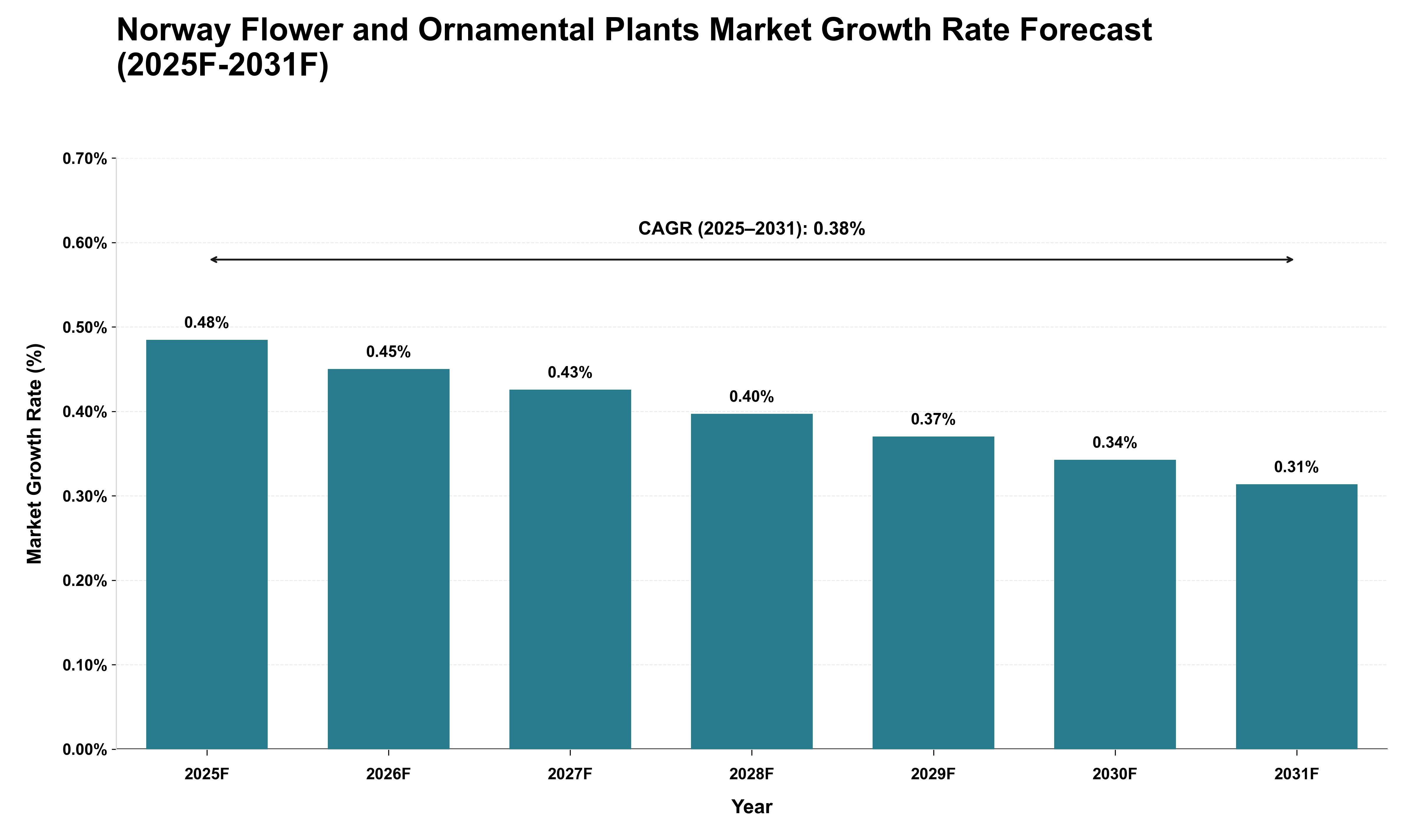
The projected compound annual growth rate of 0.38% for the Norway flower and ornamental plants market from 2025 to 2031 indicates a gradual deceleration in growth, reflecting broader macroeconomic factors such as shifting consumer preferences and potential import dependencies. As consumers increasingly prioritize sustainability and local sourcing, the market may experience a transition towards native plant varieties and eco-friendly cultivation practices, influencing demand dynamics. Additionally, cyclical trends in disposable income and housing markets will likely impact ornamental plant purchases, with fluctuations in economic conditions affecting consumer spending patterns. The anticipated decline in annual growth rates—from 0.48% in 2025 to 0.31% by 2031—suggests that while the market will continue to expand, it will do so at a diminishing pace as technological advancements in horticulture and product substitution strategies reshape competitive landscapes within the sector.
Key Highlights of the Report:
- Norway Flower and Ornamental Plants Market Outlook
- Market Size of Norway Flower and Ornamental Plants Market, 2025
- Forecast of Norway Flower and Ornamental Plants Market, 2032
- Historical Data and Forecast of Norway Flower and Ornamental Plants Revenues & Volume for the Period 2022 - 2032F
- Norway Flower and Ornamental Plants Market Trend Evolution
- Norway Flower and Ornamental Plants Market Drivers and Challenges
- Norway Flower and Ornamental Plants Price Trends
- Norway Flower and Ornamental Plants Porter`s Five Forces
- Norway Flower and Ornamental Plants Industry Life Cycle
- Historical Data and Forecast of Norway Flower and Ornamental Plants Market Revenues & Volume By Product Type for the Period 2022 - 2032F
- Historical Data and Forecast of Norway Flower and Ornamental Plants Market Revenues & Volume By Potted Plants for the Period 2022 - 2032F
- Historical Data and Forecast of Norway Flower and Ornamental Plants Market Revenues & Volume By Cut Flowers for the Period 2022 - 2032F
- Historical Data and Forecast of Norway Flower and Ornamental Plants Market Revenues & Volume By Application for the Period 2022 - 2032F
- Historical Data and Forecast of Norway Flower and Ornamental Plants Market Revenues & Volume By Home for the Period 2022 - 2032F
- Historical Data and Forecast of Norway Flower and Ornamental Plants Market Revenues & Volume By Commercial for the Period 2022 - 2032F
- Norway Flower and Ornamental Plants Import Export Trade Statistics
- Market Opportunity Assessment By Product Type
- Market Opportunity Assessment By Application
- Norway Flower and Ornamental Plants Top Companies Market Share
- Norway Flower and Ornamental Plants Competitive Benchmarking By Technical and Operational Parameters
- Norway Flower and Ornamental Plants Company Profiles
- Norway Flower and Ornamental Plants Key Strategic Recommendations






































