Norway Footwear Market Growth Rate Analysis (2025 - 2031)
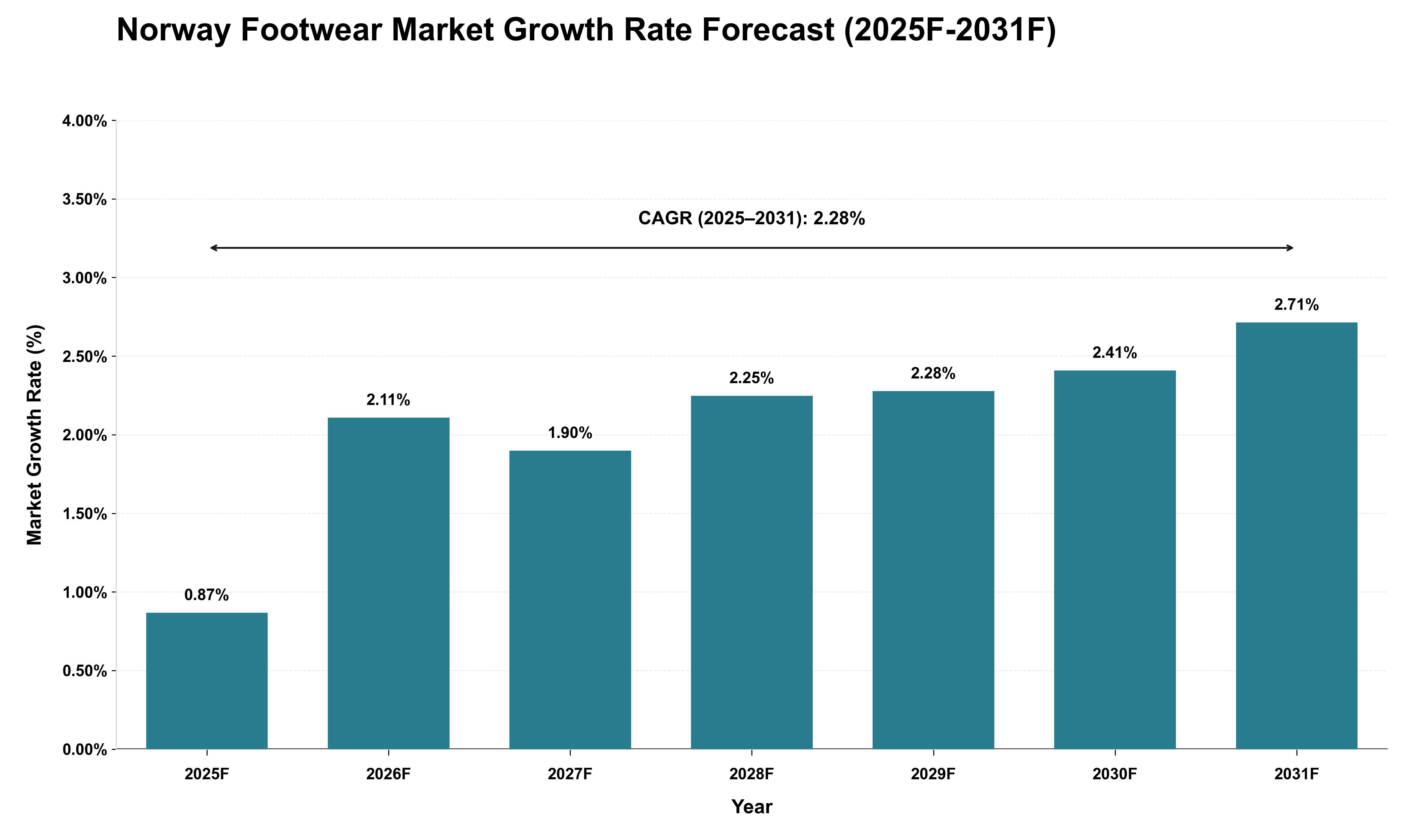
The Norway footwear market is projected to experience a compound annual growth rate of 2.28% from 2025 to 2031, reflecting a gradual increase in consumer demand influenced by evolving fashion trends and sustainability considerations. As the annual growth rates rise from 0.87% in 2025 to an anticipated 2.71% by 2031, this trend indicates a strengthening of import dependencies, particularly for specialized and eco-friendly footwear options that align with global consumer preferences. The cyclical nature of the footwear industry will likely see fluctuations driven by seasonal demand patterns and economic conditions, impacting trade flows as Norway continues to import a significant portion of its footwear needs. Additionally, the increasing focus on sustainable practices may lead to shifts in sourcing strategies, further influencing import dynamics and potentially enhancing trade relationships with key exporting nations during this forecast period.
Key Highlights of the Report:
- Norway Footwear Market Outlook
- Market Size of Norway Footwear Market, 2025
- Forecast of Norway Footwear Market, 2032
- Historical Data and Forecast of Norway Footwear Revenues & Volume for the Period 2022 - 2032F
- Norway Footwear Market Trend Evolution
- Norway Footwear Market Drivers and Challenges
- Norway Footwear Price Trends
- Norway Footwear Porter`s Five Forces
- Norway Footwear Industry Life Cycle
- Historical Data and Forecast of Norway Footwear Market Revenues & Volume By Type for the Period 2022 - 2032F
- Historical Data and Forecast of Norway Footwear Market Revenues & Volume By Athletic for the Period 2022 - 2032F
- Historical Data and Forecast of Norway Footwear Market Revenues & Volume By Non-Athletic for the Period 2022 - 2032F
- Historical Data and Forecast of Norway Footwear Market Revenues & Volume By Material for the Period 2022 - 2032F
- Historical Data and Forecast of Norway Footwear Market Revenues & Volume By Lather for the Period 2022 - 2032F
- Historical Data and Forecast of Norway Footwear Market Revenues & Volume By Rubber for the Period 2022 - 2032F
- Historical Data and Forecast of Norway Footwear Market Revenues & Volume By Plastic for the Period 2022 - 2032F
- Historical Data and Forecast of Norway Footwear Market Revenues & Volume By End-users for the Period 2022 - 2032F
- Historical Data and Forecast of Norway Footwear Market Revenues & Volume By Male for the Period 2022 - 2032F
- Historical Data and Forecast of Norway Footwear Market Revenues & Volume By Female for the Period 2022 - 2032F
- Historical Data and Forecast of Norway Footwear Market Revenues & Volume By Kids for the Period 2022 - 2032F
- Historical Data and Forecast of Norway Footwear Market Revenues & Volume By Distribution Channel for the Period 2022 - 2032F
- Historical Data and Forecast of Norway Footwear Market Revenues & Volume By Online Stores for the Period 2022 - 2032F
- Historical Data and Forecast of Norway Footwear Market Revenues & Volume By Supermarkets and Hypermarkets for the Period 2022 - 2032F
- Historical Data and Forecast of Norway Footwear Market Revenues & Volume By Independent Retail Stores for the Period 2022 - 2032F
- Historical Data and Forecast of Norway Footwear Market Revenues & Volume By Others for the Period 2022 - 2032F
- Norway Footwear Import Export Trade Statistics
- Market Opportunity Assessment By Type
- Market Opportunity Assessment By Material
- Market Opportunity Assessment By End-users
- Market Opportunity Assessment By Distribution Channel
- Norway Footwear Top Companies Market Share
- Norway Footwear Competitive Benchmarking By Technical and Operational Parameters
- Norway Footwear Company Profiles
- Norway Footwear Key Strategic Recommendations






































