Norway Fragrance Ingredients Market Top 5 Importing Countries and Market Competition (HHI) Analysis
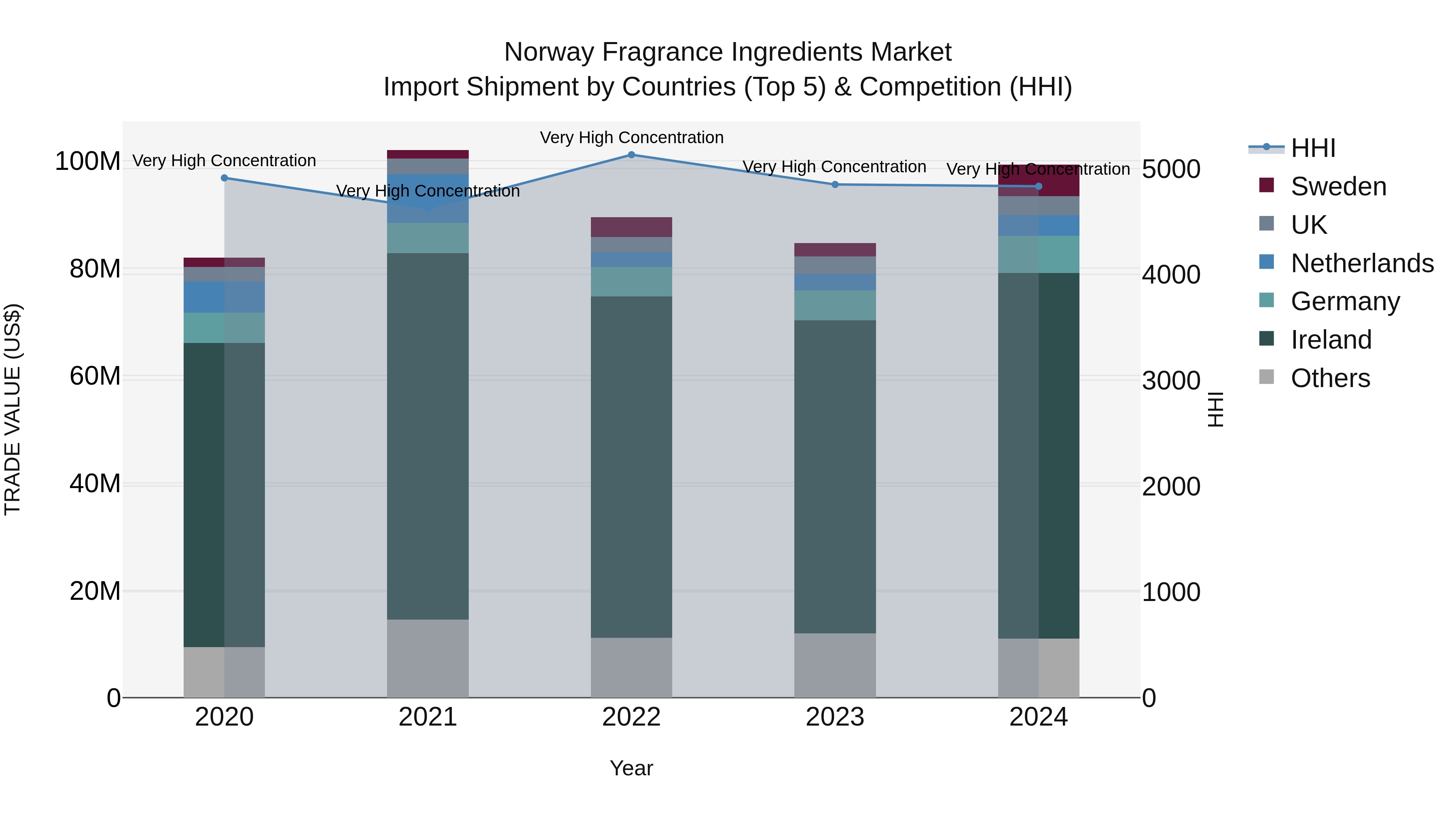
Norway`s fragrance ingredients import market in 2024 continued to be dominated by key suppliers such as Ireland, Germany, Sweden, Netherlands, and the UK, indicating a high level of concentration. The industry saw steady growth with a compound annual growth rate (CAGR) of 4.9% from 2020 to 2024. Importantly, the growth rate spiked in 2024, reaching 17.23%, showcasing a significant expansion in the market demand for fragrance ingredients. This trend suggests a positive outlook for the fragrance industry in Norway and highlights the importance of these top exporting countries in meeting the growing demand for fragrance ingredients.
Norway Fragrance Ingredients Market Overview
Norways fragrance ingredients market is expanding, particularly in the personal care, cosmetics, and household products industries. Consumers preference for natural and organic ingredients is driving innovation and growth in this market.
Drivers of the market
The fragrance ingredients market in Norway is influenced by the demand for raw materials used in the production of perfumes, cosmetics, and personal care products. Fragrance ingredients provide essential scents and enhance product appeal. The market benefits from advancements in fragrance formulation technologies, increasing consumer demand for unique and high-quality fragrances, and the growing focus on creating innovative and appealing fragrance products.
Challenges of the market
The fragrance ingredients market in Norway faces challenges from the rising demand for natural and organic ingredients, which increases production costs. Additionally, ensuring compliance with strict safety and environmental regulations adds complexity to the production process.
Government Policy of the market
In Norway, government policies related to the fragrance ingredients market emphasize the importance of safety and transparency. Regulations require that fragrance ingredients meet standards for safety and labeling, addressing potential allergens and harmful substances. The government supports research into safer and more sustainable fragrance ingredients to ensure consumer health and environmental protection.
Key Highlights of the Report:
- Norway Fragrance Ingredients Market Outlook
- Market Size of Norway Fragrance Ingredients Market, 2024
- Forecast of Norway Fragrance Ingredients Market, 2031
- Historical Data and Forecast of Norway Fragrance Ingredients Revenues & Volume for the Period 2021-2031
- Norway Fragrance Ingredients Market Trend Evolution
- Norway Fragrance Ingredients Market Drivers and Challenges
- Norway Fragrance Ingredients Price Trends
- Norway Fragrance Ingredients Porter`s Five Forces
- Norway Fragrance Ingredients Industry Life Cycle
- Historical Data and Forecast of Norway Fragrance Ingredients Market Revenues & Volume By Type for the Period 2021-2031
- Historical Data and Forecast of Norway Fragrance Ingredients Market Revenues & Volume By Essential Oils for the Period 2021-2031
- Historical Data and Forecast of Norway Fragrance Ingredients Market Revenues & Volume By Aroma Chemicals for the Period 2021-2031
- Historical Data and Forecast of Norway Fragrance Ingredients Market Revenues & Volume By Application for the Period 2021-2031
- Historical Data and Forecast of Norway Fragrance Ingredients Market Revenues & Volume By Cosmetics & toiletries for the Period 2021-2031
- Historical Data and Forecast of Norway Fragrance Ingredients Market Revenues & Volume By Fine fragrances for the Period 2021-2031
- Historical Data and Forecast of Norway Fragrance Ingredients Market Revenues & Volume By Soaps & detergents for the Period 2021-2031
- Historical Data and Forecast of Norway Fragrance Ingredients Market Revenues & Volume By Others for the Period 2021-2031
- Norway Fragrance Ingredients Import Export Trade Statistics
- Market Opportunity Assessment By Type
- Market Opportunity Assessment By Application
- Norway Fragrance Ingredients Top Companies Market Share
- Norway Fragrance Ingredients Competitive Benchmarking By Technical and Operational Parameters
- Norway Fragrance Ingredients Company Profiles
- Norway Fragrance Ingredients Key Strategic Recommendations






































