Norway Leather Market Growth Rate Analysis (2025 - 2031)
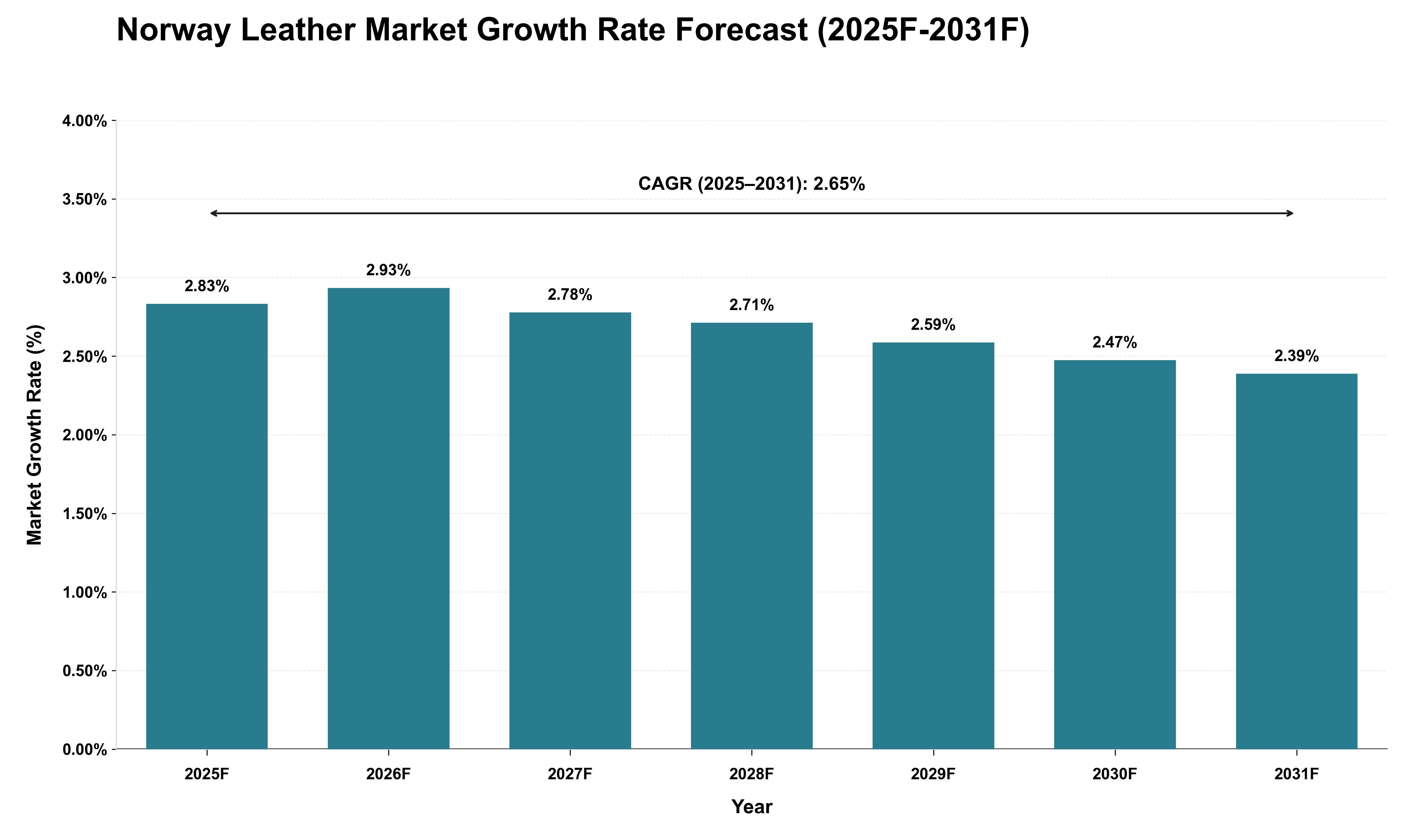
The Norway leather market will experience a steady growth trajectory driven by several macroeconomic factors, including rising consumer disposable income and an increasing demand for sustainable and ethically sourced materials. As the global economy continues to recover from recent disruptions, the anticipated CAGR of 2.65% from 2025 to 2031 reflects a gradual but consistent expansion in this sector. The annual growth rates will peak at 2.93% in 2026 before tapering off, indicating a response to fluctuating import dependencies and potential supply chain adjustments. Additionally, cyclical trends in consumer preferences towards luxury goods and durable products will support this growth, despite external pressures such as inflationary trends and shifts in trade policies that may impact pricing dynamics. Overall, the Norwegian leather market is poised for resilient performance amid evolving economic conditions.
Key Highlights of the Report:
- Norway Leather Market Outlook
- Market Size of Norway Leather Market, 2024
- Forecast of Norway Leather Market, 2031
- Historical Data and Forecast of Norway Leather Revenues & Volume for the Period 2021-2031
- Norway Leather Market Trend Evolution
- Norway Leather Market Drivers and Challenges
- Norway Leather Price Trends
- Norway Leather Porter`s Five Forces
- Norway Leather Industry Life Cycle
- Historical Data and Forecast of Norway Leather Market Revenues & Volume By Type for the Period 2021-2031
- Historical Data and Forecast of Norway Leather Market Revenues & Volume By Luggage for the Period 2021-2031
- Historical Data and Forecast of Norway Leather Market Revenues & Volume By Footwear for the Period 2021-2031
- Historical Data and Forecast of Norway Leather Market Revenues & Volume By Accessories for the Period 2021-2031
- Historical Data and Forecast of Norway Leather Market Revenues & Volume By Distribution Channel for the Period 2021-2031
- Historical Data and Forecast of Norway Leather Market Revenues & Volume By Online for the Period 2021-2031
- Historical Data and Forecast of Norway Leather Market Revenues & Volume By Offline for the Period 2021-2031
- Norway Leather Import Export Trade Statistics
- Market Opportunity Assessment By Type
- Market Opportunity Assessment By Distribution Channel
- Norway Leather Top Companies Market Share
- Norway Leather Competitive Benchmarking By Technical and Operational Parameters
- Norway Leather Company Profiles
- Norway Leather Key Strategic Recommendations






































