Norway Luxury Bath And Body Products Market Top 5 Importing Countries and Market Competition (HHI) Analysis
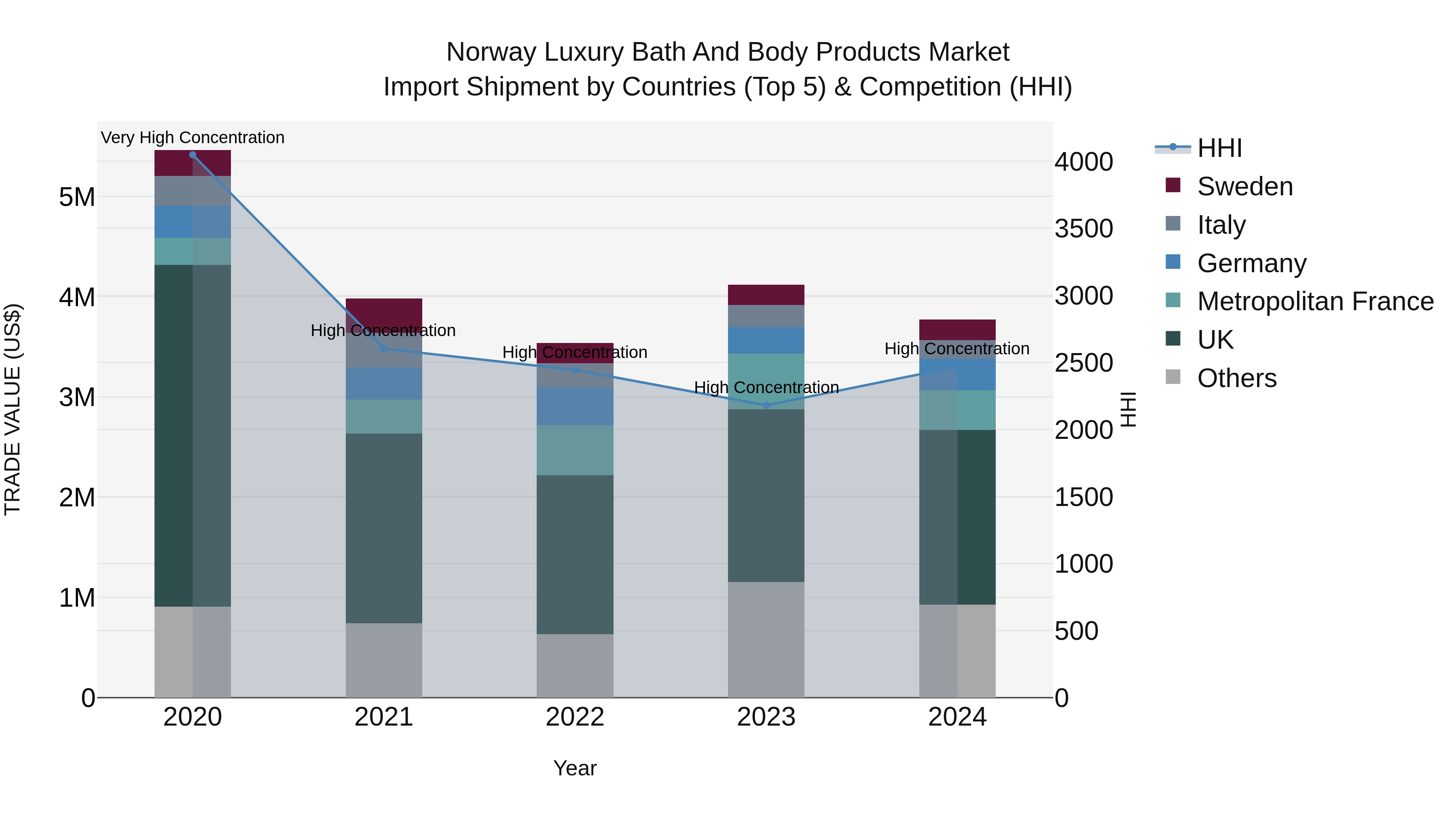
Despite a declining CAGR and negative growth rate in 2024, Norway`s luxury bath and body products import market continues to show high concentration with top exporters being the UK, Metropolitan France, Germany, USA, and China. This indicates a strong demand for premium products in Norway, presenting opportunities for market players to innovate and differentiate their offerings to cater to the discerning Norwegian consumers. Keeping a close eye on evolving consumer preferences and market trends will be crucial for sustained success in this competitive market segment.
Norway Luxury Bath And Body Products Market Synopsis
The Norway luxury bath and body products market is characterized by a growing demand for high-quality, premium products that offer both indulgence and health benefits. Consumers in Norway are increasingly seeking natural and organic ingredients, as well as products that are sustainably sourced and cruelty-free. Key trends in the market include a preference for luxury brands that emphasize wellness and self-care, as well as a focus on innovative formulations and packaging. Major players in the market include international luxury beauty brands as well as niche Scandinavian companies that highlight the country`s clean and minimalist aesthetic. With a strong emphasis on skincare and wellness, the Norway luxury bath and body products market is expected to continue growing as consumers prioritize self-care and seek out premium products that cater to their individual needs and preferences.
Norway Luxury Bath And Body Products Market Trends
The Norway Luxury Bath and Body Products Market is experiencing a growing demand for sustainable and natural products, driven by increasing consumer awareness of environmental and health benefits. Key trends in the market include the rise of clean beauty products, personalized skincare solutions, and innovative packaging designs. Opportunities lie in catering to the preferences of the younger generation for experiential products, such as spa-like treatments at home, as well as targeting the aging population with anti-aging and wellness-focused products. Collaborations with local artisans and influencers can help brands establish a unique identity and reach a wider audience in this competitive market. Overall, there is a strong potential for growth in the luxury bath and body products segment in Norway by tapping into these trends and opportunities.
Norway Luxury Bath And Body Products Market Challenges
In the Norway luxury bath and body products market, one of the key challenges faced is the relatively small population size compared to other European countries, leading to a limited customer base for luxury products. Additionally, the high cost of living in Norway can result in price sensitivity among consumers, impacting their willingness to spend on premium bath and body products. Competition from international luxury brands and the need to differentiate offerings to attract discerning consumers also present challenges. Furthermore, the market may face regulatory hurdles related to ingredients, sustainability, and packaging practices, requiring brands to navigate strict compliance requirements. Overall, achieving market penetration and sustaining growth in the luxury bath and body products segment in Norway requires a deep understanding of consumer preferences, effective marketing strategies, and a commitment to meeting regulatory standards.
Norway Luxury Bath And Body Products Market Investment Opportunities
The Norway Luxury Bath and Body Products Market is primarily driven by increasing consumer awareness and demand for high-quality, premium personal care products. Consumers are increasingly seeking products that offer unique and luxurious formulations, organic and natural ingredients, as well as eco-friendly and sustainable packaging. The growing influence of social media and beauty influencers has also played a significant role in driving the demand for luxury bath and body products in Norway. Additionally, the rising disposable income levels and changing lifestyles have led to a higher willingness to spend on premium personal care products, further fueling the growth of the luxury bath and body products market in the country.
Norway Luxury Bath And Body Products Market Government Polices
In Norway, the luxury bath and body products market is subject to government regulations regarding product safety, labeling, and ingredient restrictions. The Norwegian government follows strict guidelines set by the European Union for cosmetic products, ensuring that products meet safety standards and are accurately labeled. Additionally, Norway has implemented regulations to limit certain ingredients in cosmetic products, such as phthalates and parabens, in order to protect consumer health and the environment. Businesses operating in the luxury bath and body products market in Norway must comply with these regulations to ensure the quality and safety of their products and to maintain the trust of consumers in the market.
Norway Luxury Bath And Body Products Market Future Outlook
The future outlook for the Norway Luxury Bath and Body Products Market appears positive, driven by increasing consumer demand for high-quality personal care products and growing awareness of the benefits of luxury ingredients. The market is expected to witness steady growth as consumers prioritize self-care and wellness, leading to a rising preference for premium bath and body products. Key trends shaping the market include a shift towards natural and sustainable products, innovative product formulations, and personalized offerings. Furthermore, the influence of social media and online retail channels is expected to drive market expansion by providing greater accessibility to luxury bath and body products. Overall, market players have opportunities to capitalize on these trends by offering innovative, sustainable, and premium products to cater to the evolving preferences of Norwegian consumers.
Key Highlights of the Report:
- Norway Luxury Bath And Body Products Market Outlook
- Market Size of Norway Luxury Bath And Body Products Market, 2024
- Forecast of Norway Luxury Bath And Body Products Market, 2031
- Historical Data and Forecast of Norway Luxury Bath And Body Products Revenues & Volume for the Period 2021- 2031
- Norway Luxury Bath And Body Products Market Trend Evolution
- Norway Luxury Bath And Body Products Market Drivers and Challenges
- Norway Luxury Bath And Body Products Price Trends
- Norway Luxury Bath And Body Products Porter's Five Forces
- Norway Luxury Bath And Body Products Industry Life Cycle
- Historical Data and Forecast of Norway Luxury Bath And Body Products Market Revenues & Volume By Product for the Period 2021- 2031
- Historical Data and Forecast of Norway Luxury Bath And Body Products Market Revenues & Volume By Body Oil for the Period 2021- 2031
- Historical Data and Forecast of Norway Luxury Bath And Body Products Market Revenues & Volume By Body Lotions & Creams for the Period 2021- 2031
- Historical Data and Forecast of Norway Luxury Bath And Body Products Market Revenues & Volume By Body Washes for the Period 2021- 2031
- Historical Data and Forecast of Norway Luxury Bath And Body Products Market Revenues & Volume By Distribution Channel for the Period 2021- 2031
- Historical Data and Forecast of Norway Luxury Bath And Body Products Market Revenues & Volume By Online for the Period 2021- 2031
- Historical Data and Forecast of Norway Luxury Bath And Body Products Market Revenues & Volume By Offline for the Period 2021- 2031
- Norway Luxury Bath And Body Products Import Export Trade Statistics
- Market Opportunity Assessment By Product
- Market Opportunity Assessment By Distribution Channel
- Norway Luxury Bath And Body Products Top Companies Market Share
- Norway Luxury Bath And Body Products Competitive Benchmarking By Technical and Operational Parameters
- Norway Luxury Bath And Body Products Company Profiles
- Norway Luxury Bath And Body Products Key Strategic Recommendations






































