Norway Mirrors Market Growth Rate Analysis (2025 - 2031)
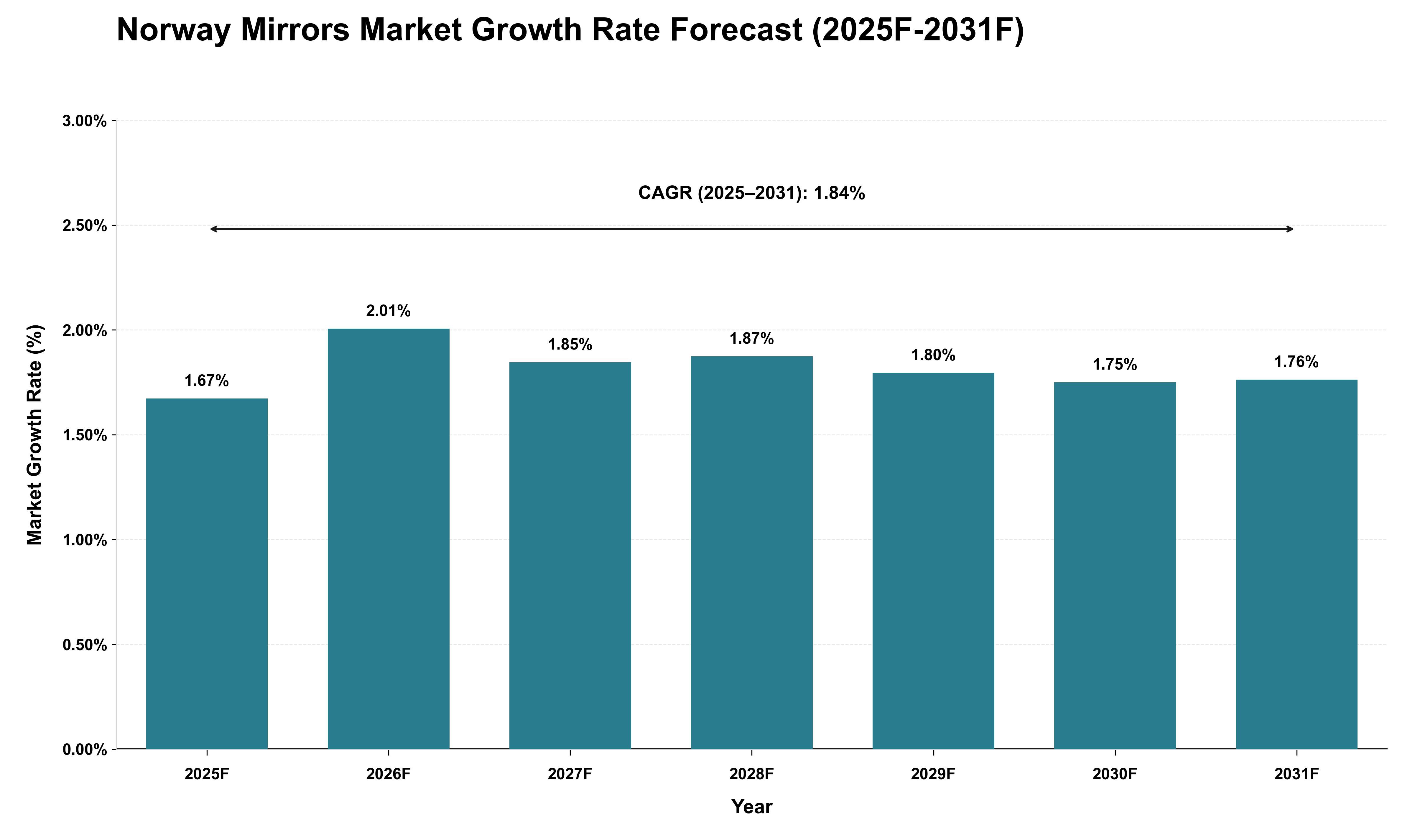
From 2025 onward, the Norway mirrors market is anticipated to experience a steady growth trajectory, driven by evolving regulatory frameworks and trade policy dynamics. The projected CAGR of 1.84% reflects a nuanced interplay between domestic production capabilities and import dependencies, particularly as Norway navigates its commitments to sustainability and environmental standards that may influence manufacturing processes. As trade policies adapt to global supply chain shifts, fluctuations in tariffs and import regulations could impact pricing structures, thereby affecting consumer demand. The annual growth rates indicate a gradual increase in market activity, with peaks in 2026 and 2028 suggesting potential cyclical rebounds influenced by consumer trends toward home improvement and aesthetic enhancements. Overall, the market will likely respond to these macroeconomic factors while maintaining resilience against external shocks through strategic regulatory adaptations.
Key Highlights of the Report:
- Norway Mirrors Market Outlook
- Market Size of Norway Mirrors Market, 2025
- Forecast of Norway Mirrors Market, 2032
- Historical Data and Forecast of Norway Mirrors Revenues & Volume for the Period 2022 - 2032F
- Norway Mirrors Market Trend Evolution
- Norway Mirrors Market Drivers and Challenges
- Norway Mirrors Price Trends
- Norway Mirrors Porter`s Five Forces
- Norway Mirrors Industry Life Cycle
- Historical Data and Forecast of Norway Mirrors Market Revenues & Volume By Types for the Period 2022 - 2032F
- Historical Data and Forecast of Norway Mirrors Market Revenues & Volume By Silver Mirror for the Period 2022 - 2032F
- Historical Data and Forecast of Norway Mirrors Market Revenues & Volume By Plated Mirror for the Period 2022 - 2032F
- Historical Data and Forecast of Norway Mirrors Market Revenues & Volume By Others for the Period 2022 - 2032F
- Historical Data and Forecast of Norway Mirrors Market Revenues & Volume By End-users for the Period 2022 - 2032F
- Historical Data and Forecast of Norway Mirrors Market Revenues & Volume By Bathroom for the Period 2022 - 2032F
- Historical Data and Forecast of Norway Mirrors Market Revenues & Volume By Make-up for the Period 2022 - 2032F
- Historical Data and Forecast of Norway Mirrors Market Revenues & Volume By Dressing for the Period 2022 - 2032F
- Historical Data and Forecast of Norway Mirrors Market Revenues & Volume By Decorative for the Period 2022 - 2032F
- Historical Data and Forecast of Norway Mirrors Market Revenues & Volume By Advertising for the Period 2022 - 2032F
- Historical Data and Forecast of Norway Mirrors Market Revenues & Volume By Others for the Period 2022 - 2032F
- Norway Mirrors Import Export Trade Statistics
- Market Opportunity Assessment By Types
- Market Opportunity Assessment By End-users
- Norway Mirrors Top Companies Market Share
- Norway Mirrors Competitive Benchmarking By Technical and Operational Parameters
- Norway Mirrors Company Profiles
- Norway Mirrors Key Strategic Recommendations






































