Norway Polyester Fabric Market Growth Rate Analysis (2025 - 2031)
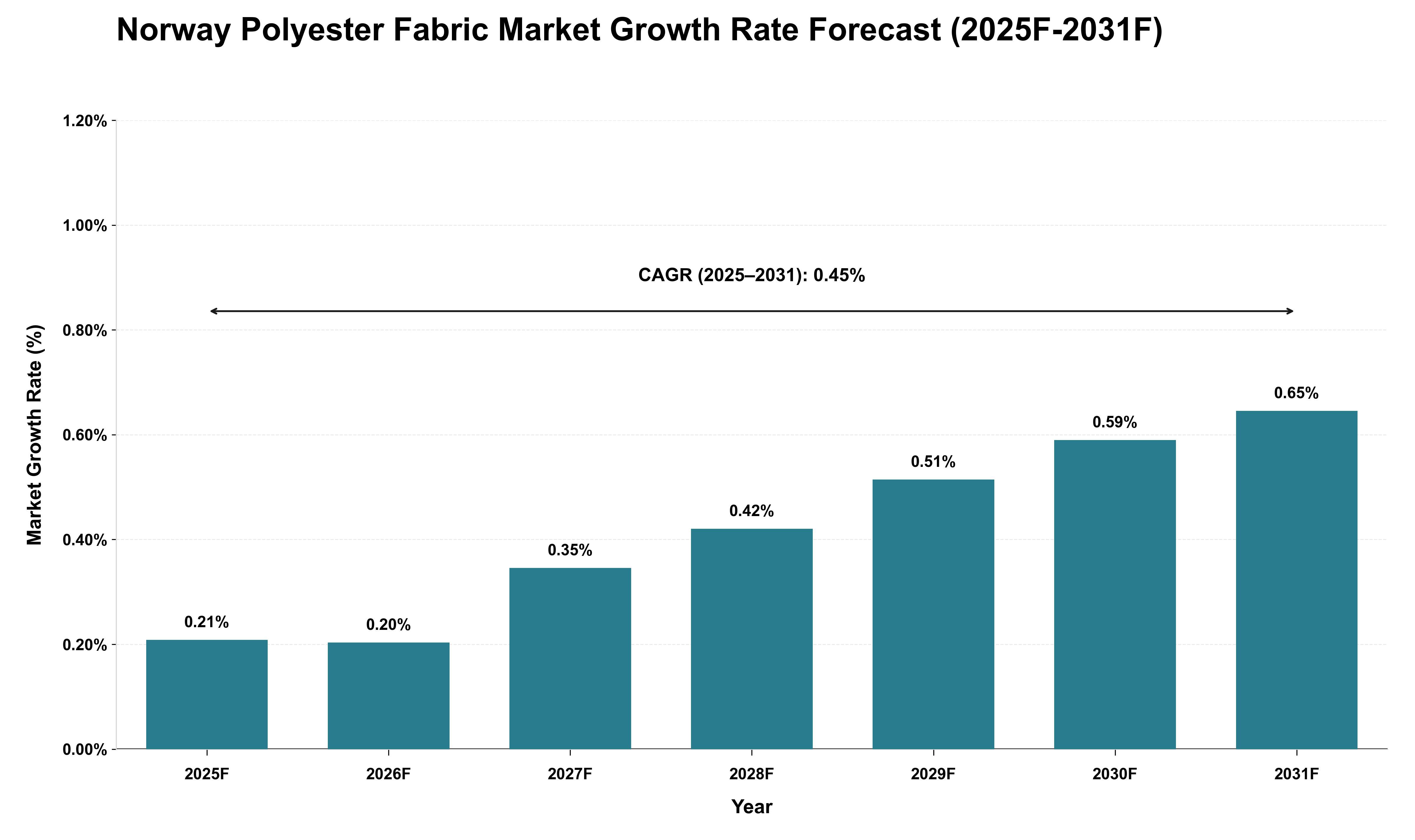
The Norway polyester fabric market is projected to experience a compound annual growth rate of 0.45% from 2025 to 2031, reflecting a gradual increase in demand driven by evolving consumer preferences and sustainability considerations. The anticipated annual growth rates indicate a slow but steady upward trajectory, with notable increases in later years, suggesting that raw material availability and pricing will play crucial roles in shaping market dynamics. As global supply chains adapt to fluctuating oil prices and environmental regulations, the cost of polyester production may face upward pressure, influencing retail prices. Additionally, Norway's reliance on imports for certain raw materials could lead to vulnerabilities in supply continuity, particularly if geopolitical tensions or trade policies shift. Consequently, while the market will likely expand modestly, external factors related to raw material sourcing will remain pivotal in determining the overall health of the polyester fabric sector during this forecast period.
Key Highlights of the Report:
- Norway Polyester Fabric Market Outlook
- Market Size of Norway Polyester Fabric Market, 2025
- Forecast of Norway Polyester Fabric Market, 2032
- Historical Data and Forecast of Norway Polyester Fabric Revenues & Volume for the Period 2022 - 2032F
- Norway Polyester Fabric Market Trend Evolution
- Norway Polyester Fabric Market Drivers and Challenges
- Norway Polyester Fabric Price Trends
- Norway Polyester Fabric Porter`s Five Forces
- Norway Polyester Fabric Industry Life Cycle
- Historical Data and Forecast of Norway Polyester Fabric Market Revenues & Volume By Type for the Period 2022 - 2032F
- Historical Data and Forecast of Norway Polyester Fabric Market Revenues & Volume By PET for the Period 2022 - 2032F
- Historical Data and Forecast of Norway Polyester Fabric Market Revenues & Volume By PCDT for the Period 2022 - 2032F
- Historical Data and Forecast of Norway Polyester Fabric Market Revenues & Volume By Applications for the Period 2022 - 2032F
- Historical Data and Forecast of Norway Polyester Fabric Market Revenues & Volume By Carpets & Rugs for the Period 2022 - 2032F
- Historical Data and Forecast of Norway Polyester Fabric Market Revenues & Volume By Non-Woven Fabrics Fiberfill for the Period 2022 - 2032F
- Historical Data and Forecast of Norway Polyester Fabric Market Revenues & Volume By Apparels for the Period 2022 - 2032F
- Historical Data and Forecast of Norway Polyester Fabric Market Revenues & Volume By Home Textiles for the Period 2022 - 2032F
- Historical Data and Forecast of Norway Polyester Fabric Market Revenues & Volume By Othersfor the Period 2022 - 2032F
- Norway Polyester Fabric Import Export Trade Statistics
- Market Opportunity Assessment By Type
- Market Opportunity Assessment By Applications
- Norway Polyester Fabric Top Companies Market Share
- Norway Polyester Fabric Competitive Benchmarking By Technical and Operational Parameters
- Norway Polyester Fabric Company Profiles
- Norway Polyester Fabric Key Strategic Recommendations






































