Norway Sail Canvas Market Top 5 Importing Countries and Market Competition (HHI) Analysis
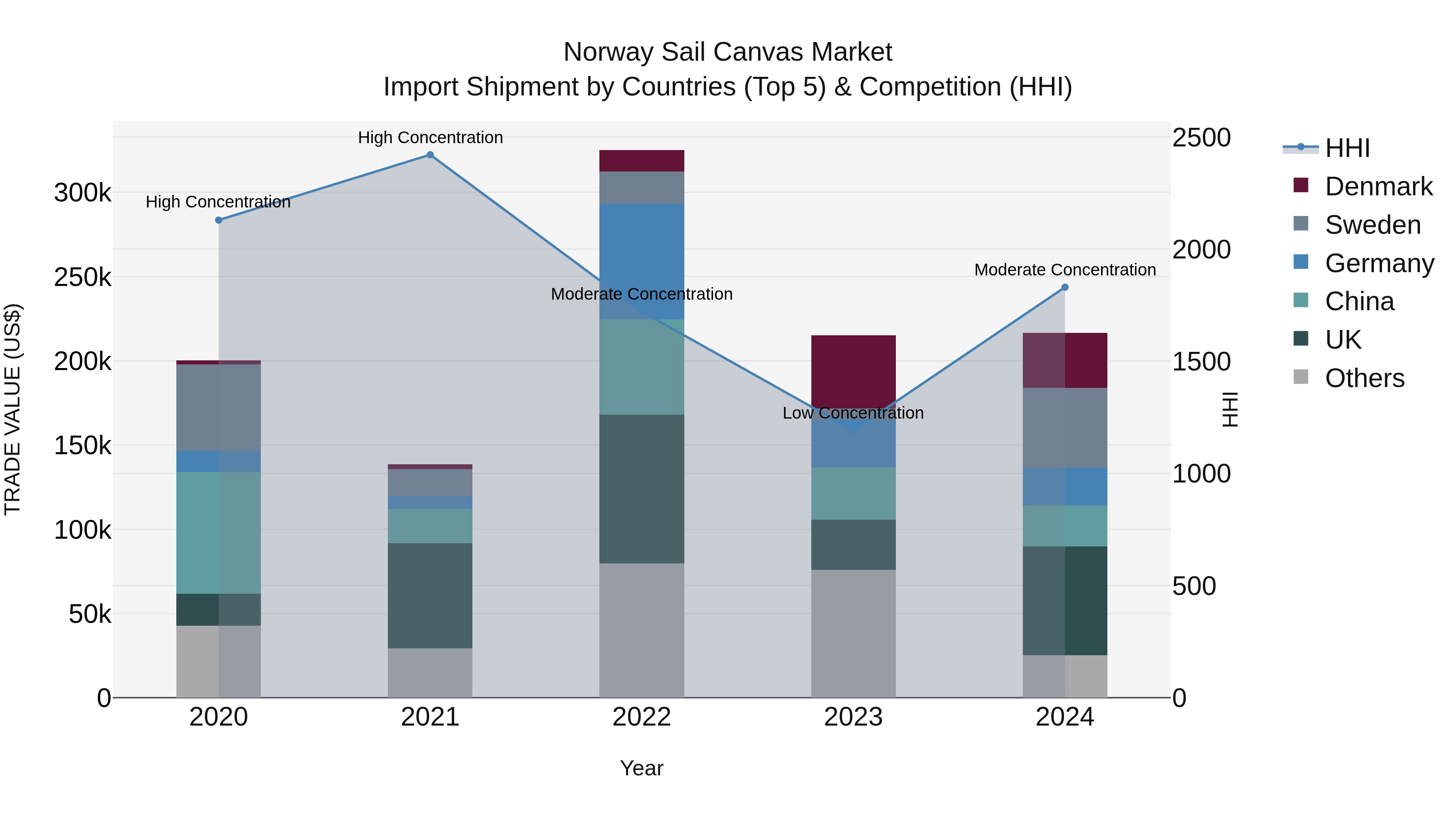
Norway`s sail canvas import market saw a shift towards moderate concentration in 2024, with top exporting countries being the UK, Sweden, Denmark, China, and Germany. The market experienced steady growth with a CAGR of 1.96% from 2020 to 2024. Despite a slightly lower growth rate of 0.66% in 2024 compared to the previous year, the market remains dynamic and attractive for importers. The diversity of sources for sail canvas imports indicates a healthy level of competition and opportunities for market players to explore partnerships and enhance their offerings to cater to the Norwegian market.
Norway Sail Canvas Market Overview
Norways sail canvas market is tied to the country`s rich maritime culture. The demand for high-quality, durable canvas for sailing vessels, particularly in recreational boating and yachting, drives the market. With a focus on lightweight, weather-resistant, and strong materials, advancements in synthetic fabrics have boosted the production of premium sail canvases. This market benefits from Norways thriving tourism and marine industry.
Drivers of the market
The sail canvas market in Norway is driven by the countrys rich maritime culture and extensive coastline, making sailing a popular recreational activity. The increasing number of sailing enthusiasts, combined with a growing demand for durable, high-performance sail materials, supports market growth. Moreover, the use of advanced materials that provide enhanced durability and resistance to harsh sea conditions, such as UV rays and saltwater corrosion, is fueling innovation in sail canvas production.
Challenges of the market
The Sail Canvas Market in Norway is confronted by challenges related to the increasing use of synthetic materials, such as polyester and nylon, which are often preferred over traditional canvas due to their durability and resistance to UV radiation and water. This shift in demand has led to a decline in traditional canvas manufacturing. Moreover, the market faces competition from international manufacturers that offer lower-priced alternatives. Environmental regulations surrounding the production and disposal of sail materials, particularly in maritime applications, also pose challenges, as manufacturers need to ensure that their products meet eco-friendly standards.
Government Policy of the market
The Norwegian government promotes marine safety and environmental sustainability in the sail canvas market. Regulations are in place that requires sail materials to meet durability and performance standards, especially for use in harsh weather conditions. Environmental policies also encourage the use of sustainable and recyclable materials in sail manufacturing, impacting the types of canvas materials used.
Key Highlights of the Report:
- Norway Sail Canvas Market Outlook
- Market Size of Norway Sail Canvas Market, 2024
- Forecast of Norway Sail Canvas Market, 2031
- Historical Data and Forecast of Norway Sail Canvas Revenues & Volume for the Period 2021-2031
- Norway Sail Canvas Market Trend Evolution
- Norway Sail Canvas Market Drivers and Challenges
- Norway Sail Canvas Price Trends
- Norway Sail Canvas Porter`s Five Forces
- Norway Sail Canvas Industry Life Cycle
- Historical Data and Forecast of Norway Sail Canvas Market Revenues & Volume By Type for the Period 2021-2031
- Historical Data and Forecast of Norway Sail Canvas Market Revenues & Volume By 8 Ann Canvas for the Period 2021-2031
- Historical Data and Forecast of Norway Sail Canvas Market Revenues & Volume By 12 Ann Canvas for the Period 2021-2031
- Historical Data and Forecast of Norway Sail Canvas Market Revenues & Volume By Polyester Canvas for the Period 2021-2031
- Historical Data and Forecast of Norway Sail Canvas Market Revenues & Volume By Others for the Period 2021-2031
- Historical Data and Forecast of Norway Sail Canvas Market Revenues & Volume By Application for the Period 2021-2031
- Historical Data and Forecast of Norway Sail Canvas Market Revenues & Volume By Sailing for the Period 2021-2031
- Historical Data and Forecast of Norway Sail Canvas Market Revenues & Volume By Yacht for the Period 2021-2031
- Historical Data and Forecast of Norway Sail Canvas Market Revenues & Volume By Others for the Period 2021-2031
- Norway Sail Canvas Import Export Trade Statistics
- Market Opportunity Assessment By Type
- Market Opportunity Assessment By Application
- Norway Sail Canvas Top Companies Market Share
- Norway Sail Canvas Competitive Benchmarking By Technical and Operational Parameters
- Norway Sail Canvas Company Profiles
- Norway Sail Canvas Key Strategic Recommendations






































