Norway Sunglasses Market Growth Rate Analysis (2025 - 2031)
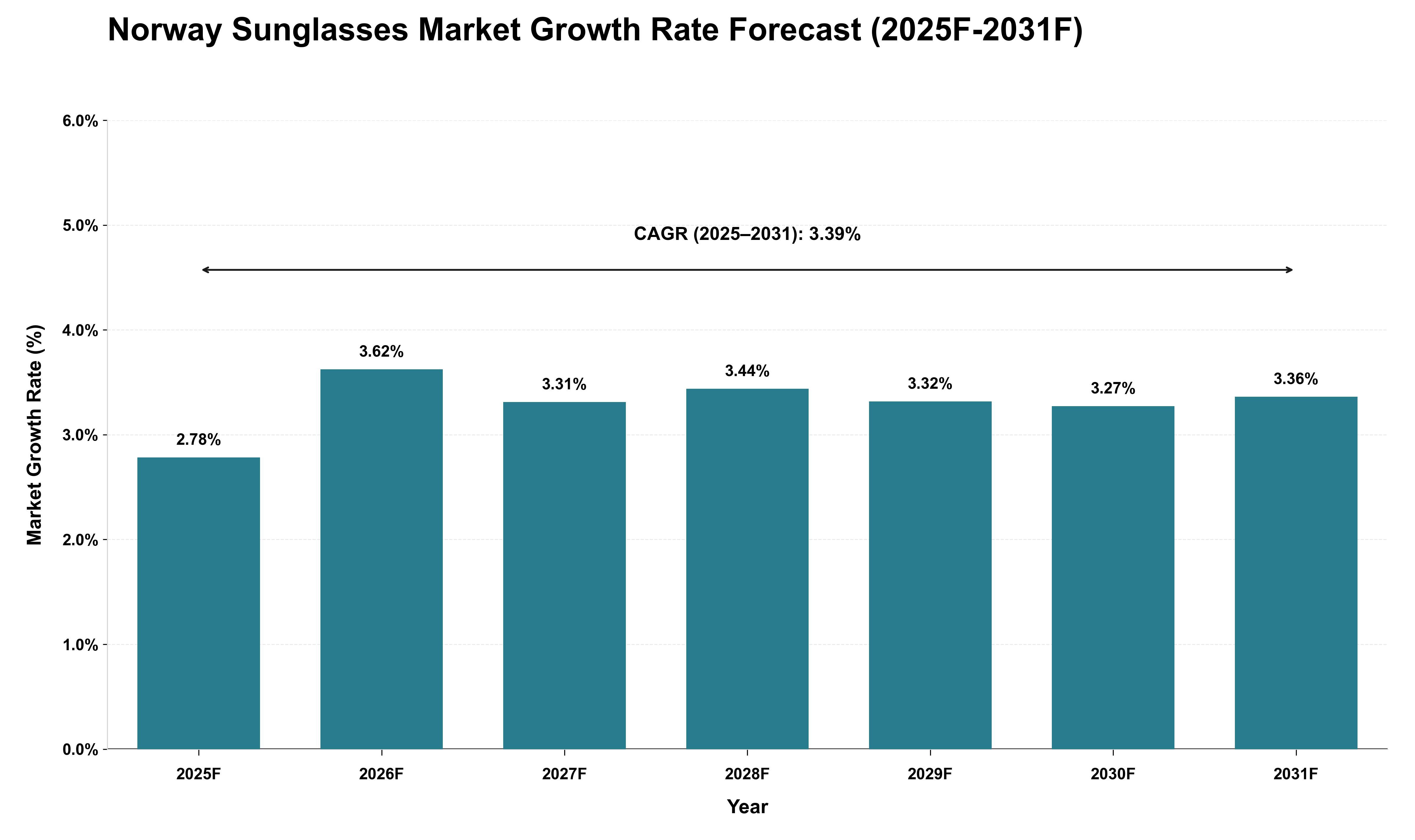
The forecasted growth trajectory for the Norway sunglasses market will exhibit a nuanced pattern, characterized by an initial acceleration in 2026 at 3.62%, followed by a gradual deceleration towards the end of the period, culminating in a projected growth rate of 3.36% in 2031. This trend reflects broader macroeconomic cycles where consumer spending on discretionary items like sunglasses is likely to be influenced by fluctuating economic conditions, including disposable income levels and shifts in fashion trends. The anticipated CAGR of 3.39% suggests that while demand will remain robust, it may be tempered by external factors such as import dependencies and potential supply chain disruptions that could affect pricing and availability. Additionally, cyclical trends in retail and tourism may play a significant role, as increased travel activity typically boosts demand for eyewear products during peak seasons.
Key Highlights of the Report:
- Norway Sunglasses Market Outlook
- Market Size of Norway Sunglasses Market, 2025
- Forecast of Norway Sunglasses Market, 2032
- Historical Data and Forecast of Norway Sunglasses Revenues & Volume for the Period 2022 - 2032F
- Norway Sunglasses Market Trend Evolution
- Norway Sunglasses Market Drivers and Challenges
- Norway Sunglasses Price Trends
- Norway Sunglasses Porter`s Five Forces
- Norway Sunglasses Industry Life Cycle
- Historical Data and Forecast of Norway Sunglasses Market Revenues & Volume By Product Type for the Period 2022 - 2032F
- Historical Data and Forecast of Norway Sunglasses Market Revenues & Volume By Polarized for the Period 2022 - 2032F
- Historical Data and Forecast of Norway Sunglasses Market Revenues & Volume By Non-polarized for the Period 2022 - 2032F
- Historical Data and Forecast of Norway Sunglasses Market Revenues & Volume By End-Users for the Period 2022 - 2032F
- Historical Data and Forecast of Norway Sunglasses Market Revenues & Volume By Women for the Period 2022 - 2032F
- Historical Data and Forecast of Norway Sunglasses Market Revenues & Volume By Men for the Period 2022 - 2032F
- Historical Data and Forecast of Norway Sunglasses Market Revenues & Volume By Unisex for the Period 2022 - 2032F
- Historical Data and Forecast of Norway Sunglasses Market Revenues & Volume By Distribution Channel for the Period 2022 - 2032F
- Historical Data and Forecast of Norway Sunglasses Market Revenues & Volume By Online for the Period 2022 - 2032F
- Historical Data and Forecast of Norway Sunglasses Market Revenues & Volume By Offline for the Period 2022 - 2032F
- Norway Sunglasses Import Export Trade Statistics
- Market Opportunity Assessment By Product Type
- Market Opportunity Assessment By End-Users
- Market Opportunity Assessment By Distribution Channel
- Norway Sunglasses Top Companies Market Share
- Norway Sunglasses Competitive Benchmarking By Technical and Operational Parameters
- Norway Sunglasses Company Profiles
- Norway Sunglasses Key Strategic Recommendations






































