Norway Thread Rolling Machine Market Growth Rate Analysis (2025 - 2031)
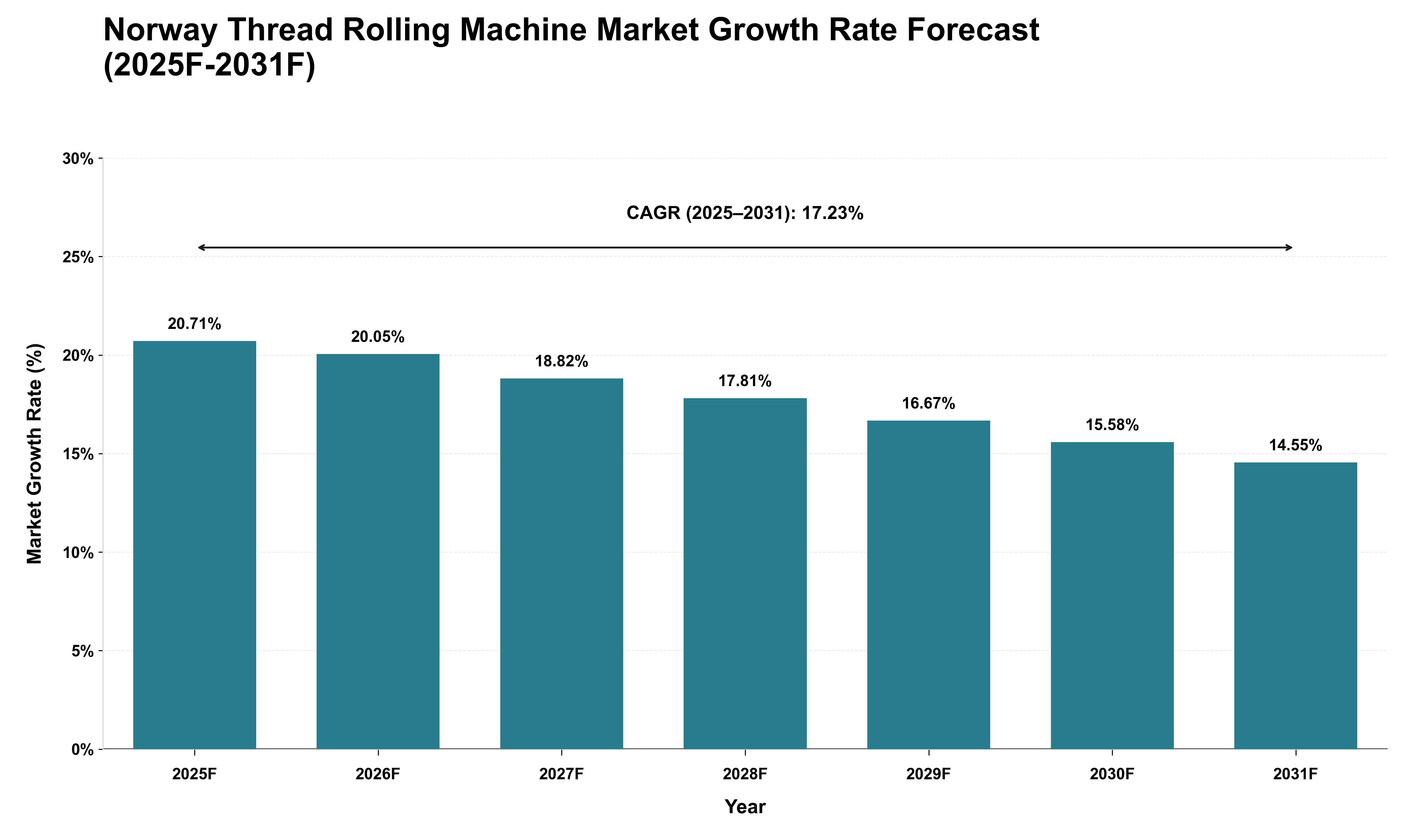
The projected deceleration in growth rates for the Norway thread rolling machine market, from 20.71% in 2025 to 14.55% by 2031, indicates a shift in market dynamics influenced by regulatory and trade policy factors. As Norway continues to navigate its import dependencies, particularly concerning machinery components and raw materials, potential tariff adjustments or trade agreements could significantly impact pricing structures and supply chain efficiencies. The anticipated CAGR of 17.23% suggests robust demand driven by industrial automation trends; however, the declining annual growth rates reflect an expected normalization as initial surges in investment may taper off. Additionally, cyclical trends within manufacturing sectors could lead to fluctuations in capital expenditure on machinery, further influencing the market's trajectory. Overall, while growth remains strong, external economic pressures and evolving trade policies will play crucial roles in shaping the landscape of this sector through 2031.
Key Highlights of the Report:
- Norway Thread Rolling Machine Market Outlook
- Market Size of Norway Thread Rolling Machine Market, 2024
- Forecast of Norway Thread Rolling Machine Market, 2031
- Historical Data and Forecast of Norway Thread Rolling Machine Revenues & Volume for the Period 2021-2031
- Norway Thread Rolling Machine Market Trend Evolution
- Norway Thread Rolling Machine Market Drivers and Challenges
- Norway Thread Rolling Machine Price Trends
- Norway Thread Rolling Machine Porter`s Five Forces
- Norway Thread Rolling Machine Industry Life Cycle
- Historical Data and Forecast of Norway Thread Rolling Machine Market Revenues & Volume By Type for the Period 2021-2031
- Historical Data and Forecast of Norway Thread Rolling Machine Market Revenues & Volume By Two Axis Thread Rolling Machine for the Period 2021-2031
- Historical Data and Forecast of Norway Thread Rolling Machine Market Revenues & Volume By Three Axis Thread Rolling Machine for the Period 2021-2031
- Historical Data and Forecast of Norway Thread Rolling Machine Market Revenues & Volume By Application for the Period 2021-2031
- Historical Data and Forecast of Norway Thread Rolling Machine Market Revenues & Volume By Construction for the Period 2021-2031
- Historical Data and Forecast of Norway Thread Rolling Machine Market Revenues & Volume By Industrial for the Period 2021-2031
- Historical Data and Forecast of Norway Thread Rolling Machine Market Revenues & Volume By Others for the Period 2021-2031
- Norway Thread Rolling Machine Import Export Trade Statistics
- Market Opportunity Assessment By Type
- Market Opportunity Assessment By Application
- Norway Thread Rolling Machine Top Companies Market Share
- Norway Thread Rolling Machine Competitive Benchmarking By Technical and Operational Parameters
- Norway Thread Rolling Machine Company Profiles
- Norway Thread Rolling Machine Key Strategic Recommendations






































