Norway Tractor Market Growth Rate Analysis (2025 - 2031)
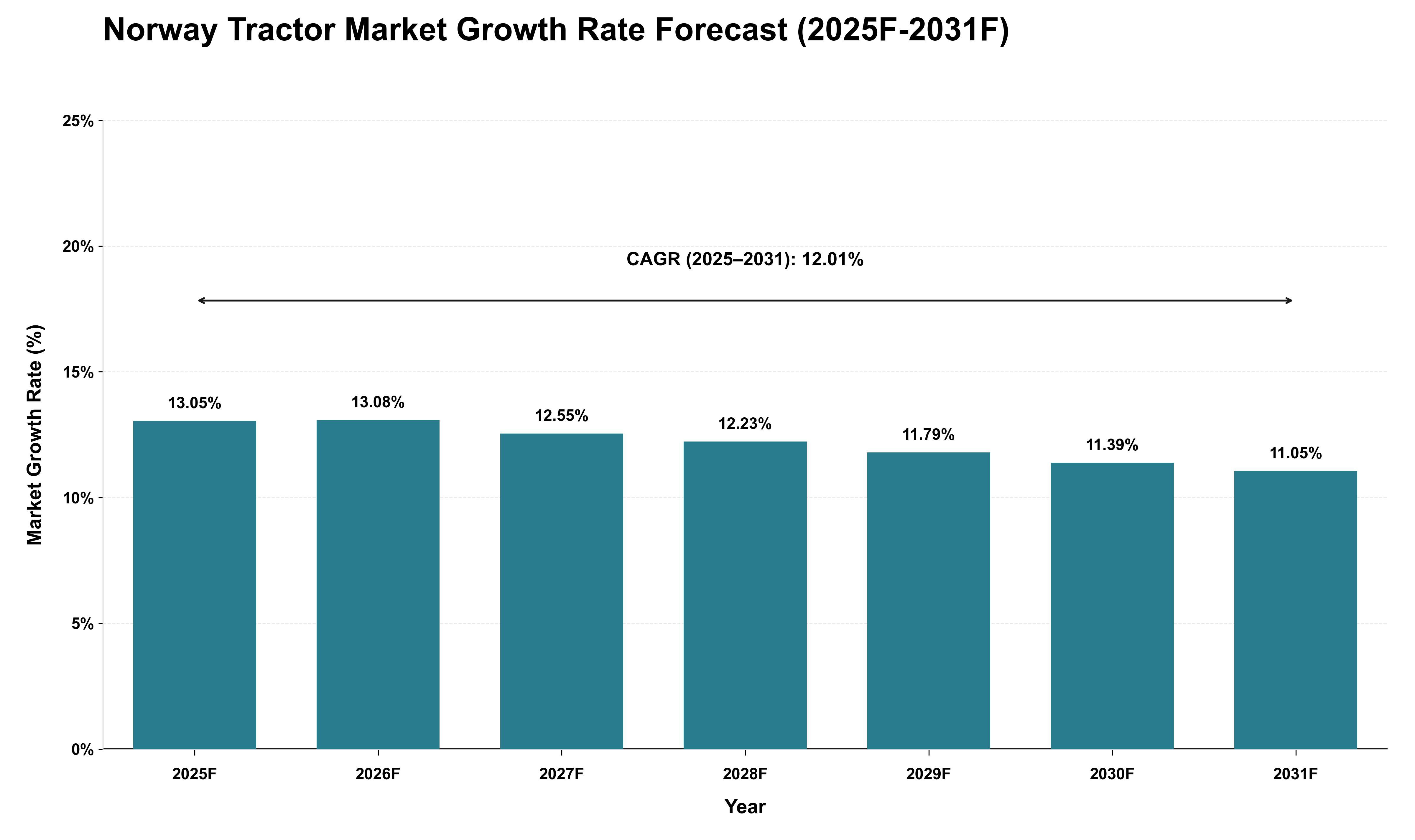
The Norway tractor market is projected to experience a robust compound annual growth rate (CAGR) of 12.01% from 2025 to 2031, driven by anticipated increases in agricultural productivity and mechanization. The annual growth rates will initially peak at over 13% before gradually tapering off, reflecting a dynamic interplay between raw material availability and pricing pressures. As global supply chains stabilize post-pandemic, the cost of essential components such as steel and electronic systems is expected to fluctuate, influencing production costs for tractors. Additionally, Norway's reliance on imports for certain machinery parts may lead to price volatility, impacting overall market dynamics. The cyclical nature of agricultural demand will further shape this landscape, as farmers increasingly invest in advanced machinery to enhance efficiency amid evolving environmental regulations and sustainability goals. Thus, the tractor market will likely navigate these macroeconomic factors while maintaining a strong growth trajectory throughout the forecast period.
Key Highlights of the Report:
- Norway Tractor Market Outlook
- Market Size of Norway Tractor Market, 2024
- Forecast of Norway Tractor Market, 2031
- Historical Data and Forecast of Norway Tractor Revenues & Volume for the Period 2021-2031
- Norway Tractor Market Trend Evolution
- Norway Tractor Market Drivers and Challenges
- Norway Tractor Price Trends
- Norway Tractor Porter`s Five Forces
- Norway Tractor Industry Life Cycle
- Historical Data and Forecast of Norway Tractor Market Revenues & Volume By Power Output for the Period 2021-2031
- Historical Data and Forecast of Norway Tractor Market Revenues & Volume By Less Than 30 HP for the Period 2021-2031
- Historical Data and Forecast of Norway Tractor Market Revenues & Volume By 30-50 HP for the Period 2021-2031
- Historical Data and Forecast of Norway Tractor Market Revenues & Volume By 51-100 HP for the Period 2021-2031
- Historical Data and Forecast of Norway Tractor Market Revenues & Volume By More Than 100 HP for the Period 2021-2031
- Historical Data and Forecast of Norway Tractor Market Revenues & Volume By Drive Type for the Period 2021-2031
- Historical Data and Forecast of Norway Tractor Market Revenues & Volume By 2 Wheel Drive for the Period 2021-2031
- Historical Data and Forecast of Norway Tractor Market Revenues & Volume By 4 Wheel Drive for the Period 2021-2031
- Historical Data and Forecast of Norway Tractor Market Revenues & Volume By Application for the Period 2021-2031
- Historical Data and Forecast of Norway Tractor Market Revenues & Volume By Agriculture for the Period 2021-2031
- Norway Tractor Import Export Trade Statistics
- Market Opportunity Assessment By Power Output
- Market Opportunity Assessment By Drive Type
- Market Opportunity Assessment By Application
- Norway Tractor Top Companies Market Share
- Norway Tractor Competitive Benchmarking By Technical and Operational Parameters
- Norway Tractor Company Profiles
- Norway Tractor Key Strategic Recommendations






































