Norway Vegetable Oil Market Growth Rate Analysis (2025 - 2031)
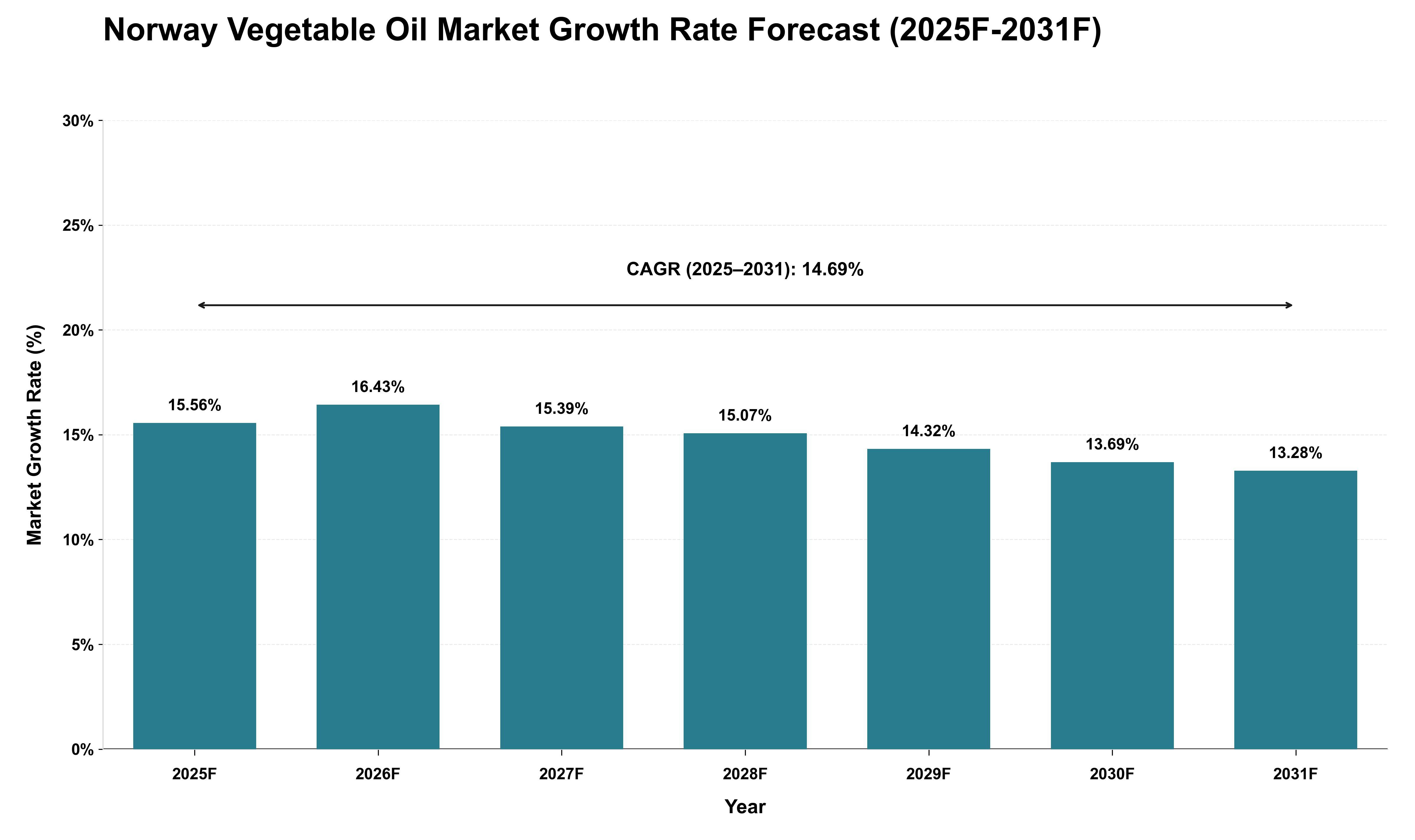
The Norway vegetable oil market is projected to experience a robust compound annual growth rate of 14.69% from 2025 to 2031, reflecting a significant shift in consumer preferences towards plant-based oils driven by health consciousness and sustainability concerns. The annual growth rates indicate a strong initial surge, particularly in 2025 and 2026, as technological advancements in extraction and processing methods enhance product quality and yield. This trend will likely be supported by increasing import dependencies as domestic production may not fully meet rising demand, prompting greater reliance on international suppliers. Additionally, cyclical trends in agricultural output and global commodity prices will influence market dynamics; fluctuations in raw material costs could impact pricing strategies. As consumers increasingly substitute traditional fats with vegetable oils, the market will adapt through innovation and diversification of product offerings to capture evolving dietary trends.
Key Highlights of the Report:
- Norway Vegetable Oil Market Outlook
- Market Size of Norway Vegetable Oil Market, 2025
- Forecast of Norway Vegetable Oil Market, 2032
- Historical Data and Forecast of Norway Vegetable Oil Revenues & Volume for the Period 2022 - 2032
- Norway Vegetable Oil Market Trend Evolution
- Norway Vegetable Oil Market Drivers and Challenges
- Norway Vegetable Oil Price Trends
- Norway Vegetable Oil Porter's Five Forces
- Norway Vegetable Oil Industry Life Cycle
- Historical Data and Forecast of Norway Vegetable Oil Market Revenues & Volume By Type for the Period 2022 - 2032
- Historical Data and Forecast of Norway Vegetable Oil Market Revenues & Volume By Sunflower Oil for the Period 2022 - 2032
- Historical Data and Forecast of Norway Vegetable Oil Market Revenues & Volume By Rapeseed (Canola) Oil for the Period 2022 - 2032
- Historical Data and Forecast of Norway Vegetable Oil Market Revenues & Volume By Soybean Oil for the Period 2022 - 2032
- Historical Data and Forecast of Norway Vegetable Oil Market Revenues & Volume By Application for the Period 2022 - 2032
- Historical Data and Forecast of Norway Vegetable Oil Market Revenues & Volume By Food for the Period 2022 - 2032
- Historical Data and Forecast of Norway Vegetable Oil Market Revenues & Volume By Feed for the Period 2022 - 2032
- Historical Data and Forecast of Norway Vegetable Oil Market Revenues & Volume By Industrial for the Period 2022 - 2032
- Norway Vegetable Oil Import Export Trade Statistics
- Market Opportunity Assessment By Type
- Market Opportunity Assessment By Application
- Norway Vegetable Oil Top Companies Market Share
- Norway Vegetable Oil Competitive Benchmarking By Technical and Operational Parameters
- Norway Vegetable Oil Company Profiles
- Norway Vegetable Oil Key Strategic Recommendations






































