Norway Wool Market Growth Rate Analysis (2025 - 2031)
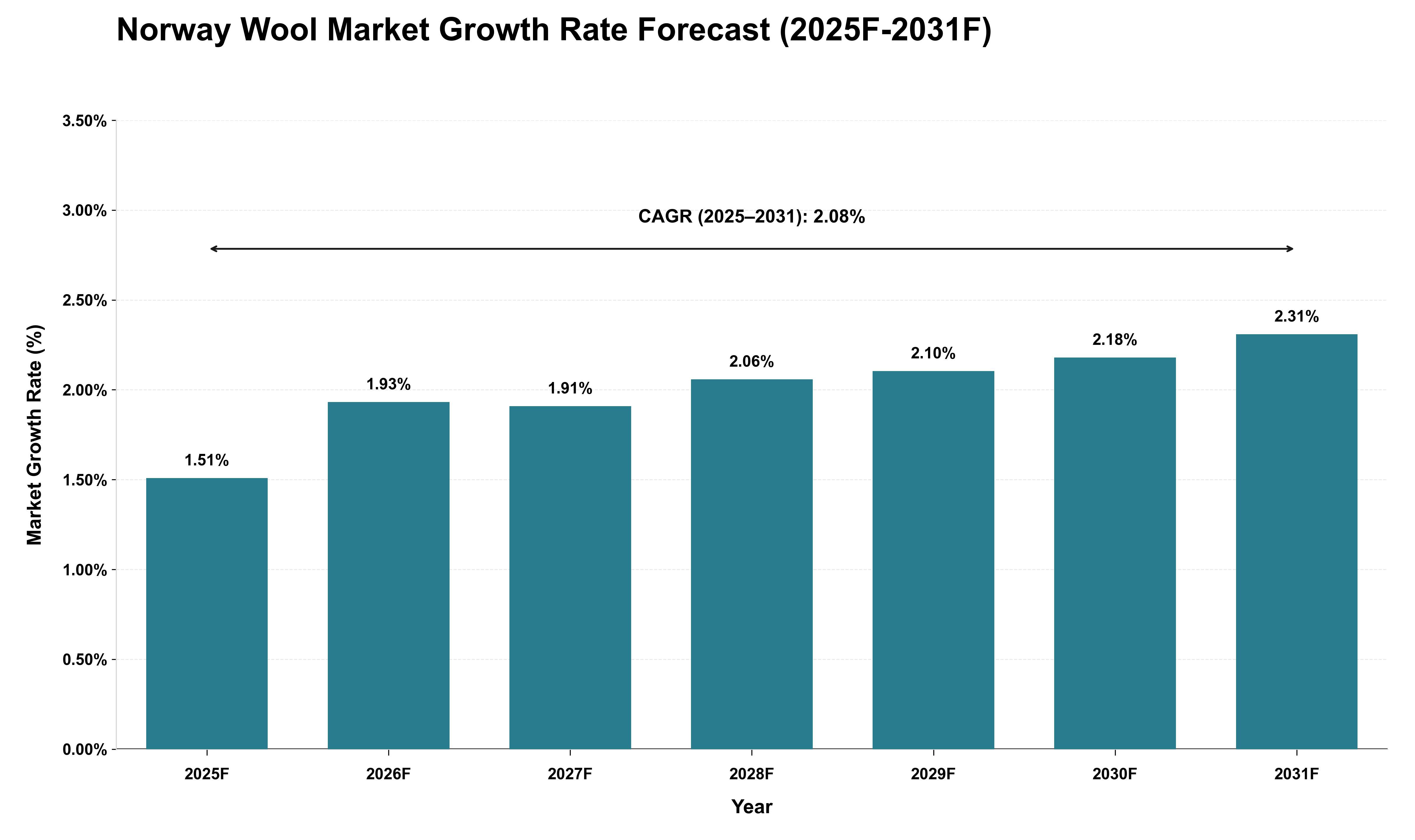
The Norway wool market will experience a gradual growth trajectory driven by evolving regulatory frameworks and trade policies that favor sustainable practices. As global demand for eco-friendly textiles increases, Norway's wool sector will likely benefit from enhanced export opportunities, particularly in regions prioritizing sustainability. The projected CAGR of 2.08% reflects a steady annual growth pattern, with rates climbing from 1.51% in 2025 to 2.31% by 2031, indicating an upward trend in consumer preference for natural fibers. Import dependencies may shift as domestic production aligns with international standards, potentially reducing reliance on foreign wool sources. Additionally, cyclical trends in fashion and textile industries will influence demand fluctuations; however, the overall regulatory push towards sustainability is expected to stabilize the market and foster resilience against external shocks during this forecast period.
Key Highlights of the Report:
- Norway Wool Market Outlook
- Market Size of Norway Wool Market, 2024
- Forecast of Norway Wool Market, 2031
- Historical Data and Forecast of Norway Wool Revenues & Volume for the Period 2021-2031
- Norway Wool Market Trend Evolution
- Norway Wool Market Drivers and Challenges
- Norway Wool Price Trends
- Norway Wool Porter`s Five Forces
- Norway Wool Industry Life Cycle
- Historical Data and Forecast of Norway Wool Market Revenues & Volume By Source for the Period 2021-2031
- Historical Data and Forecast of Norway Wool Market Revenues & Volume By Merino Wool for the Period 2021-2031
- Historical Data and Forecast of Norway Wool Market Revenues & Volume By Peruvian Highland Wool for the Period 2021-2031
- Historical Data and Forecast of Norway Wool Market Revenues & Volume By Teeswater Wool for the Period 2021-2031
- Historical Data and Forecast of Norway Wool Market Revenues & Volume By Shetland Wool for the Period 2021-2031
- Historical Data and Forecast of Norway Wool Market Revenues & Volume By Cashmere Wool for the Period 2021-2031
- Historical Data and Forecast of Norway Wool Market Revenues & Volume By others for the Period 2021-2031
- Historical Data and Forecast of Norway Wool Market Revenues & Volume By Type for the Period 2021-2031
- Historical Data and Forecast of Norway Wool Market Revenues & Volume By Fine wool (? 25 ) for the Period 2021-2031
- Historical Data and Forecast of Norway Wool Market Revenues & Volume By Medium wool (25 to 35 ?) for the Period 2021-2031
- Historical Data and Forecast of Norway Wool Market Revenues & Volume By Coarse wool (? 35 ) for the Period 2021-2031
- Historical Data and Forecast of Norway Wool Market Revenues & Volume By Application for the Period 2021-2031
- Historical Data and Forecast of Norway Wool Market Revenues & Volume By Apparels for the Period 2021-2031
- Historical Data and Forecast of Norway Wool Market Revenues & Volume By Interior Textiles for the Period 2021-2031
- Norway Wool Import Export Trade Statistics
- Market Opportunity Assessment By Source
- Market Opportunity Assessment By Type
- Market Opportunity Assessment By Application
- Norway Wool Top Companies Market Share
- Norway Wool Competitive Benchmarking By Technical and Operational Parameters
- Norway Wool Company Profiles
- Norway Wool Key Strategic Recommendations






































