Oman Digital Lending Market Size & Growth Rate (2026-2032)
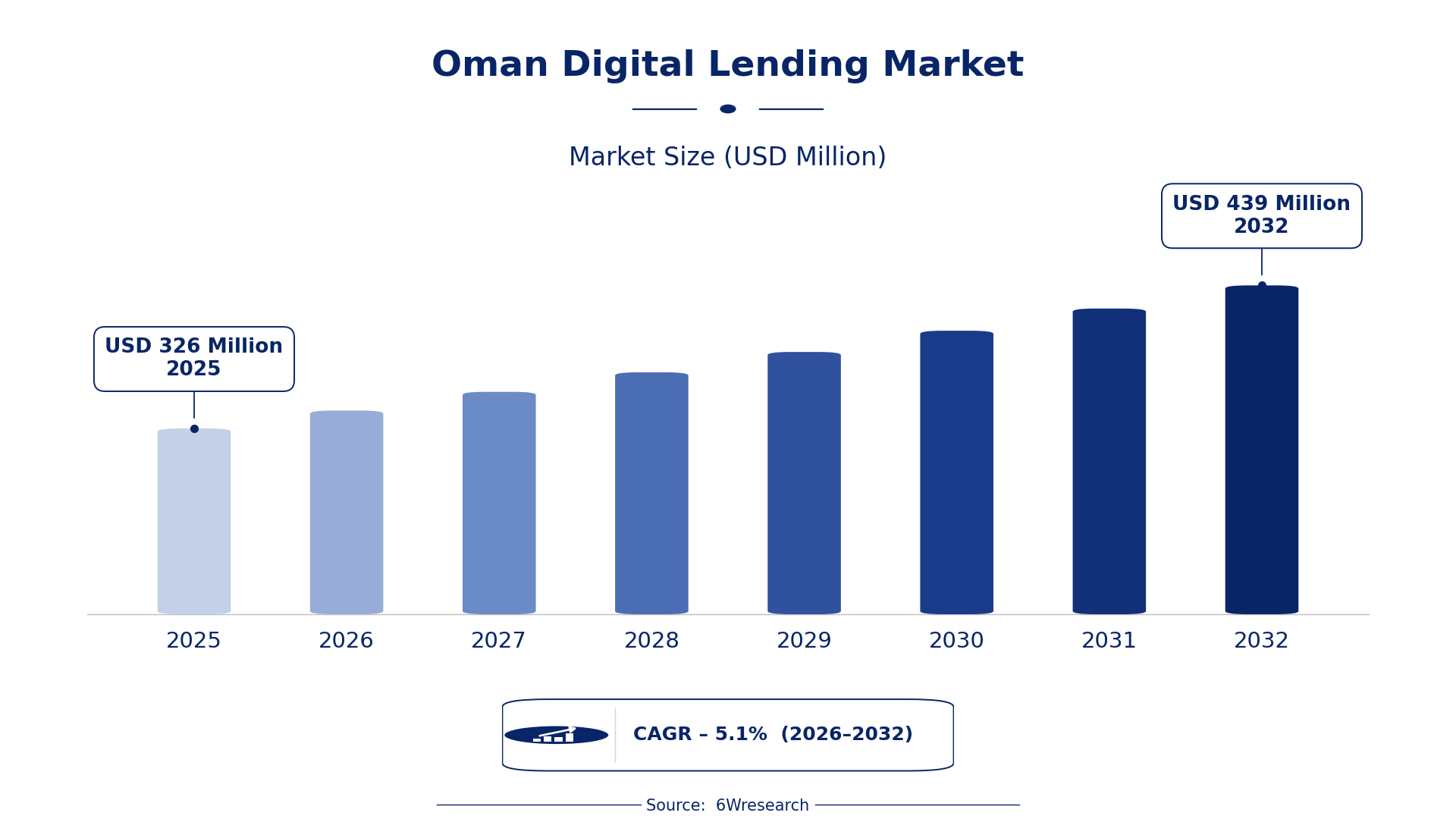
The Oman Digital Lending Market was estimated at USD 326 Million in 2025 and is projected to reach USD 439 Million by 2032, growing at a CAGR of 5.1% from 2026 to 2032.
Oman Digital Lending Market Synopsis
The digital lending scene in Oman is gaining momentum as consumers demand faster, more efficient credit solutions. With the increasing penetration of smartphones and the internet, the market is evolving rapidly, presenting new opportunities for both borrowers and fintech providers.
Key players in the sector are harnessing technology to simplify the loan application process. This drive for innovation is complemented by an evolving regulatory framework aimed at ensuring consumer protection while facilitating the growth of digital financial services.
Oman Digital Lending Market Year-wise Growth Rate and Key Drivers
This graph illustrates the annual growth rates of the Oman Digital Lending Market from 2021 to 2032, highlighting a steady upward trajectory and projected expansion over the forecast period.
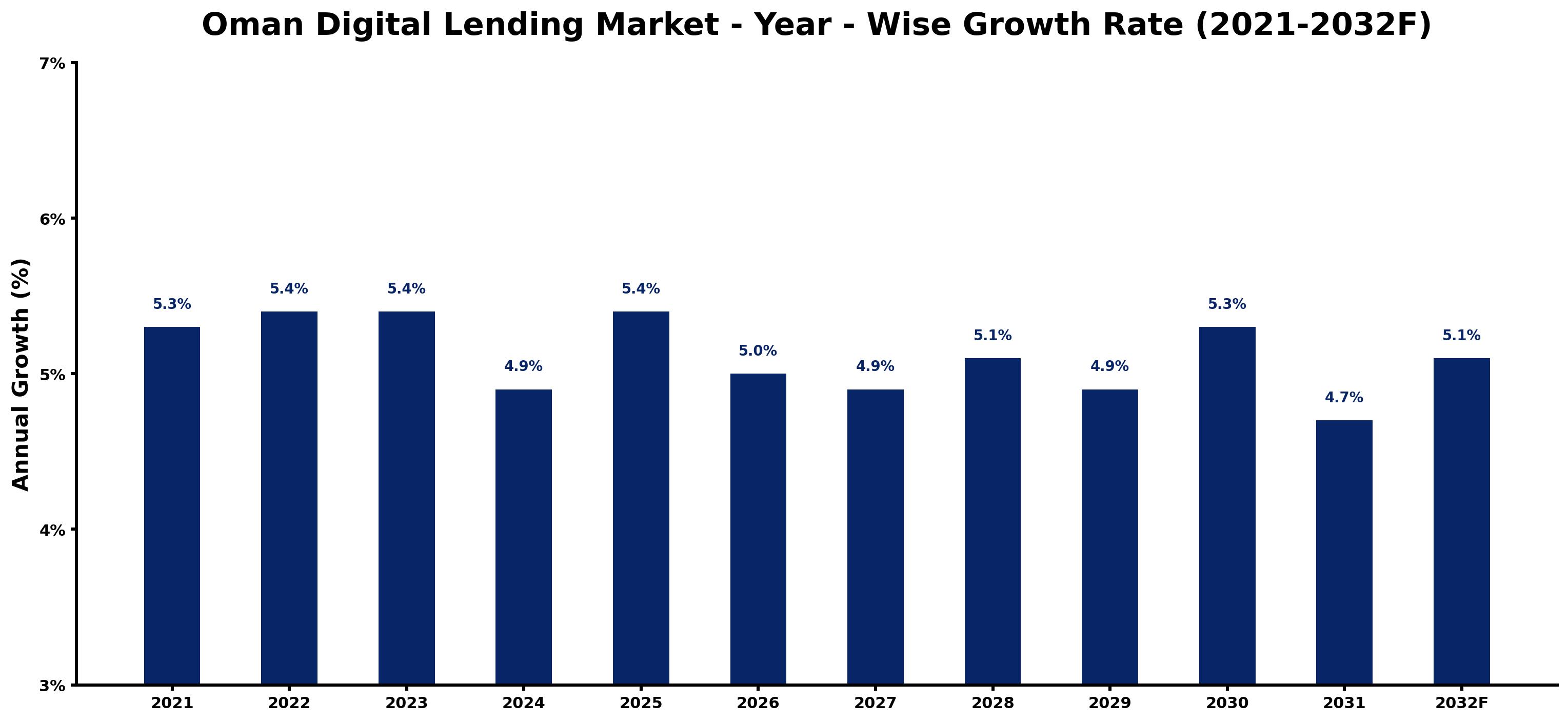
The table below presents the year‑wise growth rates along with the key drivers influencing the market
| Year | Growth Rate | Major Drivers |
| 2021 | 5.3% | Increased smartphone penetration boosts digital lending platforms. |
| 2022 | 5.4% | Regulatory support from CMA enhances fintech innovation in lending. |
| 2023 | 5.4% | Young population drives demand for accessible financing options. |
| 2024 | 4.9% | Growing awareness of online financial services among consumers. |
| 2025 | 5.4% | Government initiatives promote digital financial inclusion strategies. |
| 2026 | 5.0% | E-commerce growth increases consumer need for short-term loans. |
| 2027 | 4.9% | Rising digital payment adoption accelerates lending activities. |
| 2028 | 5.1% | Partnerships between banks and fintechs expand lending solutions. |
| 2029 | 4.9% | Increased investor interest fuels digital lending startups. |
| 2030 | 5.3% | Improved internet infrastructure enhances online lending accessibility. |
| 2031 | 4.7% | Local customer service improvements boost consumer trust in lending. |
| 2032 | 5.1% | Innovative credit scoring models attract more borrowers digitally. |
Note: Market size estimations and growth projections presented in this report are based on 6Wresearch's proprietary forecasting methodology, utilizing the latest available industry data, government publications, and primary research inputs.
Oman Digital Lending Market Key Takeaways
Below are some of the specific key takeaways from the market, including:
- Increasing smartphone and internet penetration is a major driver of market growth.
- Digital platforms are streamlining the loan application process and reducing paperwork.
- Collaboration between fintech companies and traditional lenders is on the rise.
- Regulatory frameworks are evolving to ensure consumer protection and responsible lending.
- There is a growing demand for personalized lending solutions among consumers.
Evaluation of Restraints in Oman Digital Lending Market
Despite its promising growth, the Oman Digital Lending Market faces notable challenges. A lack of clear regulatory guidelines can stifle innovation and deter new entrants. Many consumers still prefer traditional banking services, creating a trust gap for digital platforms. Additionally, the limited availability of credit information complicates the lending process, making it difficult for lenders to assess risk accurately. These factors collectively hinder the potential for widespread adoption and growth in the sector.
Oman Digital Lending Market Trends
Several trends are shaping the future of the Oman Digital Lending Market. The rise of artificial intelligence and big data analytics is enabling lenders to evaluate creditworthiness with greater precision. Instant approval mechanisms are becoming commonplace, catering to the consumer's need for speed and efficiency. on top of that, personalized lending solutions are gaining traction, as customers seek tailored financial products that meet their unique requirements.
Oman Digital Lending Market Opportunities
The digital lending arena in Oman is rife with investment opportunities. The expanding young population, coupled with increasing digital literacy, creates a fertile ground for innovative financial services. Investors have the chance to either fund existing digital lending platforms or develop new solutions that address specific consumer needs. Customization of loan products can provide a competitive edge in capturing this evolving market.
Government Initiatives in the Oman Digital Lending Market
The Omani government is actively shaping the digital lending sector through targeted policies and regulations. The Central Bank of Oman has set forth a framework to govern digital lending practices, emphasizing consumer protection and fair lending. These initiatives are crucial as they aim to create a transparent and competitive market while fostering financial inclusion for all citizens.
- A regulatory framework introduced in 2025 mandates transparency in lending practices, protecting consumer rights.
- Currently underway is a financial literacy campaign aimed at educating consumers about responsible borrowing and the benefits of digital lending.
- A national digital infrastructure upgrade program is planned to enhance connectivity and accessibility for digital financial services by 2028.
- Recent initiatives have focused on licensing digital lenders, ensuring they adhere to strict guidelines on interest rates and loan terms.
Future Insights of the Oman Digital Lending Market
Looking ahead to 2026-2032, the Oman Digital Lending Market is set to expand significantly. As consumer preferences shift towards digital solutions, the demand for quick and easy access to credit will only increase. With the government's continued support for fintech innovations and an emphasis on financial inclusion, the sector is likely to witness groundbreaking advancements. The interplay between technology and regulatory frameworks will shape a more dynamic lending environment, opening doors for new players and innovative products.
Oman Digital Lending Market Latest Developments
In the past year, the Oman Digital Lending Market has seen several notable developments that highlight its growth trajectory. As fintech adoption accelerates, the focus has been on enhancing customer experiences and expanding service offerings. Key industry players are making strides to innovate and improve their platforms, catering to an increasingly discerning customer base.
- A major technology vendor launched a new AI-driven loan approval system in Q3 2025, aimed at reducing processing times for applicants.
- An initiative to partner with local banks for data sharing began in early 2025, enhancing credit assessment capabilities across digital platforms.
- A leading fintech company is currently rolling out a personalized lending solution that adapts to individual borrower profiles, with plans for completion by mid-2026.
- A new educational webinar series focusing on digital finance literacy was launched in late 2025 to promote responsible borrowing among consumers.
Oman Digital Lending Market - Key Attractiveness of the Report
- 10 Years of Market Numbers
- Historical Data Starting from 2022 to 2025
- Base Year: 2025
- Forecast Data until 2032
- Key Performance Indicators Impacting the Market
- Major Upcoming Developments and Projects
Key Highlights of the Report:
- Oman Digital Lending Market Outlook
- Market Size of Oman Digital Lending Market, 2025
- Forecast of Oman Digital Lending Market, 2032
- Historical Data and Forecast of Oman Digital Lending Revenues & Volume for the Period 2022-2032F
- Oman Digital Lending Market Trend Evolution
- Oman Digital Lending Market Drivers and Challenges
- Oman Digital Lending Price Trends
- Oman Digital Lending Porter's Five Forces
- Oman Digital Lending Industry Life Cycle
- Historical Data and Forecast of Oman Digital Lending Market Revenues & Volume By Offering for the Period 2022-2032F
- Historical Data and Forecast of Oman Digital Lending Market Revenues & Volume By Solutions for the Period 2022-2032F
- Historical Data and Forecast of Oman Digital Lending Market Revenues & Volume By Services for the Period 2022-2032F
- Historical Data and Forecast of Oman Digital Lending Market Revenues & Volume By Deployment Mode for the Period 2022-2032F
- Historical Data and Forecast of Oman Digital Lending Market Revenues & Volume By Cloud for the Period 2022-2032F
- Historical Data and Forecast of Oman Digital Lending Market Revenues & Volume By On-premises for the Period 2022-2032F
- Historical Data and Forecast of Oman Digital Lending Market Revenues & Volume By End User for the Period 2022-2032F
- Historical Data and Forecast of Oman Digital Lending Market Revenues & Volume By Banks for the Period 2022-2032F
- Historical Data and Forecast of Oman Digital Lending Market Revenues & Volume By Credit Unions for the Period 2022-2032F
- Historical Data and Forecast of Oman Digital Lending Market Revenues & Volume By NBFCs for the Period 2022-2032F
- Oman Digital Lending Import Export Trade Statistics
- Market Opportunity Assessment By Offering
- Market Opportunity Assessment By Deployment Mode
- Market Opportunity Assessment By End User
- Oman Digital Lending Top Companies Market Share
- Oman Digital Lending Competitive Benchmarking By Technical and Operational Parameters
- Oman Digital Lending Company Profiles
- Oman Digital Lending Key Strategic Recommendations






































