Oman Flower and Ornamental Plants Market Summary
The oman flower and ornamental plants market was estimated at USD 431 Million in 2025 and is projected to reach USD 629 Million by 2032, growing at a CAGR of 6.4% from 2026 to 2032.
Oman Flower and Ornamental Plants Market Year-wise Growth Rate and Key Drivers
This graph highlights how the Oman Flower and Ornamental Plants Market has steadily grown over the past five years, supported by major growth factors.
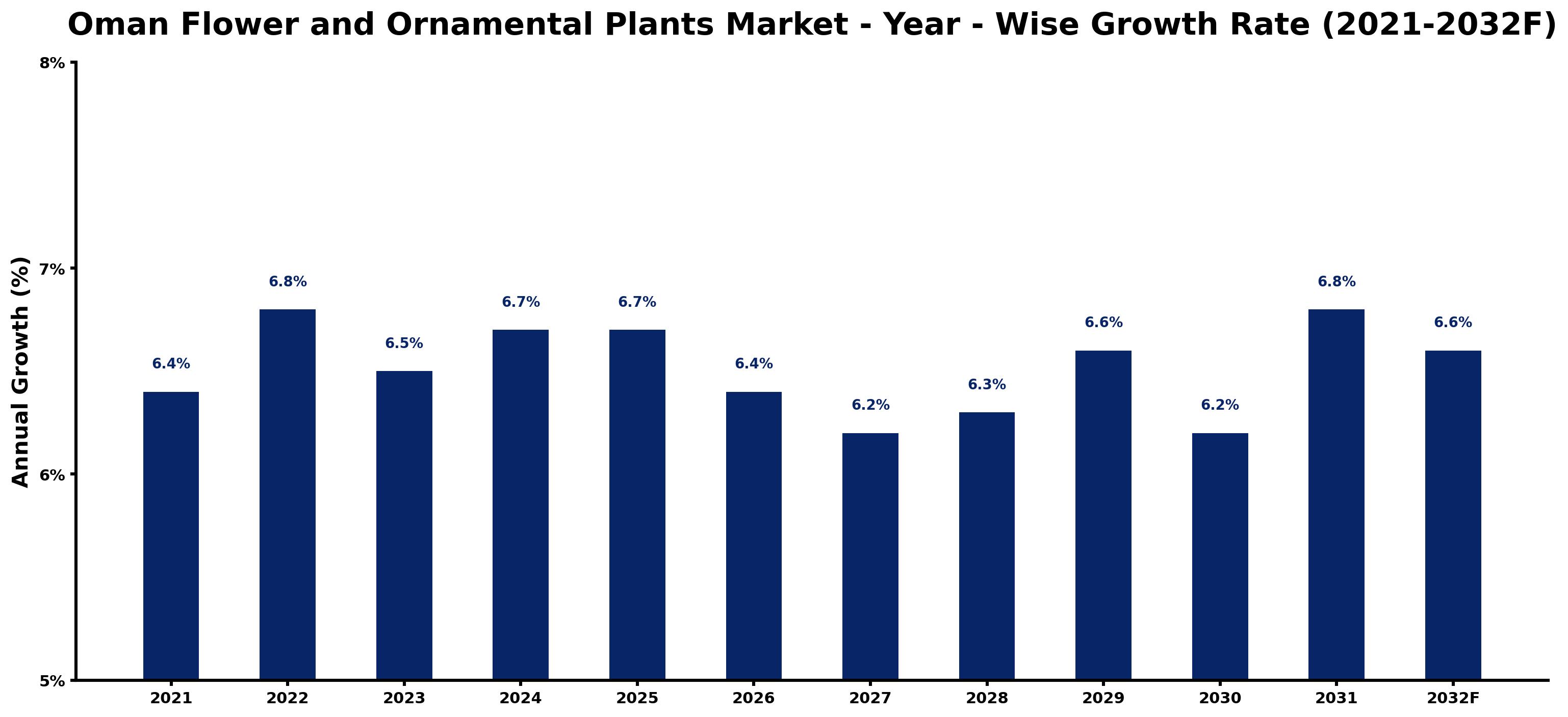
The table below presents the year wise growth rates along with the key drivers influencing the market
| Year | Growth Rate | Major Drivers |
| 2021 | 6.4% | Local gardening festivals boosted interest in ornamental plants among Omani families. |
| 2022 | 6.8% | E-commerce platforms enhanced accessibility to flower and plant varieties for consumers. |
| 2023 | 6.5% | Increased awareness of sustainable landscaping practices influenced market purchasing decisions. |
| 2024 | 6.7% | Climate adaptations prompted a surge in demand for drought-resistant plant varieties. |
| 2025 | 6.7% | Partnerships with hotels and resorts expanded the ornamental plant market significantly. |
| 2026 | 6.4% | Regional landscaping projects fueled a robust pipeline for ornamental plants and flowers. |
| 2027 | 6.2% | Shifting consumer preferences towards indoor plants cultivated a blossoming home decor segment. |
| 2028 | 6.3% | Collaborations with local artists promoted unique plant displays in public spaces. |
| 2029 | 6.6% | Innovations in vertical gardening created new opportunities for urban plant enthusiasts. |
| 2030 | 6.2% | Environmental education programs enhanced public engagement with gardening and plant care. |
| 2031 | 6.8% | Oman's tourism sector emphasized native plants for authentic cultural experiences. |
| 2032 | 6.6% | Sustainable farming practices emerged as a competitive advantage for local nurseries. |
Note - Market size estimations and growth projections presented in this report are based on 6Wresearch's advanced forecasting approach, validated with industry datasets as of June 2026.
Oman Flower and Ornamental Plants Market Synopsis
The Oman Flower and Ornamental Plants Market is projected to reach 6.4% and witness significant growth during the forecast period (2026-2032). This growth can be attributed to an increasing appreciation for the aesthetic and functional value of ornamental plants among Omani consumers. As urbanization continues to rise, homeowners are increasingly seeking ways to enhance their living spaces with vibrant, low-maintenance greenery.
Oman Flower and Ornamental Plants Market Growth Drivers
The demand for ornamental plants in Oman has shown a consistent upward trajectory in recent years. Several factors are contributing to this trend:
- There is a marked increase in consumer awareness regarding the advantages of incorporating ornamental plants into residential and commercial environments, including improved air quality and enhanced aesthetic appeal.
- The rise of urban gardening initiatives is motivating homemakers to adopt ornamental plants for balcony and terrace gardening, which is gaining popularity among city dwellers.
- Indoor plants are becoming a favored choice for consumers seeking cost-effective home decor solutions, as they provide a refreshing alternative to traditional furnishings.
- Oman's favorable climate allows for a diverse range of ornamental flora to thrive, further encouraging local cultivation efforts and consumer interest.
- Increased leisure activities and outdoor living trends are prompting homeowners to invest in gardens and outdoor spaces, driving demand for a variety of ornamental plants.
Oman Flower and Ornamental Plants Market Trends and Opportunities
The Oman Flower and Ornamental Plants Market is experiencing several emerging trends that present unique opportunities for growth:
- There is a notable shift toward eco-friendly and sustainable gardening practices, with consumers increasingly favoring native and drought-resistant plant species.
- The rise of online retail platforms is enhancing the accessibility of ornamental plants, allowing consumers the convenience of purchasing diverse species from the comfort of their homes.
- Workshops and seminars on plant care and maintenance are becoming more popular, fostering a community of enthusiasts who are eager to learn and share knowledge.
- Collaboration with interior designers and landscape architects is becoming more common, as these professionals recognize the value of ornamental plants in enhancing their projects.
- Social media and digital marketing are playing a pivotal role in influencing consumer choices, with urban gardeners showcasing their plant collections and gardening successes online.
Oman Flower and Ornamental Plants Market Challenges and Restraints
While the Oman Flower and Ornamental Plants Market is poised for growth, several challenges may impede its trajectory:
- Fluctuations in climate conditions can adversely affect plant growth and availability, presenting risks for both suppliers and consumers.
- Limited local expertise in plant care may lead to higher rates of plant mortality among consumers, impacting overall market demand.
- Competition from imported ornamental plants poses a challenge, as consumers may gravitate toward perceived higher quality or unique species from abroad.
- Logistical challenges related to distribution and transportation can hinder the timely delivery of plants, affecting customer satisfaction.
- Economic fluctuations may result in reduced discretionary spending on non-essential items, including ornamental plants, slowing market growth.
Oman Flower and Ornamental Plants Market Government Investment and Initiatives
The Sultanate of Oman is actively promoting investments in the horticultural sector, including the flower and ornamental plants market. Government initiatives aimed at boosting agricultural productivity include:
- Investment in research and development to enhance local cultivation techniques and improve the resilience of ornamental plant varieties.
- Financial incentives for farmers to adopt modern agricultural practices, which can increase yield and the quality of ornamental plants.
- Support for urban greening projects that encourage the proliferation of ornamental plants in public spaces, parks, and private gardens.
- Partnerships with educational institutions to develop training programs focusing on sustainable gardening and horticultural practices.
- Policies aimed at improving the supply chain and distribution networks for ornamental plants, ensuring that they reach consumers efficiently.
Oman Flower and Ornamental Plants Market Latest Developments (May 2025 - June 2026)
During the period from May 2025 to June 2026, the Oman Flower and Ornamental Plants Market has witnessed several noteworthy developments:
- There has been a growing participation of local communities in botanical gardens and flower shows, increasing public interest in diverse plant species.
- Workshops focused on sustainable gardening practices have gained popularity, promoting awareness of ecological gardening solutions.
- The emergence of specialty retail stores dedicated to ornamental plants has provided consumers with more varied options, enhancing market accessibility.
- Digital platforms have become essential for plant sales as e-commerce continues to expand, allowing consumers to browse a wider selection of ornamental varieties.
- Initiatives aimed at reducing reliance on imported plants have begun, with local growers encouraged to cultivate indigenous species to meet rising consumer demand.
Oman Flower and Ornamental Plants Market - Key Attractiveness of the Report
- 10 Years of Market Numbers
- Historical Data Starting from 2022 to 2025
- Base Year: 2025
- Forecast Data until 2032
- Key Performance Indicators Impacting the Market
- Major Upcoming Developments and Projects
Key Highlights of the Report:
- Oman Flower and Ornamental Plants Market Outlook
- Market Size of Oman Flower and Ornamental Plants Market, 2025
- Forecast of Oman Flower and Ornamental Plants Market, 2032F
- Historical Data and Forecast of Oman Flower and Ornamental Plants Revenues & Volume for the Period 2022-2032F
- Oman Flower and Ornamental Plants Market Trend Evolution
- Oman Flower and Ornamental Plants Market Drivers and Challenges
- Oman Flower and Ornamental Plants Price Trends
- Oman Flower and Ornamental Plants Porter's Five Forces
- Oman Flower and Ornamental Plants Industry Life Cycle
- Historical Data and Forecast of Oman Flower and Ornamental Plants Market Revenues & Volume By Product Type for the Period 2022-2032F
- Historical Data and Forecast of Oman Flower and Ornamental Plants Market Revenues & Volume By Potted Plants for the Period 2022-2032F
- Historical Data and Forecast of Oman Flower and Ornamental Plants Market Revenues & Volume By Cut Flowers for the Period 2022-2032F
- Historical Data and Forecast of Oman Flower and Ornamental Plants Market Revenues & Volume By Application for the Period 2022-2032F
- Historical Data and Forecast of Oman Flower and Ornamental Plants Market Revenues & Volume By Home for the Period 2022-2032F
- Historical Data and Forecast of Oman Flower and Ornamental Plants Market Revenues & Volume By Commercial for the Period 2022-2032F
- Oman Flower and Ornamental Plants Import Export Trade Statistics
- Market Opportunity Assessment By Product Type
- Market Opportunity Assessment By Application
- Oman Flower and Ornamental Plants Top Companies Market Share
- Oman Flower and Ornamental Plants Competitive Benchmarking By Technical and Operational Parameters
- Oman Flower and Ornamental Plants Company Profiles
- Oman Flower and Ornamental Plants Key Strategic Recommendations






































