Oman Hotel Furniture Market Summary
The oman hotel furniture market was estimated at USD 341 Million in 2025 and is projected to reach USD 477 Million by 2032, growing at a CAGR of 5.4% from 2026 to 2032.
Oman Hotel Furniture Market Year-wise Growth Rate and Key Drivers
This graph highlights how the Oman Hotel Furniture Market has steadily grown over the past five years, supported by major growth factors.
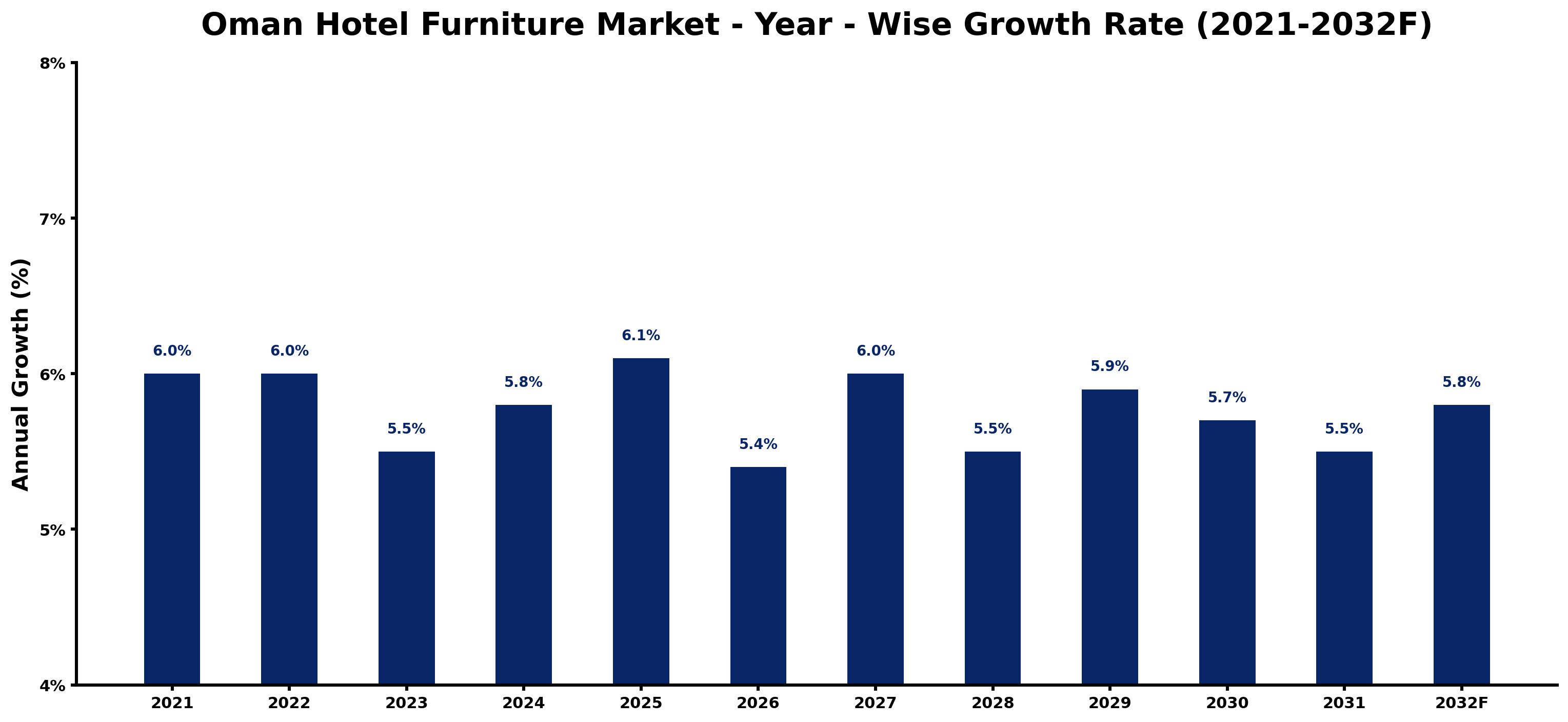
The table below presents the year wise growth rates along with the key drivers influencing the market
| Year | Growth Rate | Major Drivers |
| 2021 | 6.0% | COVID-19 recovery spurred demand for flexible hotel furniture solutions across Oman. |
| 2022 | 6.0% | Increased tourist arrivals fostered a vibrant market for upgraded hotel furnishings. |
| 2023 | 5.5% | Construction of mega-projects like Oman Vision 2040 revitalized the hospitality sector. |
| 2024 | 5.8% | Eco-friendly furniture options gain traction, aligning with sustainability trends in tourism. |
| 2025 | 6.1% | Luxury hotel segments expand, leading to a higher demand for bespoke furniture designs. |
| 2026 | 5.4% | Integration of smart technologies into furniture attracts tech-savvy hotel operators. |
| 2027 | 6.0% | Collaborations between local artisans and international brands enhance furniture diversity. |
| 2028 | 5.5% | Regional trade agreements facilitate easier import of premium hotel furnishings. |
| 2029 | 5.9% | Increased focus on experiential travel encourages hotels to redesign interior spaces. |
| 2030 | 5.7% | Emerging boutique hotels challenge traditional establishments, needing innovative furniture solutions. |
| 2031 | 5.5% | Shift towards wellness tourism prompts hotels to invest in calming, functional furnishings. |
| 2032 | 5.8% | Ongoing urban development projects continually refresh the landscape of hotel furniture demands. |
Note - Market size estimations and growth projections presented in this report are based on 6Wresearch's advanced forecasting approach, validated with industry datasets as of June 2026.
Oman Hotel Furniture Market Synopsis
The Oman Hotel Furniture Market is projected to reach 5.4% and witness significant growth during the forecast period (2026-2032). This growth trajectory is primarily driven by the burgeoning hotel sector, which is increasingly focusing on enhancing guest experiences through the incorporation of high-quality and aesthetically pleasing furniture. With tourism on the rise, hotels are investing in luxurious and durable furniture pieces to distinguish themselves in a competitive landscape.
Oman Hotel Furniture Market Growth Drivers
The expansion of the Oman Hotel Furniture Market is influenced by several growth drivers:
- The increasing number of hotel developments across Oman, spurred by governmental initiatives to boost tourism, is a primary contributor to market growth.
- Changing consumer preferences, with a focus on comfort and style, are compelling hotels to invest in sophisticated furniture designs that enhance the overall guest experience.
- The rise of luxury and boutique hotels demanding unique, customizable furniture options is driving innovation among suppliers.
- Heightened awareness regarding sustainability is pushing hotels to seek eco-friendly furniture solutions, thereby broadening the scope for sustainable product offerings.
- Strategic partnerships between local and international furniture manufacturers are fostering a competitive environment, enhancing the availability of high-quality products tailored to the hospitality sector.
Oman Hotel Furniture Market Trends and Opportunities
Several trends are shaping the Oman Hotel Furniture Market, presenting opportunities for growth:
- There is a notable shift towards sustainable furniture alternatives, reflecting the industry's commitment to environmentally responsible practices and materials.
- Customization is increasingly favored, with hotels seeking bespoke furniture designs that enhance the uniqueness of their interiors.
- The integration of local craftsmanship and traditional Omani designs into furniture options is gaining traction, contributing to an authentic guest experience.
- Emerging technologies in furniture design and manufacturing are enabling innovative and space-efficient solutions tailored to the needs of modern hospitality.
- The trend towards wellness and relaxation within hotel environments is prompting investments in specialized furniture types designed to enhance guest comfort and satisfaction.
Oman Hotel Furniture Market Challenges and Restraints
Despite the promising outlook, the Oman Hotel Furniture Market faces several challenges:
- Intense competition among suppliers is leading to pricing pressures, which can result in margin erosion for manufacturers.
- Fluctuations in the prices of raw materials, particularly for premium fabrics and timber, can disrupt production costs and timelines.
- The diverse design preferences of hotels and guests necessitate continuous innovation and adaptability from furniture manufacturers.
- Logistical complexities, such as transportation and installation challenges for large-scale projects, can hinder the timely delivery of furniture.
- Establishing and maintaining robust supplier relationships is critical for consistent quality and supply, requiring considerable effort and investment.
Oman Hotel Furniture Market Government Investment and Initiatives
The government of Oman plays a pivotal role in fostering the growth of the hotel furniture market through various initiatives.
- Policies aimed at supporting local manufacturers, including financial incentives and subsidies, are encouraging the production of high-quality furniture tailored for the hospitality sector.
- Infrastructure development projects are being prioritized, enhancing logistics and supply chains to improve the import and export capabilities for furniture products.
- Government regulations ensure compliance with sustainability practices, promoting eco-friendly options in furniture design and manufacturing.
- Investment in tourism infrastructure is expected to attract more visitors, which will subsequently increase demand for hotel accommodations and the related furniture market.
- The government's commitment to supporting the hospitality and tourism sectors underscores the long-term viability of the Oman Hotel Furniture Market.
Oman Hotel Furniture Market Latest Developments (May 2025 - June 2026)
In the period from May 2025 to June 2026, the Oman Hotel Furniture Market has witnessed several notable developments:
- There has been a marked increase in hotels adopting eco-friendly practices, leading to a greater emphasis on sustainable furniture options crafted from recycled and renewable materials.
- New hotel projects have incorporated locally sourced materials and designs, which has positively influenced the market for traditional Omani-style furniture.
- Customization requests have intensified, with hotels seeking unique furniture pieces that create distinctive guest experiences, reflecting personal and cultural narratives.
- A surge in investment from foreign stakeholders in the Omani hospitality sector has catalyzed demand for high-quality hotel furniture.
- Innovative designs integrating technology and comfort have begun to emerge, aligning with contemporary trends in the hospitality industry.
Oman Hotel Furniture Market - Key Attractiveness of the Report
- 10 Years of Market Numbers
- Historical Data Starting from 2022 to 2025
- Base Year: 2025
- Forecast Data until 2032
- Key Performance Indicators Impacting the Market
- Major Upcoming Developments and Projects
Key Highlights of the Report:
- Oman Hotel Furniture Market Outlook
- Market Size of Oman Hotel Furniture Market, 2025
- Forecast of Oman Hotel Furniture Market, 2032F
- Historical Data and Forecast of Oman Hotel Furniture Revenues & Volume for the Period 2022-2032F
- Oman Hotel Furniture Market Trend Evolution
- Oman Hotel Furniture Market Drivers and Challenges
- Oman Hotel Furniture Price Trends
- Oman Hotel Furniture Porter's Five Forces
- Oman Hotel Furniture Industry Life Cycle
- Historical Data and Forecast of Oman Hotel Furniture Market Revenues & Volume By Product Types for the Period 2022-2032F
- Historical Data and Forecast of Oman Hotel Furniture Market Revenues & Volume By Table and Chairs for the Period 2022-2032F
- Historical Data and Forecast of Oman Hotel Furniture Market Revenues & Volume By Hotel Beds for the Period 2022-2032F
- Historical Data and Forecast of Oman Hotel Furniture Market Revenues & Volume By Hotel Casegoods for the Period 2022-2032F
- Historical Data and Forecast of Oman Hotel Furniture Market Revenues & Volume By Other for the Period 2022-2032F
- Historical Data and Forecast of Oman Hotel Furniture Market Revenues & Volume By Applications for the Period 2022-2032F
- Historical Data and Forecast of Oman Hotel Furniture Market Revenues & Volume By Business Hotel for the Period 2022-2032F
- Historical Data and Forecast of Oman Hotel Furniture Market Revenues & Volume By Luxury Hotel for the Period 2022-2032F
- Historical Data and Forecast of Oman Hotel Furniture Market Revenues & Volume By Boutique Hotel for the Period 2022-2032F
- Historical Data and Forecast of Oman Hotel Furniture Market Revenues & Volume By Other for the Period 2022-2032F
- Oman Hotel Furniture Import Export Trade Statistics
- Market Opportunity Assessment By Product Types
- Market Opportunity Assessment By Applications
- Oman Hotel Furniture Top Companies Market Share
- Oman Hotel Furniture Competitive Benchmarking By Technical and Operational Parameters
- Oman Hotel Furniture Company Profiles
- Oman Hotel Furniture Key Strategic Recommendations






































