Oman Predictive Analytics Market Size & Growth Rate (2026-2032)
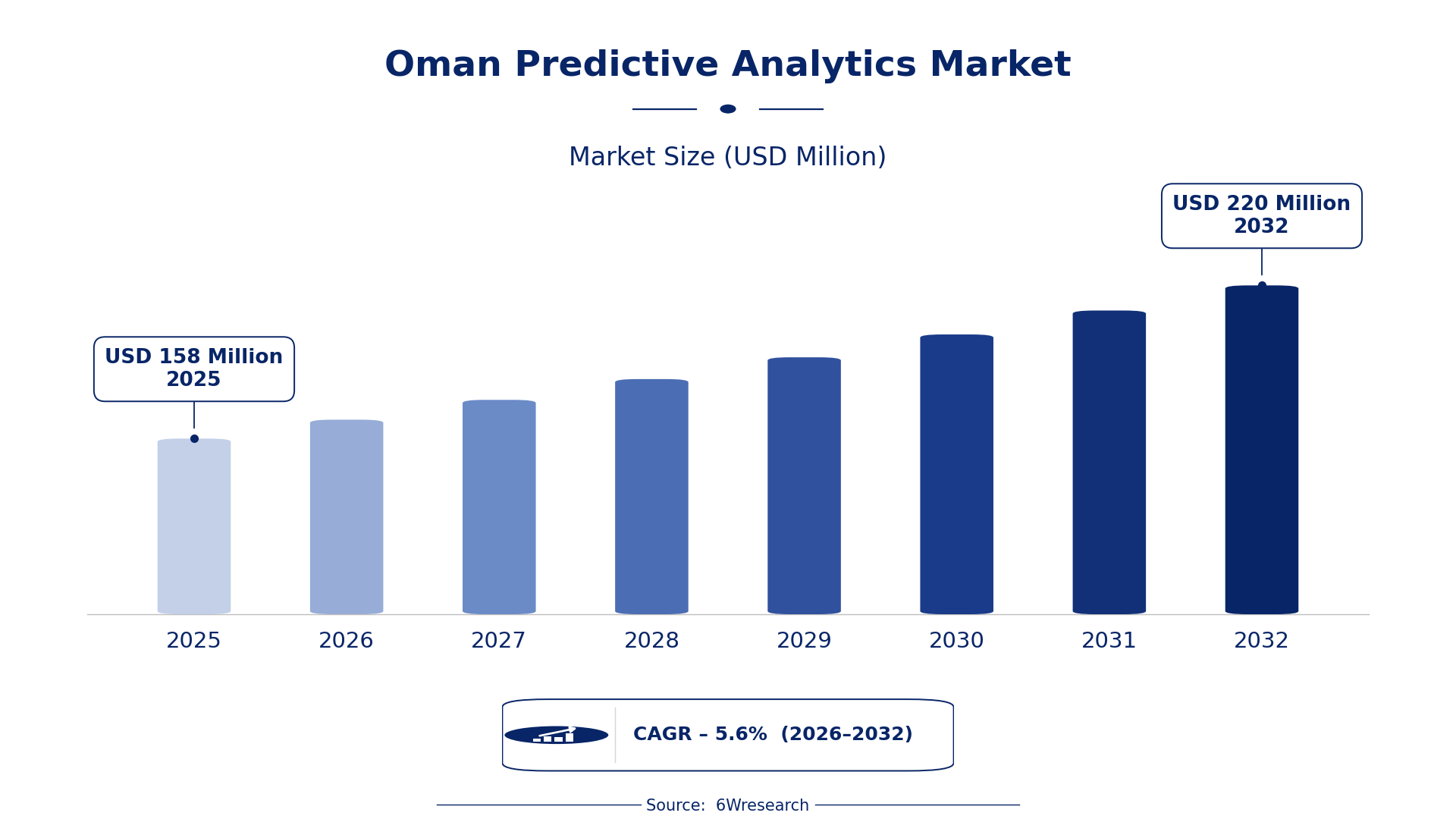
The Oman Predictive Analytics Market was estimated at USD 158 Million in 2025 and is projected to reach USD 220 Million by 2032, growing at a CAGR of 5.6% from 2026 to 2032.
Oman Predictive Analytics Market Synopsis
The primary force driving the Oman Predictive Analytics Market is the escalating adoption of advanced analytics solutions across key sectors such as banking, healthcare, and retail. Organizations are increasingly recognizing the power of data to enhance decision-making and operational efficiency, positioning predictive analytics as a critical tool for competitive advantage.
As the Omani business landscape evolves, the integration of artificial intelligence and machine learning technologies is emerging as a vital trend. These technologies not only offer more accurate predictions but also help businesses tailor their strategies to meet the specific needs of their customers, enhancing personalization and engagement.
Oman Predictive Analytics Market Year-wise Growth Rate and Key Drivers
This graph illustrates the annual growth rates of the Oman Predictive Analytics Market from 2021 to 2032, highlighting a steady upward trajectory and projected expansion over the forecast period.
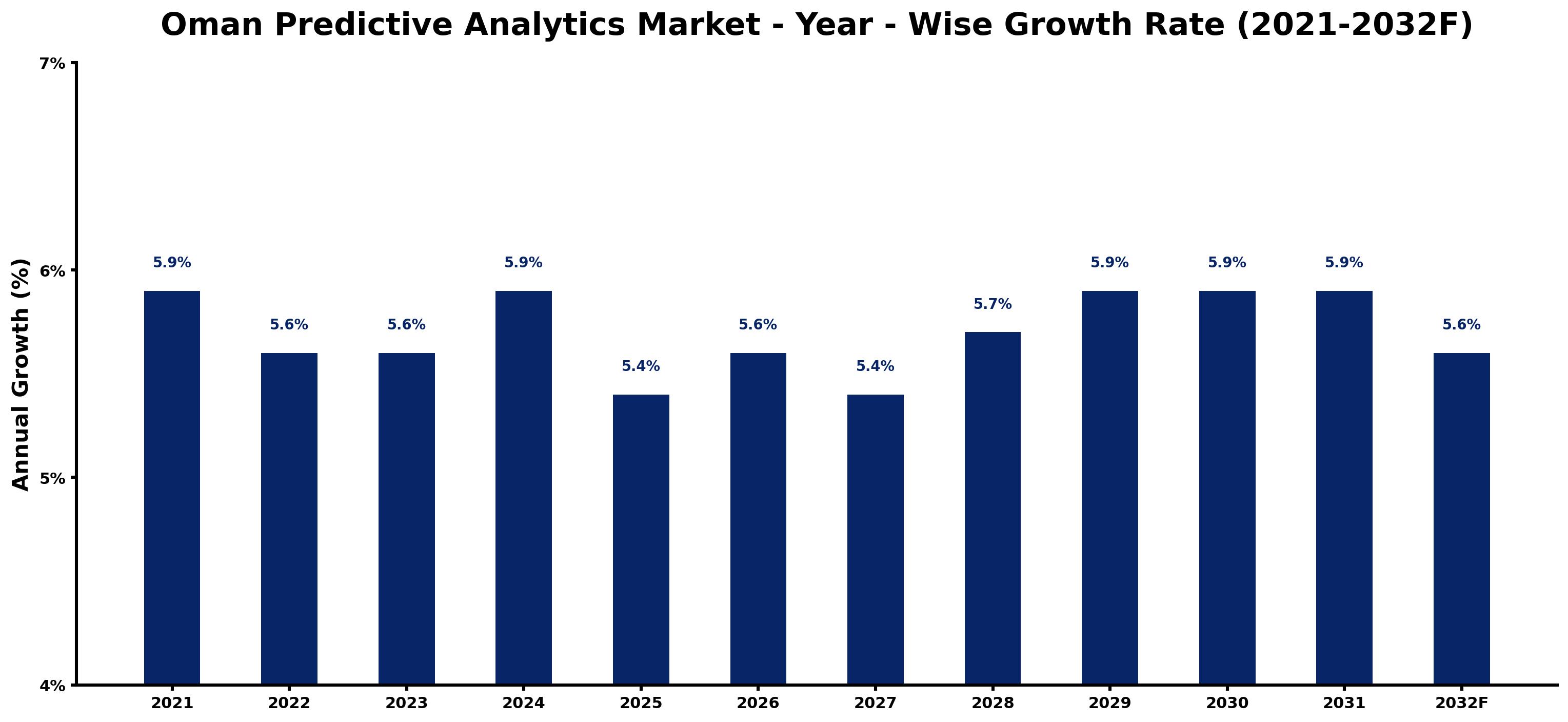
The table below presents the year‑wise growth rates along with the key drivers influencing the market
| Year | Growth Rate | Major Drivers |
| 2021 | 5.9% | Government Vision 2040 promotes data-driven decision making. |
| 2022 | 5.6% | Increasing investments in smart city initiatives for urban analytics. |
| 2023 | 5.6% | Emerging fintech sector driving predictive risk management solutions. |
| 2024 | 5.9% | Growth in e-commerce necessitating advanced customer behavior analytics. |
| 2025 | 5.4% | Government incentives for digital transformation in public sectors. |
| 2026 | 5.6% | Rising healthcare data integration spurring predictive health analytics. |
| 2027 | 5.4% | Focus on renewable energy data insights enhances operational efficiency. |
| 2028 | 5.7% | Boost in educational data analytics for improved learning outcomes. |
| 2029 | 5.9% | Tourism sector growth requires predictive visitor trend analytics. |
| 2030 | 5.9% | Increase in cybersecurity investments drives need for risk analytics. |
| 2031 | 5.9% | Developing localized sustainability initiatives enhances resource management forecasts. |
| 2032 | 5.6% | Regulatory requirements for data transparency boost analytics adoption. |
Note: Market size estimations and growth projections presented in this report are based on 6Wresearch's proprietary forecasting methodology, utilizing the latest available industry data, government publications, and primary research inputs.
Oman Predictive Analytics Market Key Takeaways
Below are some of the specific key takeaways from the market, including:
- The market is set to grow significantly, driven by the increasing demand for data-driven decision-making.
- Real-time analytics solutions are becoming a priority for organizations seeking immediate insights.
- Government initiatives aimed at digital transformation are creating a supportive environment for market growth.
- Investment opportunities are prevalent in sectors like healthcare and retail, focusing on advanced analytics tools.
- Data quality and skilled workforce shortages remain challenges that need addressing to maximize market potential.
Evaluation of Restraints in Oman Predictive Analytics Market
Despite the promising outlook, the Oman Predictive Analytics Market faces notable restraints. Limited awareness and understanding of predictive analytics among businesses hinder adoption rates. Many organizations still grapple with data quality issues, which compromise the effectiveness of predictive models. Additionally, a shortage of skilled professionals in analytics fields creates barriers to implementation and hampers the effective use of available technologies.
Oman Predictive Analytics Market Trends
Several key trends are shaping the Oman Predictive Analytics Market. There is a noticeable shift toward real-time data analytics, which enables organizations to make informed decisions promptly. The integration of AI and machine learning technologies is also on the rise, enhancing predictive accuracy and operational efficiency. on top of that, the emergence of cloud-based platforms is facilitating access to advanced analytics for smaller enterprises, democratizing data insights across various sectors.
Oman Predictive Analytics Market Opportunities
Investment opportunities within the Oman Predictive Analytics Market are abundant, particularly in sectors like banking, healthcare, and retail. As businesses strive for operational excellence, the demand for predictive modeling, machine learning algorithms, and data visualization tools is expected to surge. The government's push for digital transformation creates a fertile ground for investors aiming to capitalize on the increasing acceptance of predictive analytics in Oman.
Government Initiatives in the Oman Predictive Analytics Market
The Omani government is actively promoting predictive analytics through various initiatives designed to enhance the country's digital capabilities. With a strong emphasis on technology and innovation, public policy aims to create a favorable environment for businesses to adopt advanced analytics solutions. These initiatives are crucial in fostering a culture of data-driven decision-making that aligns with national economic goals.
- A recent initiative launched in 2025 focuses on upgrading digital infrastructure, including data centers to support analytics capabilities.
- Currently ongoing efforts aim to develop a national digital literacy program to educate businesses about the benefits of predictive analytics.
- Upcoming plans include a regulatory framework intended to encourage data sharing and transparency among organizations by 2028.
- Initiatives promoting collaborations between academia and industry are underway to cultivate a skilled workforce in data analytics.
- The National Strategy for the Digital Economy emphasizes investment in analytics technologies as part of broader economic diversification efforts.
Future Insights of the Oman Predictive Analytics Market
Looking ahead to 2026-2032, the Oman Predictive Analytics Market is set to witness substantial growth. The continuous adoption of data-driven practices will be pivotal in this trajectory, as organizations increasingly acknowledge the strategic advantages offered by predictive analytics. Innovations in AI and machine learning will further bolster market demand, as companies seek to refine their operations and enhance customer interactions.
Oman Predictive Analytics Market Latest Developments
Recent activity in the Oman Predictive Analytics Market has been vibrant, with organizations keen to adopt innovative analytics solutions. Investments in technology and infrastructure have accelerated, reflecting a strong commitment to enhancing data-driven capabilities across sectors.
- A technology vendor recently launched a new predictive analytics platform, enhancing functionalities for real-time data processing in Q2 2025.
- An initiative focusing on analytics training for SMEs began in early 2025 and remains ongoing, aiming to bridge the skills gap in the industry.
- A major healthcare provider is in the process of implementing predictive analytics tools to improve patient care outcomes, expected to be completed by late 2025.
- A partnership between a regional university and local businesses has been established to foster research in predictive analytics, with activities slated to start in early 2026.
- A rollout of a government-supported data visualization initiative is planned for mid-2026, aimed at enhancing data accessibility for smaller enterprises.
Oman Predictive Analytics Market - Key Attractiveness of the Report
- 10 Years of Market Numbers
- Historical Data Starting from 2022 to 2025
- Base Year: 2025
- Forecast Data until 2032
- Key Performance Indicators Impacting the Market
- Major Upcoming Developments and Projects
Key Highlights of the Report:
- Oman Predictive Analytics Market Outlook
- Market Size of Oman Predictive Analytics Market, 2025
- Forecast of Oman Predictive Analytics Market, 2032
- Historical Data and Forecast of Oman Predictive Analytics Revenues & Volume for the Period 2022-2032F
- Oman Predictive Analytics Market Trend Evolution
- Oman Predictive Analytics Market Drivers and Challenges
- Oman Predictive Analytics Price Trends
- Oman Predictive Analytics Porter's Five Forces
- Oman Predictive Analytics Industry Life Cycle
- Historical Data and Forecast of Oman Predictive Analytics Market Revenues & Volume By Component for the Period 2022-2032F
- Historical Data and Forecast of Oman Predictive Analytics Market Revenues & Volume By Solutions for the Period 2022-2032F
- Historical Data and Forecast of Oman Predictive Analytics Market Revenues & Volume By Services for the Period 2022-2032F
- Historical Data and Forecast of Oman Predictive Analytics Market Revenues & Volume By Deployment Mode for the Period 2022-2032F
- Historical Data and Forecast of Oman Predictive Analytics Market Revenues & Volume By Cloud for the Period 2022-2032F
- Historical Data and Forecast of Oman Predictive Analytics Market Revenues & Volume By On-premises for the Period 2022-2032F
- Historical Data and Forecast of Oman Predictive Analytics Market Revenues & Volume By Organization Size for the Period 2022-2032F
- Historical Data and Forecast of Oman Predictive Analytics Market Revenues & Volume By Large enterprises for the Period 2022-2032F
- Historical Data and Forecast of Oman Predictive Analytics Market Revenues & Volume By Small and medium-sized enterprises (SMEs) for the Period 2022-2032F
- Historical Data and Forecast of Oman Predictive Analytics Market Revenues & Volume By Vertical for the Period 2022-2032F
- Historical Data and Forecast of Oman Predictive Analytics Market Revenues & Volume By BFSI for the Period 2022-2032F
- Historical Data and Forecast of Oman Predictive Analytics Market Revenues & Volume By Manufacturing for the Period 2022-2032F
- Historical Data and Forecast of Oman Predictive Analytics Market Revenues & Volume By Retail and eCommerce for the Period 2022-2032F
- Historical Data and Forecast of Oman Predictive Analytics Market Revenues & Volume By Government and Defense for the Period 2022-2032F
- Historical Data and Forecast of Oman Predictive Analytics Market Revenues & Volume By Healthcare and Life Sciences for the Period 2022-2032F
- Historical Data and Forecast of Oman Predictive Analytics Market Revenues & Volume By Energy and Utilities for the Period 2022-2032F
- Historical Data and Forecast of Oman Predictive Analytics Market Revenues & Volume By Telecommunications and IT for the Period 2022-2032F
- Historical Data and Forecast of Oman Predictive Analytics Market Revenues & Volume By Transportation and Logistics for the Period 2022-2032F
- Oman Predictive Analytics Import Export Trade Statistics
- Market Opportunity Assessment By Component
- Market Opportunity Assessment By Deployment Mode
- Market Opportunity Assessment By Organization Size
- Market Opportunity Assessment By Vertical
- Oman Predictive Analytics Top Companies Market Share
- Oman Predictive Analytics Competitive Benchmarking By Technical and Operational Parameters
- Oman Predictive Analytics Company Profiles
- Oman Predictive Analytics Key Strategic Recommendations






































